

Essence
The structural transparency of distributed ledgers creates a systemic vulnerability for sophisticated market participants. Professional capital allocators require the ability to execute high-conviction strategies without broadcasting their intent to predatory observers. Zero Knowledge Financial Privacy functions as a cryptographic layer that decouples the verification of a transaction from the visibility of its metadata.
By utilizing mathematical proofs, the system confirms that a state transition adheres to protocol rules while keeping the sender, recipient, and asset quantity confidential.
The decoupling of transaction verification from data disclosure allows for the execution of complex strategies without exposing proprietary alpha.
In the context of derivative markets, this confidentiality is a prerequisite for institutional participation. Without Zero Knowledge Financial Privacy, large-scale hedging or speculative positioning becomes an invitation for front-running and Miner Extractable Value (MEV) exploitation. The technology ensures that the information asymmetry necessary for competitive price discovery remains intact.
It replaces the “glass box” model of public blockchains with a “black box” validation system where only the validity of the trade is public, not the strategic intent behind it. The identity of Zero Knowledge Financial Privacy is defined by its capacity to provide selective disclosure. This allows participants to maintain total anonymity against the general market while providing specific audit trails to authorized entities.
This dual-purpose architecture resolves the tension between the need for transactional secrecy and the mandates of regulatory oversight. It represents a shift from blanket transparency to sovereign data management.


Origin
The lineage of Zero Knowledge Financial Privacy traces back to the early cypherpunk movements and the quest for digital cash that mirrored the anonymity of physical banknotes. While Bitcoin introduced decentralized settlement, its public ledger lacked the confidentiality required for true financial sovereignty.
The first significant breakthrough appeared with the implementation of zk-SNARKs in the Zcash protocol, which demonstrated that non-interactive proofs could validate shielded transactions on a public blockchain. As decentralized finance matured, the limitations of simple mixers became apparent. Early privacy tools focused on breaking the link between addresses but failed to support the programmable logic required for options and structured products.
The demand for Zero Knowledge Financial Privacy accelerated as institutional traders realized that public order books were being scraped by automated bots to identify and front-run large trades. This necessitated the development of privacy-preserving smart contract environments.
Mathematical soundness ensures that every shielded transaction adheres to protocol rules without revealing the identity of the participants.
The transition from basic anonymity to complex financial confidentiality was driven by the integration of zero-knowledge proofs into Layer 2 scaling solutions and standalone privacy protocols. These systems moved beyond simple asset transfers to support private state transitions. This enabled the creation of shielded liquidity pools where participants could interact with decentralized applications without leaking their entire financial history.
The current state of Zero Knowledge Financial Privacy is the result of decades of research into elliptic curve cryptography and polynomial commitments.


Theory
The mathematical framework of Zero Knowledge Financial Privacy relies on the construction of arithmetic circuits. These circuits represent the logic of a financial transaction as a series of constraints. A prover generates a succinct proof that they possess a valid witness ⎊ such as a private key or a specific balance ⎊ that satisfies these constraints.
The verifier can then confirm the proof’s validity in constant time, regardless of the complexity of the underlying transaction.
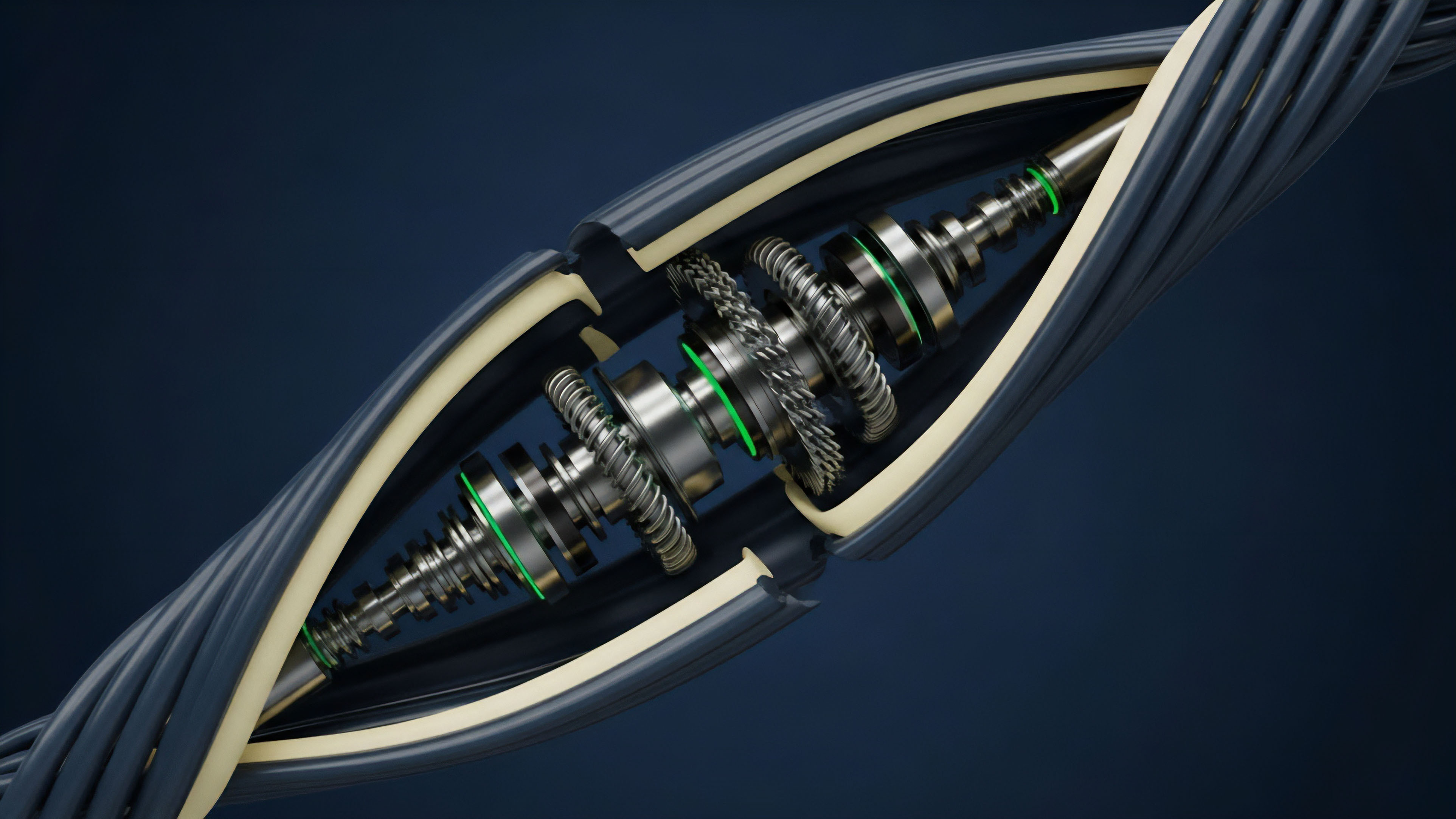
Cryptographic Proof Systems
The selection of a proof system determines the trade-offs between proof size, verification speed, and the necessity of a trusted setup. Zero Knowledge Financial Privacy implementations typically choose between zk-SNARKs and zk-STARKs based on the specific requirements of the derivative engine.
| Metric | zk-SNARKs | zk-STARKs | Bulletproofs |
|---|---|---|---|
| Proof Size | Very Small (Bytes) | Large (Kilobytes) | Medium |
| Verification Speed | Fastest | Fast | Slow |
| Trusted Setup | Required | Not Required | Not Required |
| Quantum Resistance | No | Yes | No |

Nullifiers and Commitment Schemes
To prevent double-spending in a shielded environment, Zero Knowledge Financial Privacy utilizes commitment schemes and nullifiers. When an asset is deposited into a shielded pool, a commitment is created and added to a Merkle tree. To spend the asset, the user provides a zero-knowledge proof that they know the secret corresponding to a commitment in the tree and reveals a unique nullifier.
The nullifier prevents the same commitment from being spent twice without revealing which commitment was used, maintaining total anonymity.


Approach
Current implementations of Zero Knowledge Financial Privacy in derivative markets focus on the creation of private order books and shielded dark pools. These venues allow traders to place limit orders and execute swaps without disclosing their entry prices or position sizes to the public. The settlement of these trades occurs via zero-knowledge proofs that update the state of the shielded pool while preserving the confidentiality of the individual participants.
- Shielded Liquidity Provision allows market makers to provide depth to a pool without exposing their inventory levels or risk management thresholds.
- Private Settlement Engines use zk-proofs to verify that an option exercise or a futures liquidation was performed according to the contract terms without revealing the specific accounts involved.
- Confidential Margin Management enables traders to prove they maintain sufficient collateral for their leveraged positions without disclosing the total value of their holdings.
Selective disclosure mechanisms provide a bridge between total anonymity and the transparency required by institutional compliance frameworks.
The integration of Zero Knowledge Financial Privacy into options protocols involves the use of specialized circuits for Black-Scholes calculations or other pricing models. This ensures that the Greeks and the resulting premiums are calculated correctly while the underlying parameters remain private. This architecture prevents “copy-trading” and the reverse-engineering of successful proprietary models.


Evolution
The advancement of Zero Knowledge Financial Privacy has moved from primitive asset mixing to the era of Zero Knowledge Virtual Machines (zkVMs).
Early systems like Tornado Cash provided a method for breaking linkability but were limited by a static set of supported assets and a lack of programmable logic. The shift toward general-purpose zk-rollups has enabled the execution of any smart contract with privacy features, allowing for the birth of privacy-native decentralized exchanges.
| Generation | Primary Mechanism | Financial Utility |
|---|---|---|
| First | Coin Mixers | Simple Anonymity |
| Second | Shielded Asset Pools | Confidential Transfers |
| Third | Programmable ZK-Layers | Private DeFi & Derivatives |
| Fourth | Compliant Privacy | Institutional Auditing |
The most significant change in the recent period is the focus on “Compliance-by-Design.” Modern Zero Knowledge Financial Privacy protocols incorporate view keys and selective disclosure proofs. This allows users to prove to a regulator that they have paid taxes or are not on a sanctions list without revealing their entire transaction history to the public. This shift is vital for the long-term survival of privacy tech in a regulated global market.


Horizon
The future of Zero Knowledge Financial Privacy lies in the widespread adoption of recursive snarks and the integration of hardware-accelerated proof generation.
These advancements will reduce the latency of private transactions, making them indistinguishable from public ones in terms of user experience. As the computational cost of generating proofs drops, Zero Knowledge Financial Privacy will become the default setting for all institutional financial interactions on-chain.
- Hardware Acceleration will involve the use of specialized ASICs and FPGAs to generate proofs in milliseconds, enabling high-frequency trading in shielded environments.
- Cross-Chain Privacy Layers will allow for the seamless transfer of shielded assets between different blockchain ecosystems without breaking the privacy set.
- Zero Knowledge Identity will decouple financial activity from personal data, allowing users to prove creditworthiness or accredited investor status through cryptographic attestations.
The ultimate destination is a financial system where privacy is a commodity and transparency is a choice. Zero Knowledge Financial Privacy will enable a new class of “Dark DeFi” protocols that offer the efficiency of decentralized markets with the confidentiality of traditional investment banks. This convergence will likely trigger a massive migration of capital from legacy systems into the cryptographically secured, private markets of the future.

Glossary

Validium

Zk-Snarks

Private Governance

Fiat-Shamir Heuristic

Shielded Pool

Zero-Knowledge Virtual Machines

On-Chain Verification

Commitment Scheme

Groth16