

Essence
Cryptographic Proof Systems establish a regime of verifiable truth where mathematical certainty supersedes institutional reputation. In the domain of digital asset derivatives, these protocols permit a participant to demonstrate the validity of a financial statement ⎊ such as the solvency of an options vault or the correct execution of a Black-Scholes pricing model ⎊ while concealing the underlying sensitive variables. This architectural shift removes the requirement for a central clearing counterparty, substituting legal recourse with computational guarantees.
Mathematical verification replaces institutional trust as the primary mechanism for financial settlement.
The function of these systems centers on the production of a succinct proof that a specific computation was performed correctly. For a derivative market, this means that every margin call, liquidation, and settlement event can be audited by any network participant while concealing proprietary trading strategies or individual wallet balances. This precision of process, coupled with the opacity of data, provides a base for high-fidelity markets that operate outside of traditional banking silos.


Origin
The intellectual ancestry of Cryptographic Proof Systems resides in the mid-1980s research into interactive protocols.
Researchers sought methods to convince a verifier of a statement’s truth while conveying zero information beyond the statement’s validity. This early work focused on the complexity classes of problems that could be proven through multi-round communication between a prover and a verifier. As the requirements for decentralized finance materialized, the focus shifted from interactive models to non-interactive versions.
The introduction of the Fiat-Shamir heuristic enabled the transformation of these dialogues into static strings of data. The subsequent development of succinct proofs allowed for the verification of large-scale financial computations on resource-constrained environments like the Ethereum Virtual Machine.


Theory
A Cryptographic Proof System relies on three mathematical pillars to maintain the integrity of a derivative engine. Completeness dictates that a true statement will always result in a valid proof.
Soundness guarantees that an incorrect statement fails to result in a valid proof, with a negligible probability of failure. The zero-knowledge property maintains that the proof reveals zero information regarding the witness data used in the computation.

Mathematical Properties
- Completeness: Honest provers successfully convince verifiers of true statements.
- Soundness: Dishonest provers fail to deceive verifiers regarding false claims.
- Zero-Knowledge: The verifier learns zero information regarding the private inputs of the prover.
Computational integrity guarantees that off-chain derivative engines operate exactly as programmed while concealing proprietary strategy data.

Proof Architectures
| Feature | zk-SNARKs | zk-STARKs |
|---|---|---|
| Trust Requirement | Trusted Setup Required | Transparent Setup |
| Proof Size | Small (Bytes) | Large (Kilobytes) |
| Quantum Resistance | Vulnerable | Resistant |


Approach
Current implementations in the crypto options market utilize Validity Proofs to scale transaction throughput while maintaining the security of the underlying layer. Protocols move the intensive computation of option Greeks and margin requirements off-chain, generating a proof that these values were derived according to the agreed-upon smart contract logic. This proof is then submitted to the main ledger for instantaneous verification.

Execution Metrics
| Metric | On-chain Execution | Validity Proof Execution |
|---|---|---|
| Gas Cost | High (Linear) | Low (Logarithmic) |
| Verification Speed | Slow | Instantaneous |
| Data Privacy | None | High |
The application of Recursive Proofs allows for the aggregation of multiple proofs into a single commitment. This technique reduces the data footprint of complex derivative instruments, enabling a single verification step to settle thousands of individual option contracts. By minimizing the on-chain data requirement, these systems lower the barrier to entry for sophisticated market makers who require high-frequency updates.


Evolution
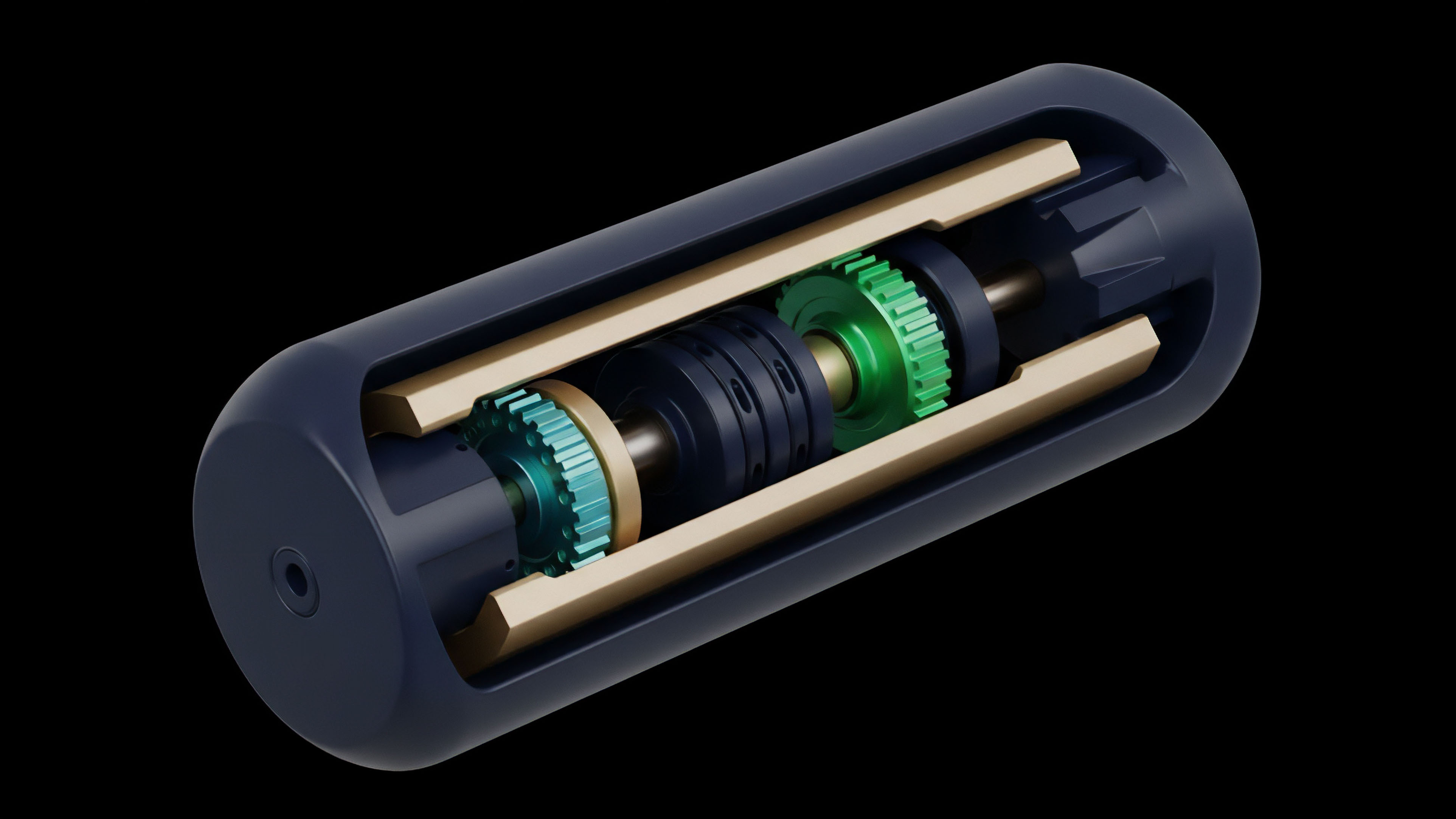
The trajectory of these systems has moved from theoretical constructs to production-ready hardware.
Early iterations suffered from high prover latency, making them unsuitable for the low-latency demands of derivative trading. The industry has responded by developing specialized hardware, including Field Programmable Gate Arrays (FPGAs) and Application Specific Integrated Circuits (ASICs), designed specifically for the modular exponentiation and multi-scalar multiplication required by proof generation.
The transition to validity-based architectures removes the withdrawal latency inherent in optimistic fraud-proof models.
This mirrors the transition in telecommunications from circuit-switched networks to packet-switched architectures, where efficiency is gained through the intelligent routing of data rather than the persistence of a physical connection.
Advancement Stages
- Interactive Phase: Required multiple rounds of communication between parties.
- Non-Interactive Phase: Enabled static proofs suitable for blockchain inclusion.
- Succinct Phase: Reduced proof size and verification time substantially.
- Hardware Phase: Utilized specialized silicon to achieve real-time proof generation.


Horizon
The future of Cryptographic Proof Systems involves the creation of global, privacy-preserving liquidity pools. Institutional participants often avoid decentralized derivative venues due to the public nature of on-chain data. By utilizing zero-knowledge architectures, these entities can satisfy regulatory reporting requirements while shielding their positions from front-running and predatory liquidations. The convergence of Asynchronous Proof Generation and cross-chain messaging will enable a unified margin engine. This allows a trader to use collateral on one network to back an option position on another, with the integrity of the entire system maintained by a continuous stream of cryptographic proofs. This interoperability will lead to a more capital-efficient market where liquidity remains unified across isolated protocols.

Glossary

Decentralized Clearing

Shielded Transactions

On-Chain Verification

Soundness Error

Zk-Rollups

Completeness Property

Financial Privacy

Range Proofs

Prover Latency