

Essence
Cryptographic validity defines the operational boundaries of this financial architecture. Every state transition within the order book requires a zero-knowledge proof to confirm adherence to margin requirements and matching logic. This shift moves the trust anchor from human institutions to mathematical verification.
Proof-Based Market Microstructure replaces institutional trust with cryptographic certainty by requiring mathematical evidence for every state transition in the trade lifecycle.
The primary function involves the generation of validity proofs that represent the integrity of the entire limit order book. Unlike centralized exchanges where the matching engine is a black box, this system provides a verifiable trail of every execution. Traders gain the ability to audit the solvency and fairness of the venue in real-time without compromising the privacy of their individual strategies.

Deterministic Execution Environments
The architecture relies on a prover-verifier model. The prover, typically the exchange operator, aggregates thousands of trades into a single batch. A succinct proof is then generated, demonstrating that all trades were executed at the correct price and that no account exceeded its leverage limits.
- Mathematical Integrity ensures that the matching engine cannot deviate from the programmed logic.
- State Transparency allows participants to verify the total open interest and collateralization levels of the platform.
- Non-Custodial Settlement prevents the exchange operator from accessing user funds without a valid cryptographic signature.


Origin
Legacy financial systems operate on a model of post-trade reconciliation. In traditional markets, the trade happens instantly, but settlement takes days as various intermediaries verify the transfer of assets. This delay creates systemic risk and requires massive capital buffers.
The first generation of decentralized finance attempted to solve this with Automated Market Makers. While these protocols provided transparency, they lacked the capital efficiency of limit order books. The need for high-performance trading without the risks of centralization led to the development of validity-based order books.

Transition from Optimistic Models
Early scaling solutions utilized optimistic assumptions, where trades were considered valid unless someone proved otherwise within a specific window. This created a withdrawal delay that hindered professional liquidity providers. The shift toward validity proofs eliminated this delay by providing immediate, undeniable evidence of correctness.
| Feature | Legacy Systems | Optimistic Models | Validity Proof Systems |
|---|---|---|---|
| Trust Model | Institutional | Game Theoretic | Cryptographic |
| Settlement Time | T+2 Days | 7 Days | Minutes |
| Capital Risk | Counterparty | Liquidity Lock | None |


Theory
The computational overhead of zero-knowledge circuits creates a new variable in the pricing of derivatives. Proving time introduces a deterministic latency that market participants must model as a liquidity tax. The Greeks, specifically Gamma and Theta, are sensitive to the frequency of proof submission.
The Greeks in a proof-based environment must account for the deterministic latency of the proving cycle which introduces a discrete jump risk between state updates.
If the proof generation interval exceeds the price discovery speed, the system experiences toxic flow from latency arbitrageurs. Quantitative models must incorporate the proving interval as a volatility multiplier. This ensures that the margin engine remains solvent even during periods of extreme market stress where the cost of generating proofs might spike.
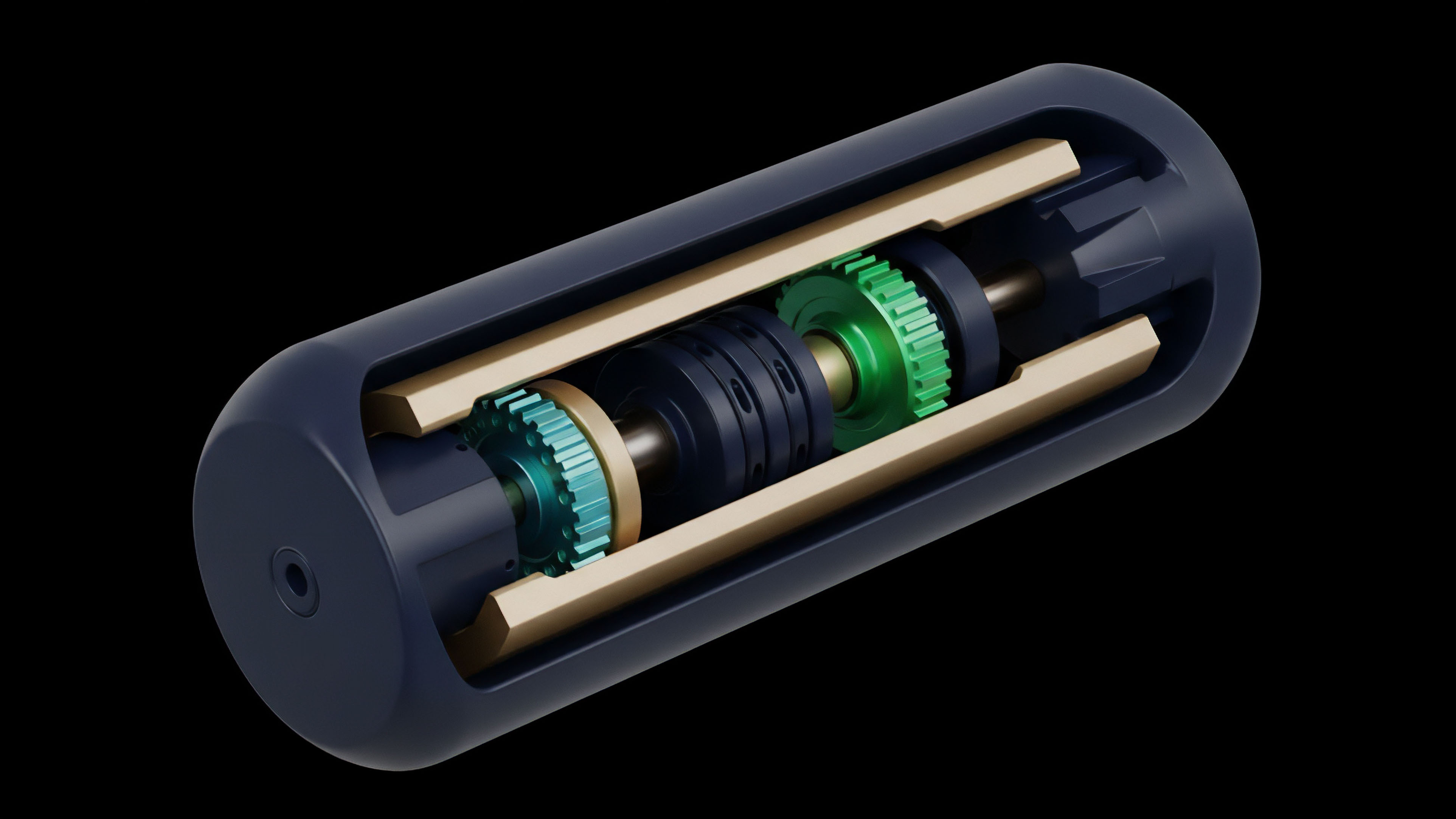
Prover Latency and Market Impact
The relationship between proof frequency and price slippage is linear. Higher proof frequency reduces the risk of stale prices but increases the operational cost for the exchange.
| Proof Frequency | Slippage Risk | Operational Cost | Capital Efficiency |
|---|---|---|---|
| High | Low | High | Maximum |
| Medium | Moderate | Moderate | Standard |
| Low | High | Low | Suboptimal |

Computational Risk Vectors
A primary risk in this architecture is the failure of the prover. If the hardware responsible for generating proofs goes offline, the market enters a state of suspended animation. Unlike a traditional server crash, the funds remain safe on the settlement layer, but liquidity is temporarily inaccessible.


Approach
Hybrid execution environments partition the trade lifecycle into off-chain matching and on-chain verification.
The matching engine handles the high-frequency requirements of order placement and cancellation, while the prover generates the evidence required for settlement. Professional traders utilize specialized APIs to interact with these systems, treating the proving interval as a fixed auction cycle. This structure allows for sub-millisecond order updates while maintaining the security of a decentralized blockchain.

Liquidity Provision Strategies
Market makers in proof-based venues adjust their quoting behavior based on the batch size of the prover. Larger batches offer lower costs but increase the time between settlement events.
- Batch-Aware Quoting involves adjusting spreads to account for the time-to-finality of the current proof cycle.
- Recursive Proof Aggregation allows multiple small proofs to be combined into a single large proof, reducing the on-chain footprint.
- Hardware Acceleration uses FPGAs and ASICs to minimize the time required to generate complex cryptographic evidence.


Evolution
The transition from simple validity proofs to recursive proof systems has significantly improved the scalability of these markets. Initially, each batch of trades required a separate proof, which was expensive and slow. Recursive proofs allow the system to prove the validity of previous proofs, creating an exponential increase in throughput.
Recursive proof structures enable the compression of infinite trade sequences into a single verifiable state update without increasing the verification cost on the settlement layer.
This progression has allowed decentralized venues to compete with centralized exchanges in terms of volume and liquidity. The focus has shifted from basic functionality to the optimization of the prover’s hardware and the reduction of the gas costs associated with proof verification.

Historical Milestones
The development of specialized circuits for financial primitives has been a major driver of adoption. These circuits are optimized for the specific math required for options pricing and margin calculations.
| Era | Technology | Primary Limitation |
|---|---|---|
| Genesis | Simple SNARKs | High Proving Time |
| Expansion | STARKs and Recursion | Large Proof Sizes |
| Current | Hardware Acceleration | Capital Fragmentation |


Horizon
Future iterations will prioritize multi-party computation and fully homomorphic encryption to create private order books. Traders will submit encrypted orders that the matching engine processes without revealing the size or price to the operator. This eliminates the risk of front-running and MEV at the architectural level.
The integration of cross-chain proof verification will allow liquidity to move seamlessly between different settlement layers. A proof generated on one network will be verified on another, creating a unified global liquidity pool that is not restricted by the boundaries of a single blockchain.

Asynchronous Settlement Layers
The shift toward asynchronous settlement will allow the matching engine to operate independently of the underlying blockchain’s block time. This decoupling is vital for achieving the speeds required for high-frequency options trading.
- Privacy-Preserving Dark Pools will use zero-knowledge proofs to hide trade details while proving solvency.
- Cross-Chain Margin Engines will allow collateral on one chain to back positions on another through validity proofs.
- Automated Regulatory Compliance will utilize proofs to demonstrate adherence to legal requirements without revealing user data.

Glossary

Zero Knowledge Proofs

Fpga Proving

Cross-Chain Settlement

Mev Resistance

Asic Proving

Off-Chain Matching

Automated Clearing

Succinct Verification

Plonky2