

Essence
Zero-Knowledge Proofs Collateral represents a fundamental architectural shift in decentralized finance, moving beyond the inherent transparency of public ledgers to enable private financial operations. The core function of Zero-Knowledge Proofs Collateral (ZKPC) is to allow a user to prove they hold sufficient assets to meet margin requirements without revealing the specific assets, amounts, or portfolio composition. This addresses a critical information asymmetry problem in decentralized derivatives markets.
In traditional, transparent DeFi protocols, market makers and sophisticated traders must expose their entire collateral position to the public chain to satisfy the protocol’s liquidation engine. This transparency allows adversarial actors to front-run trades, predict future market movements based on observed liquidity, and strategically exploit known vulnerabilities in large positions. ZKPC mitigates this information leakage, creating a more level playing field for market participants.
The systemic value of ZKPC lies in its ability to separate solvency verification from data exposure. A protocol’s smart contract requires assurance that a short options position is adequately collateralized against potential price swings. The ZK proof provides this assurance as a cryptographic statement, confirming that a specific inequality (collateral value > margin requirement) holds true, without ever revealing the underlying variables of that inequality.
This design choice directly impacts market microstructure by reducing the “information cost” associated with providing liquidity. By protecting proprietary trading strategies and inventory details, ZKPC encourages deeper liquidity pools and attracts larger institutional capital, which is otherwise hesitant to operate in fully transparent environments where alpha can be easily extracted by competitors.
Zero-Knowledge Proofs Collateral allows for the verification of solvency without exposing the specific assets or portfolio details, directly addressing the information asymmetry inherent in public ledger financial systems.


Origin
The theoretical foundation of zero-knowledge proofs dates back to the seminal 1980s paper by Goldwasser, Micali, and Rackoff, which introduced the concept of interactive proofs where a prover can convince a verifier of a statement’s truth without conveying any additional information beyond the truth of the statement itself. The transition from these theoretical interactive proofs to non-interactive proofs (NIPs) and, specifically, to practical, scalable implementations like zk-SNARKs and zk-STARKs, was essential for their application in financial systems. Early applications in crypto focused primarily on scaling solutions, where ZK rollups bundled transactions off-chain and submitted a single proof of validity on-chain, thereby reducing transaction costs.
The specific application of ZKPs to collateral management evolved from the realization that privacy-preserving scaling solutions could also be used to create privacy-preserving financial applications. Protocols began experimenting with ways to hide transaction details while still allowing for on-chain verification of specific conditions. The concept of ZKPC emerged as a natural extension of this work, moving from general transaction privacy to specific financial primitives.
This development was driven by the recognition that while full transparency works for simple lending protocols, complex derivatives markets require a more sophisticated approach to risk management. The high-stakes nature of options trading, where information about large short positions can be used to manipulate prices, made it clear that a new architectural layer was necessary to protect market participants from front-running. The integration of ZKPs into collateral management represents a shift from “privacy for scaling” to “privacy for market efficiency.”
- Foundational Cryptography: The initial work by Goldwasser, Micali, and Rackoff established the theoretical basis for zero-knowledge proofs in computer science.
- Scaling Solutions: The first practical applications in crypto focused on ZK-rollups to improve throughput and reduce transaction costs on base layers like Ethereum.
- Privacy-Preserving DeFi: The current phase applies ZKPs directly to financial primitives, enabling private transactions and, crucially, private collateral management for derivatives.


Theory
The theoretical architecture of ZKPC in derivatives markets centers on a specific cryptographic primitive known as a “proof of solvency.” The core challenge in options protocols is to ensure that the writer of an option (the short position) has sufficient collateral to cover the maximum potential loss. In a transparent system, this involves revealing the portfolio’s contents. ZKPC implements this verification via a circuit that computes a Boolean output: either true (collateral is sufficient) or false (collateral is insufficient).
The verifier receives only this output, without seeing the inputs used to calculate it. The process involves several key components: a commitment scheme, a valuation function, and a circuit that enforces the collateralization ratio. The user first commits to their portfolio state off-chain using a cryptographic commitment, such as a Merkle tree root.
The ZK circuit then takes this commitment, along with market data (like oracle prices) and the protocol’s margin requirements, to calculate the portfolio’s value and potential risk exposure. The proof generated by the circuit verifies that the portfolio value, adjusted for risk (e.g. Delta and Gamma exposures for options), exceeds the required margin.
The verifier (the options protocol’s smart contract) checks the proof’s validity without ever seeing the actual portfolio details. This mechanism fundamentally alters the liquidation process. Instead of a public check on a transparent portfolio, the protocol initiates liquidation only if the user fails to provide a valid proof of solvency when requested.
The system relies on a “liveness assumption” where users must continuously update their proofs or face default. The complexity of options pricing models, particularly the calculation of Greeks, requires highly specialized ZK circuits. These circuits must be designed to handle floating-point arithmetic or fixed-point representations, which can be computationally intensive and costly to verify on-chain.

Proof of Solvency Logic
The ZKPC logic for an options protocol requires a circuit to verify several conditions simultaneously. The circuit’s inputs include:
- Portfolio Commitment: A cryptographic representation of the user’s assets and liabilities.
- Market Data Oracles: Price feeds for the underlying assets and volatility surfaces.
- Margin Parameters: The protocol’s specific collateralization requirements (e.g. minimum margin ratio).
The circuit’s output confirms the validity of the statement: CollateralValue(Portfolio) ge MarginRequirement(Portfolio, MarketData). The complexity here is that the collateral value for an options portfolio is not static; it changes dynamically with price movements and time decay. Therefore, the proof must be generated and updated frequently to maintain accurate risk assessment.

Collateral Valuation and Risk
In options, collateral requirements are driven by the potential for adverse price movements. A ZKPC system must verify that the collateral covers the portfolio’s risk profile, often represented by the “Greeks.” The proof generation process involves calculating these risk metrics within the zero-knowledge environment. This requires a specific design where the circuit can perform complex calculations while preserving privacy.
| Risk Parameter | Description | ZKPC Challenge |
|---|---|---|
| Delta | Measures price sensitivity of the option’s value relative to the underlying asset. | Calculating Delta requires knowing the underlying asset’s price and volatility, which must be verified within the circuit. |
| Gamma | Measures the rate of change of Delta. Crucial for dynamic hedging strategies. | High-frequency Gamma calculation in a ZK circuit adds significant computational overhead. |
| Theta | Measures time decay. The option loses value as time passes. | The circuit must account for the passage of time and update collateral requirements accordingly. |
This complexity means that ZKPC implementations often focus on a specific set of financial instruments to optimize the circuit design. The cost of generating a proof for a complex portfolio with multiple options and hedging positions can be substantial, leading to trade-offs in implementation design.
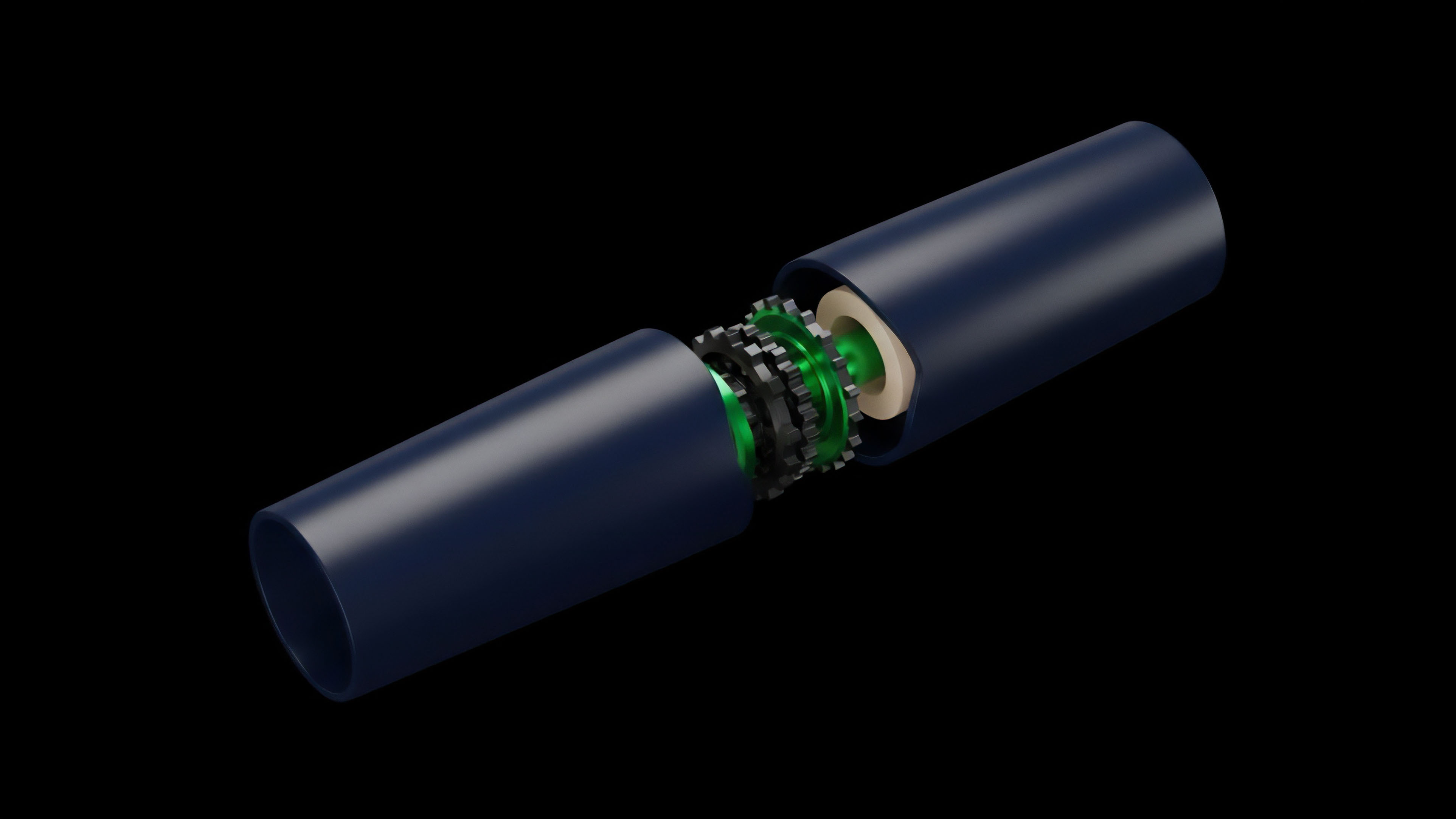
The implementation of ZKPC for options requires complex cryptographic circuits that calculate portfolio risk metrics, such as Delta and Gamma, while keeping the specific asset positions hidden from the public verifier.

Approach
Current implementations of ZKPC for options protocols generally follow two distinct architectural patterns: fully on-chain verification and hybrid off-chain generation with on-chain verification. The choice between these two approaches determines the trade-off between cost, latency, and trust assumptions. In a fully on-chain model, the entire ZK proof generation and verification process occurs on the blockchain.
While this offers the highest level of trustlessness, the computational cost associated with verifying complex proofs on a layer-1 blockchain can be prohibitive for high-frequency trading. The gas fees for verification often outweigh the benefits for all but the largest transactions. This approach struggles with scalability for derivatives, which require frequent collateral re-evaluations due to dynamic market conditions.
The more common approach involves a hybrid model where the computationally intensive proof generation is performed off-chain by the user or a dedicated prover network. The resulting proof is then submitted to the on-chain smart contract for verification. This model significantly reduces on-chain costs but introduces new considerations regarding latency and potential centralization risks.
The prover network must be fast enough to keep up with market changes, ensuring that collateral requirements are met in near real-time. The practical application of ZKPC requires a careful selection of the underlying proof system. For options, where calculations are complex and require high precision, zk-STARKs offer a compelling alternative to zk-SNARKs.
STARKs generally have larger proof sizes but are more computationally efficient to generate and do not require a trusted setup, which is a significant advantage for a system dealing with financial assets.

Implementation Considerations
- Proof Generation Latency: The time required for a user to generate a new proof of solvency. In fast-moving options markets, a delay of even a few seconds can lead to significant risk exposure.
- Verifier Cost: The gas cost associated with verifying the proof on-chain. This cost must be low enough to make ZKPC economically viable for retail traders and market makers.
- Oracle Integration: The method by which market data (prices, volatility) is fed into the ZK circuit. The integrity of the proof relies entirely on the integrity of the data inputs.
The integration of ZKPC with options protocols requires a re-architecture of the traditional liquidation engine. Instead of a simple check of on-chain collateral, the system must handle the complexity of proof validation. This involves a shift in how risk is assessed, moving from direct observation to cryptographic assurance.
The trade-off between on-chain verification costs and off-chain generation latency determines the viability of ZKPC for high-frequency derivatives trading, favoring hybrid architectures for most practical applications.


Evolution
The evolution of ZKPC in crypto derivatives markets has primarily focused on reducing information leakage and enhancing capital efficiency for market makers. The initial, fully transparent derivatives protocols faced significant challenges in attracting institutional liquidity. Market makers operating in these environments quickly realized that their strategies were vulnerable to front-running by sophisticated bots that could observe large collateral deposits or withdrawals.
This information leakage created an adverse selection problem, where high-frequency traders could profit at the expense of liquidity providers. ZKPC directly addresses this issue by shielding the market maker’s inventory and risk exposure. This allows for a more robust form of liquidity provision.
By preventing competitors from reverse-engineering a market maker’s positions, ZKPC reduces the risk of strategic exploitation and encourages larger capital deployment. This leads to a virtuous cycle where increased liquidity results in tighter spreads and more efficient pricing for all participants. Furthermore, ZKPC enables new forms of risk management and capital utilization.
In traditional transparent systems, collateral is often siloed within a single protocol. ZKPC allows for the possibility of cross-protocol collateralization. A user could prove they hold sufficient collateral in one protocol without having to physically transfer those assets to another.
This composability enhances capital efficiency significantly, allowing a single pool of assets to back positions across multiple decentralized applications.

Impact on Market Microstructure
The shift to private collateral changes the game theory of market participation.
- Reduced Front-Running: Market makers can update their collateral and adjust positions without broadcasting their intent to the public.
- Incentivized Liquidity: By protecting proprietary strategies, ZKPC attracts larger, more sophisticated market makers who demand information privacy.
- Improved Capital Efficiency: The ability to prove collateral without transferring assets allows for more flexible risk management across different protocols.
This architectural change moves decentralized markets closer to the operational characteristics of traditional financial systems, where market participants rely on private information and robust risk models. The ability to maintain a private balance sheet while proving solvency to a public protocol is a key step toward institutional adoption.
The transition from transparent to private collateral management via ZKPC fundamentally alters market microstructure by reducing front-running and creating stronger incentives for sophisticated liquidity providers.


Horizon
Looking ahead, the horizon for ZKPC extends beyond individual protocol implementations to encompass a new paradigm for cross-chain and institutional finance. The current challenge for ZKPC is to move from single-protocol solutions to a generalized framework that can be applied across different blockchains. This involves creating a standard for ZK proofs of collateral that can be verified by smart contracts on multiple chains.
A key development on the horizon is the integration of ZKPC with regulatory compliance requirements. While ZKPs are often associated with anonymity, they can also be used to enforce “selective disclosure.” A user could generate a proof that demonstrates compliance with KYC/AML regulations to a specific verifier without revealing their identity to the public ledger. This creates a pathway for institutional adoption, allowing large financial entities to participate in decentralized derivatives markets while adhering to existing regulatory frameworks.
The future of ZKPC also includes the development of more complex financial instruments. With private collateral, protocols can explore options with more intricate payoffs, such as exotic options, which are currently impractical in transparent DeFi due to the high risk of information leakage. The ability to manage complex risk privately unlocks new avenues for financial engineering and risk transfer.

Future Developments in ZKPC
| Area of Innovation | Impact on Options Markets | Key Challenge |
|---|---|---|
| Cross-Chain Collateralization | Allows a single collateral pool on Chain A to secure positions on Chain B, improving capital efficiency. | Developing secure and efficient cross-chain communication protocols for proof verification. |
| Regulatory Compliance Integration | Enables institutions to prove compliance (e.g. accreditation status) without revealing personal identity. | Standardizing ZK circuits for diverse and changing regulatory requirements. |
| Advanced Risk Modeling | Allows for the creation of exotic options and structured products with private collateral requirements. | Designing efficient ZK circuits capable of verifying complex, non-linear pricing models. |
The ultimate goal is to create a fully private and composable financial layer where risk management and capital allocation are optimized without sacrificing security. ZKPC is a necessary step in building a truly resilient and scalable decentralized financial system that can compete with traditional markets in terms of efficiency and information protection.

Glossary

Proof Generation Latency

Blockchain State Proofs

Defi Architecture

Asset Proofs of Reserve

Zero Knowledge Liquidation

Zero-Knowledge Proof Applications

Proof Generation

Collateral Transfer Cost

Risk-Weighted Collateral Framework