
Essence
The true challenge in decentralized finance is not censorship resistance, but information asymmetry at the protocol level. Zero-Knowledge Position Disclosure Minimization (ZK-PDM) represents a fundamental architectural shift, moving the visibility of a trader’s entire options book from the public ledger to a private, cryptographically attested state. This is a direct response to the front-running and adverse selection inherent in transparent, open-book decentralized exchanges.
ZK-PDM ensures that a market participant can hold a complex options portfolio ⎊ long calls, short puts, various spreads ⎊ without revealing the composition, size, or delta-hedge of that portfolio to any other party, including the protocol itself, while still proving solvency and collateral sufficiency.
The core function of ZK-PDM is to separate the proof of capital adequacy from the data of position specifics. The system proves the financial statement ⎊ specifically, that the margin account can cover the maximum potential loss under defined stress scenarios ⎊ without ever revealing the underlying assets or liabilities that comprise that statement. This separation is achieved through a delicate cryptographic dance, where the option contract parameters are essentially commitments hidden behind a verifiable computation.
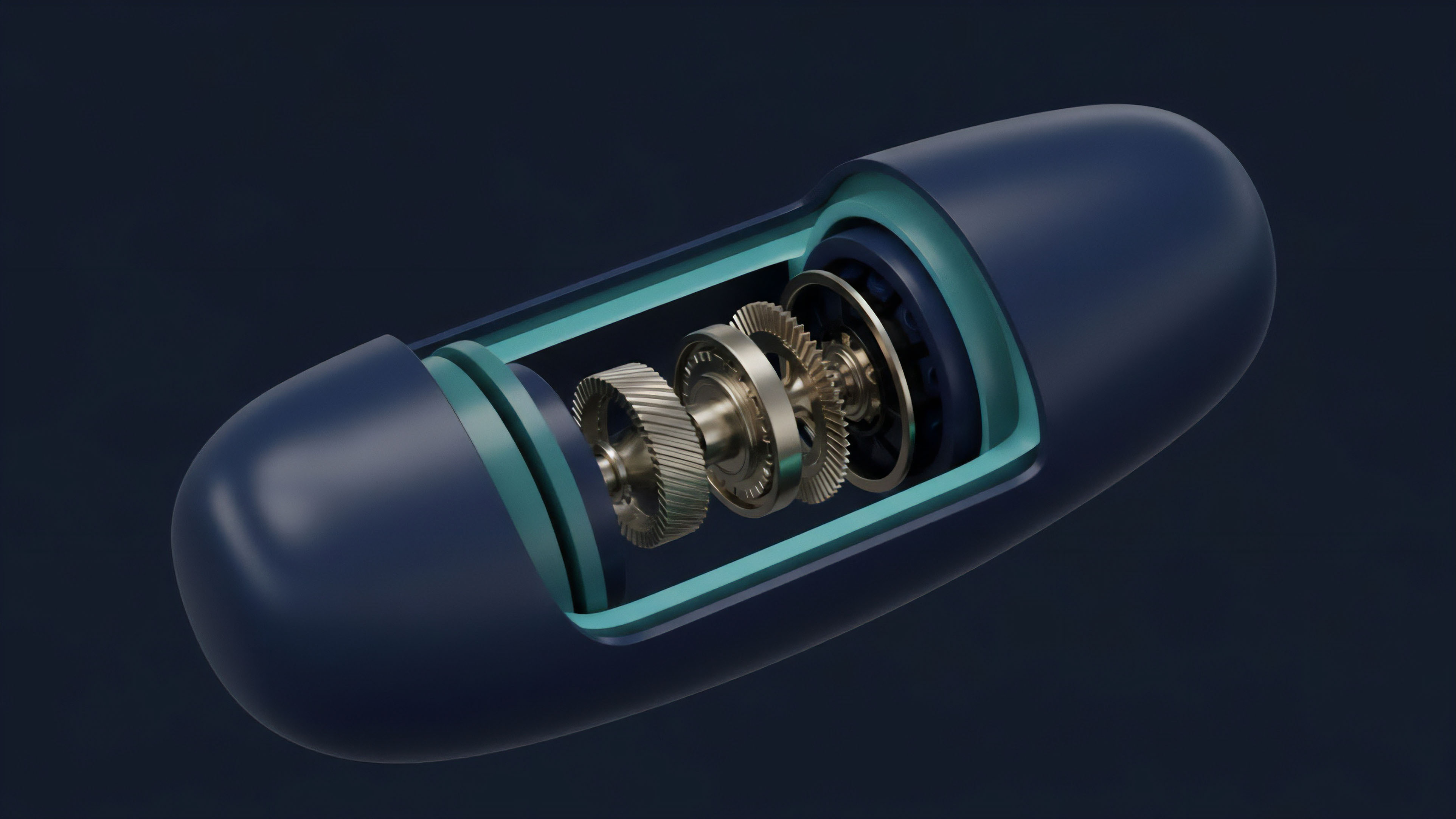
Zero-Knowledge Position Disclosure Minimization fundamentally re-architects market transparency, allowing a trader to prove financial compliance without disclosing strategic position data.
Originating from the theoretical intersection of advanced cryptography and quantitative finance, ZK-PDM’s conceptual roots lie in the desire to replicate the privacy of an Over-The-Counter (OTC) trade within the auditable environment of a smart contract. The concept takes inspiration from the foundational Zcash protocol’s use of ZK-SNARKs for shielded transactions, but extends this application from simple value transfer to the much more complex domain of derivative liability and risk management. This progression from confidential transfers to confidential state computation marks a maturation in the application of Zero-Knowledge technology within the financial operating system.


Origin
The concept’s genesis is rooted in the structural flaws of early DeFi options protocols. When every margin account, every option strike, and every collateral movement is publicly visible on a block explorer, professional market makers face an untenable systemic risk. Their alpha ⎊ the unique knowledge derived from their position and order flow ⎊ becomes instantly public information, ripe for exploitation by sophisticated bots and adversarial participants.
This is a fundamental violation of the competitive equilibrium that sustains deep, liquid markets.

The Problem of Public Order Flow
In traditional finance, position privacy is assumed; the clearinghouse sees the full book, but individual traders do not see each other’s. Early decentralized options protocols inverted this, making the clearinghouse (the blockchain) public, thus revealing all strategic information. This public disclosure of implied volatility surfaces, skew positioning, and large directional bets leads to adverse selection, where the market maker is systematically picked off by actors with full visibility into their risk exposures.
The high capital cost associated with this risk premium severely hindered institutional participation.
The push for ZK-PDM began as an academic response to this market microstructure problem. The realization was that a decentralized clearinghouse required a proof of solvency, not a public ledger of positions. The intellectual groundwork was laid by cryptographic research extending the functionality of ZK-SNARKs from simple membership proofs to complex polynomial commitments required for verifying option pricing and risk parameters like the Greeks ⎊ specifically, delta and gamma exposure ⎊ without revealing the input variables.


Theory
The analytical rigor behind ZK-PDM rests on a synthesis of advanced quantitative finance and pairing-based cryptography. We are dealing with a verifiable computation over encrypted data, where the core assertion is that the trader’s net liability, derived from the Black-Scholes or a comparable model, remains below their collateral threshold. This involves two distinct, but connected, cryptographic layers.

Cryptographic Liability Proofs
The system relies on a committed value representing the net portfolio liability. The commitment is a hash of the option position data, the pricing oracle’s input, and the collateral balance. The resulting Zero-Knowledge Proof (ZKP) verifies a series of polynomial constraints:
- Pricing Function Verification: The ZKP proves that the options were priced correctly according to the protocol’s mandated pricing function (e.g. a variant of Black-Scholes-Merton or a binomial model) using the committed, but hidden, strike price, time to expiry, and implied volatility.
- Margin Sufficiency Constraint: The ZKP proves the inequality Collateral ≥ sum (Position × MaxLossScenario), where the specific values for Position and Max_Loss_Scenario are kept private. This is a proof of a numerical constraint, not a disclosure of the numbers themselves.
- Position Consistency: The proof attests that the same hidden position parameters were used consistently across the pricing, risk calculation, and collateral verification steps, preventing malicious manipulation of inputs between calculations.
The ZK-PDM architecture transforms the audit from a data inspection to a proof verification, asserting financial compliance through cryptographic commitment.
This is where the pricing model becomes truly elegant ⎊ and dangerous if ignored. The ZKP circuit must be meticulously designed to handle floating-point arithmetic or high-precision fixed-point representations for the Greeks, which is computationally expensive. The choice of the ZK-scheme ⎊ SNARKs for their concise proof size or STARKs for their post-quantum resistance ⎊ introduces a critical trade-off between on-chain verification cost and long-term security assurance.
Our inability to respect the complexity of the underlying pricing function in the ZK-circuit is the critical flaw in our current model implementations.

Impact on Greeks and Risk Management
The application of ZK-PDM significantly alters the dynamics of portfolio hedging. A market maker’s Delta and Gamma exposure, which dictate their systematic risk, remain private. This privacy is the core competitive advantage.
| Risk Parameter | Public Ledger Systems | ZK-PDM Systems |
|---|---|---|
| Position Size Disclosure | Full and Immediate | Zero Disclosure via ZKP |
| Delta Hedging Visibility | Predictable, Prone to Front-Running | Unpredictable, Cryptographically Shielded |
| Liquidation Threshold Trigger | Publicly Observable Margin Ratio | Private Ratio, Publicly Verified ZKP Failure |
| Capital Efficiency | Lower (High Adverse Selection Risk) | Higher (Low Adverse Selection Risk) |
The liquidation mechanism is triggered not by a direct calculation on public numbers, but by the failure of the periodic ZKP to validate the margin sufficiency constraint. This moves the liquidation event from a public, pre-emptive signal to a private, immediate action, mitigating the liquidation cascade risk often seen in transparent DeFi protocols.


Approach
The current implementation approach for ZK-PDM involves a dedicated Layer 2 architecture, typically a ZK-Rollup, specifically optimized for financial operations. This is not a task for a simple smart contract; it requires a specialized execution environment capable of generating complex proofs efficiently.

Architecture of Private Position Management
The architecture centers around a state machine that updates the hidden option positions. A trader submits a transaction, which includes the encrypted trade details and a ZKP proving that the trade is valid according to the protocol’s rules ⎊ for example, that the strike price is within bounds and the required premium is covered. The core components of this operational structure are as follows:
- The Commitment Layer: Every position, collateral amount, and liability is committed to a Merkle tree, with the root of the tree being the only public element on Layer 1. This root is the cryptographic anchor for the entire private state.
- The Proving Circuit (The ZK Engine): This off-chain computational environment generates the proofs. It is a highly optimized environment, often written in specialized languages like Circom or Cairo, where the complexity of the options pricing models is translated into arithmetic circuits.
- The Verifier Contract: This is the small, highly secure smart contract on Layer 1 that only checks the validity of the ZKP. It verifies the cryptographic integrity of the proof against the public commitment root, consuming minimal gas and ensuring the entire private state transition is valid without ever seeing the state itself.
This approach ensures that the “Protocol Physics” of the system ⎊ the rules governing settlement and risk ⎊ are enforced by the ZK-proof, making the system auditable by verification, not by observation. The entire process of trade execution, position adjustment, and margin update is bundled into a single ZKP, which is then submitted to the verifier contract.

Trade-Offs in ZK-PDM Implementation
The choice of cryptographic primitive directly impacts the system’s operational viability. The trade-off is a classic one between proof size, proving time, and trust assumptions.
| Feature | ZK-SNARKs (e.g. Groth16) | ZK-STARKs (e.g. FRI) |
|---|---|---|
| Proof Size | Very Small (Constant Size) | Large (Logarithmic in Computation) |
| Proving Time | Fast (Requires Trusted Setup) | Slower (No Trusted Setup) |
| Post-Quantum Security | None | Yes |
| Practical Options Use | Dominant for Lower Latency | Emerging for High-Security Requirements |
Market makers, valuing speed and low verification cost, currently lean toward SNARK-based systems, accepting the trust assumption of a secure setup ceremony in exchange for lower latency. This pragmatic choice highlights the Strategic Architect’s focus on capital efficiency and immediate market viability over purely theoretical security ideals.


Evolution
The progression of ZK-PDM has moved from simple confidential transactions to fully private, composable financial primitives. Initially, protocols struggled with the fundamental problem of how to handle liquidations privately. If the liquidation logic requires revealing the position to the liquidator, the privacy goal is defeated.

From Confidentiality to Conditional Privacy
The early models only offered “confidentiality” for the trade amount, but the existence of a trade was still public. The true evolution to Position Disclosure Minimization involved the creation of specialized ZK circuits that handle the entire lifecycle of an option. The breakthrough came with the concept of “conditional disclosure,” where the position data is only revealed to a pre-authorized party ⎊ the liquidator ⎊ only upon the failure of the ZKP solvency check.
This moves the system from a fully public-to-private model to a public-to-private-to-selective disclosure model.
This evolution is a direct reflection of Behavioral Game Theory in adversarial environments. The system must be designed to minimize the financial incentive for a malicious actor to spend vast resources attempting to break the ZK-proof. By making the liquidation event immediate and non-exploitable ⎊ the liquidator simply executes a pre-signed, private transaction based on the ZKP failure ⎊ the financial reward for front-running the liquidation is removed.
The shift to conditional disclosure upon ZKP failure transforms liquidation from a market-signaling event to a purely mechanical, private enforcement of collateral requirements.
A significant challenge remains in the calculation of Value at Risk (VaR) within the ZK-circuit. VaR calculations are highly complex, often involving Monte Carlo simulations or historical data lookbacks. Integrating this level of computational complexity into a practical ZK-proof remains an active area of research.
Current implementations use simplified, deterministic margin models that can be efficiently expressed as arithmetic circuits, accepting a temporary loss of quantitative precision for operational speed. This compromise is a strategic choice, a bet that the market will reward low-latency privacy more than perfect risk modeling.


Horizon
The future of ZK-PDM is not just about hiding positions; it is about building the infrastructure for a truly anonymous, yet solvent, global options market. The next phase involves ZK-Composability and the elimination of the current deterministic margin models in favor of verifiable stochastic models.

Verifiable Stochastic Margin
The current reliance on simplified, deterministic margin rules is a major limitation. The horizon involves developing ZK-circuits capable of verifying the output of a Stochastic Volatility Model or a Monte Carlo Simulation using a Verifiable Delay Function (VDF) to ensure the random seed used in the simulation is genuinely unpredictable. This allows the protocol to move beyond simplistic stress tests and toward a dynamic, risk-sensitive margin system that mirrors the complexity of traditional financial institutions, all while maintaining privacy.
The final goal is a system where the ZKP is not just a proof of solvency, but a proof of optimal risk management. This necessitates a protocol that can privately attest to its Macro-Crypto Correlation exposure ⎊ for example, proving that the portfolio’s net delta exposure to the total crypto market cap remains below a systemic threshold. This capability will be the foundation for the next generation of decentralized credit default swaps and structured products, enabling sophisticated systemic risk management.
The most pressing challenge lies in regulatory arbitrage. As ZK-PDM protocols mature, their privacy features will attract institutional capital seeking to avoid the public scrutiny of on-chain trading. This will inevitably force a reckoning with global regulators who demand surveillance capability.
The architectural choice of ZK-SNARKs or ZK-STARKs is no longer just a technical one; it becomes a political and legal one, determining the protocol’s jurisdictional viability. The next iteration of ZK-PDM may incorporate a “regulator key” or a “selective disclosure proof” that only unlocks position data to a verified regulatory authority under specific, court-ordered conditions, thereby building a bridge between the decentralized ideal and the reality of global financial law.
Glossary

Zero Knowledge Regulatory Reporting

Zero-Knowledge Execution

Option Writing Strategies

Position Notional Value

Non-Interactive Zero-Knowledge Arguments

Option Sellers

American Option Exercise Friction

Zero-Knowledge Proof Implementations

Verifier Contract