

Essence
Scaling solutions are the architectural layer required to move decentralized options from theoretical possibility to practical financial instrument. The core challenge in decentralized finance (DeFi) options is the high cost of on-chain computation. Traditional options pricing models rely on constant rebalancing, risk management, and dynamic margin calculations.
Executing these operations on a Layer 1 (L1) blockchain like Ethereum Mainnet incurs prohibitive gas fees, making high-frequency trading, tight bid-ask spreads, and efficient liquidations financially unviable. Scaling solutions address this constraint by offloading computation from the L1 to a secondary environment. This shift enables protocols to process a significantly higher volume of transactions at a fraction of the cost, fundamentally altering the economics of options trading.
For market makers, this means the cost of rebalancing a delta hedge or adjusting risk parameters drops from potentially hundreds of dollars to pennies. This change in market microstructure allows for a level of capital efficiency previously restricted to centralized exchanges.
Scaling solutions are the critical infrastructure that allows decentralized options protocols to achieve the necessary throughput and capital efficiency for competitive market operations.
Without scaling solutions, decentralized options protocols are confined to either low-frequency, illiquid markets or a structure where options are primarily settled off-chain, compromising the core principle of trustless verification. The move to Layer 2 (L2) and beyond is not merely an optimization; it is a prerequisite for a robust and liquid options ecosystem capable of competing with traditional finance counterparts. The underlying financial principle is that lower transaction costs directly translate to tighter spreads and higher liquidity, as market makers can operate profitably with smaller margins.


Origin
The necessity for scaling solutions emerged directly from the initial design constraints of early blockchain networks. The Ethereum network, in particular, prioritized security and decentralization over raw transaction throughput, a design choice that led to significant network congestion during periods of high demand. Early attempts to build derivatives protocols on L1 quickly exposed this bottleneck.
The cost of minting an option, executing a trade, or performing a liquidation often exceeded the premium or profit from the trade itself. Initial attempts to solve this problem involved sidechains, such as Polygon, which offered high throughput by running parallel to the L1. However, sidechains often make security trade-offs, relying on their own validator sets rather than inheriting the full security of the underlying L1.
This created a new risk vector for derivatives protocols, where the security of user funds depended on the integrity of a separate, less decentralized network. The true breakthrough came with the development of rollups, which fundamentally changed the scaling paradigm. Rollups process transactions off-chain but post compressed transaction data back to the L1.
This allows them to inherit the security guarantees of the L1 while providing vastly superior throughput. This innovation marked a shift from scaling by sacrificing security to scaling by abstracting computation. This new architecture created the first viable pathway for complex financial instruments, including options, to operate on a decentralized, high-speed basis.


Theory
The theoretical underpinnings of scaling solutions for options protocols center on the trade-off between latency and computational overhead, specifically comparing optimistic and zero-knowledge (ZK) rollup architectures.

Optimistic Rollups and Settlement Latency
Optimistic rollups operate on the assumption that all transactions are valid unless proven otherwise. They achieve efficiency by allowing a period ⎊ typically seven days ⎊ during which a “fraud proof” can be submitted to challenge an invalid state transition. This approach significantly reduces computational costs on the L1, as only invalid transactions require expensive on-chain verification.
However, this architecture introduces significant latency for derivatives. The seven-day challenge period creates a capital lockup cost for users attempting to withdraw funds back to the L1. From a risk management perspective, this latency complicates options pricing models.
Market makers must account for the possibility of a large price swing during the withdrawal period, increasing the capital required to maintain a position. The capital lockup cost and settlement latency in optimistic rollups necessitate higher collateralization ratios for options protocols to remain solvent, which reduces capital efficiency compared to a system with instantaneous finality.

ZK-Rollups and Instant Validity
ZK-rollups offer a different theoretical approach. They generate cryptographic validity proofs for every transaction batch processed off-chain. These proofs are then verified on the L1, confirming the correctness of the state transition without revealing the underlying transaction data.
The verification process is computationally intensive but results in near-instant finality. For options protocols, ZK-rollups eliminate the settlement latency inherent in optimistic designs. This allows for significantly tighter margin requirements and faster liquidation mechanisms.
A protocol built on a ZK-rollup can maintain a lower collateralization ratio because there is no risk of a price movement during a prolonged withdrawal period. The instantaneous validity proof enables a more accurate, real-time calculation of risk parameters and PnL, allowing market makers to operate with greater confidence and efficiency. The primary theoretical trade-off for ZK-rollups is the higher computational cost associated with generating the proofs themselves, which can impact the overall throughput depending on the specific implementation.


Approach
The implementation of scaling solutions in decentralized options protocols follows distinct architectural patterns driven by the specific needs of derivatives trading. The primary goal is to optimize for capital efficiency and low latency execution, which dictates the choice between general-purpose L2s and application-specific chains.

General-Purpose L2 Deployment
Many options protocols initially deploy on general-purpose L2s like Arbitrum or Optimism. This approach offers a large user base and shared liquidity from other DeFi protocols. The primary challenge here is managing the shared resources of the L2.
When network usage spikes, transaction fees can still rise, impacting the profitability of options strategies that require frequent rebalancing. Protocols mitigate this by designing specific mechanisms for liquidation and margin maintenance that minimize on-chain interactions. Liquidity Provision on L2s: Market makers utilize automated market makers (AMMs) or order book models tailored for the L2 environment.
The lower transaction costs allow for more complex AMM curves and dynamic adjustments to volatility parameters. Risk Management: Protocols implement off-chain or hybrid liquidation systems. When a user’s collateral ratio drops below a threshold, a bot monitors the position off-chain and executes the liquidation on-chain only when necessary, minimizing gas costs.
Application-Specific Chains (Appchains)
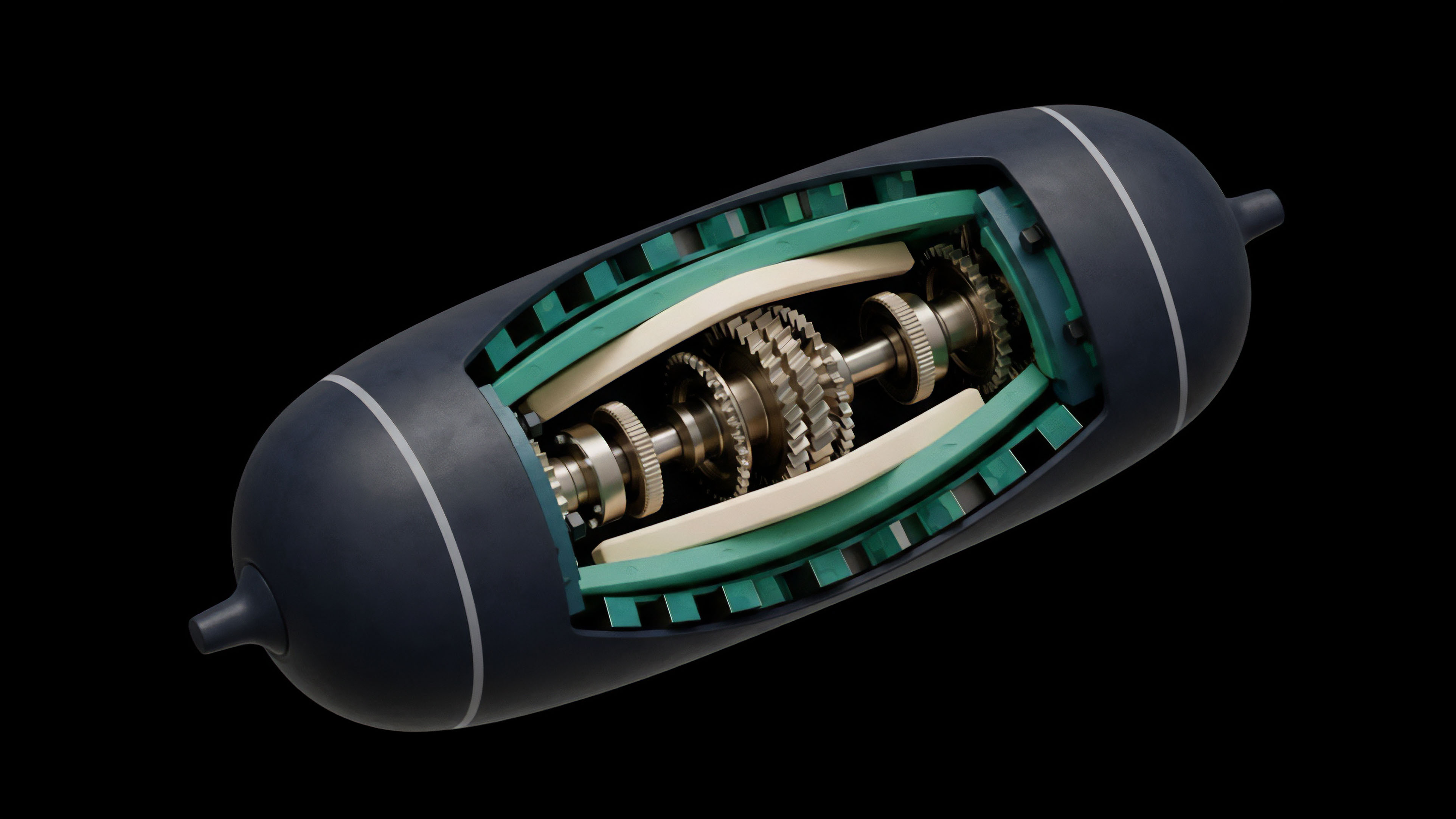
A more advanced approach involves creating a dedicated blockchain, or appchain, specifically for the derivatives protocol. This allows the protocol to control all parameters of the network, including transaction fees, block time, and validation logic.
| Feature | General-Purpose L2 | Application-Specific Chain (Appchain) |
|---|---|---|
| Cost Model | Variable gas fees; shared resource contention. | Predictable or fixed fees; dedicated resources. |
| Liquidity | Shared liquidity with other protocols. | Isolated liquidity; requires specific incentives. |
| Customization | Limited customization of network logic. | Full customization of validation and settlement logic. |
| Security Model | Inherits L1 security via rollup mechanism. | Inherits L1 security via rollup or requires custom security model (e.g. Cosmos SDK). |
This specialized architecture enables a level of performance required for high-frequency trading. Protocols like dYdX have adopted this model, moving from an L2 rollup to a standalone chain. The trade-off is that an appchain must bootstrap its own liquidity and user base, but the performance gains for complex options trading are substantial.


Evolution
The evolution of scaling solutions for derivatives protocols tracks a path from simple L1 optimization to highly specialized, multi-layered architectures. The initial phase focused on optimizing L1 smart contracts to reduce gas usage, but this quickly reached its limits. The second phase involved the migration to general-purpose L2s, where protocols could benefit from shared liquidity and lower transaction costs.
This allowed for the first generation of functional, capital-efficient decentralized options. The current evolution is marked by a trend toward specialization. As derivatives protocols gain traction, they are finding that general-purpose L2s, while efficient, still impose constraints.
The shared block space creates congestion risk, where a spike in activity from a different application can increase fees for derivatives traders. The solution to this has been the rise of appchains and Layer 3 (L3) architectures.
The move toward application-specific scaling solutions demonstrates a growing understanding that derivatives protocols require dedicated resources to achieve high-frequency trading performance.
The L3 architecture, built on top of an L2, offers a path for a protocol to customize its environment even further. This allows for specific features like custom data availability layers or specialized pre-compiles for options calculations. The design philosophy has shifted from “where can we fit on Ethereum?” to “how can we design an entire network around the needs of a specific financial instrument?” This specialization allows for a more robust risk engine and a more efficient liquidation process. The market is moving toward a future where a single L2 or L3 handles all derivatives for an entire ecosystem, creating a dedicated liquidity hub.


Horizon
Looking ahead, the horizon for scaling solutions in derivatives markets points toward a complete re-architecture of decentralized financial systems. The current L2 landscape, while effective, still struggles with liquidity fragmentation. The future likely involves L2s and L3s becoming interconnected liquidity hubs, where options protocols can access collateral and liquidity from multiple chains without needing to bridge assets back to L1. This cross-chain liquidity will enable truly global options markets. We anticipate a future where a significant portion of traditional financial options volume moves to these high-performance, decentralized environments. The key advantage of a decentralized system is its transparency and permissionless nature. Scaling solutions provide the necessary speed and cost structure to make this vision practical. This will lead to the creation of novel financial products, such as options on real-world assets (RWAs) or highly specific, customized derivative products that cannot be offered on centralized exchanges due to regulatory or technical limitations. The ultimate goal of scaling solutions for derivatives is to create a market where the cost of a transaction approaches zero, allowing for near-continuous rebalancing and dynamic risk management. This will fundamentally change how options are priced and traded, enabling strategies that are currently only theoretical. The future architecture will prioritize seamless integration between L2s, L3s, and L1s, creating a unified financial operating system where options are a core, low-cost primitive.

Glossary

Cryptographic Solutions for Privacy

Starknet

Layer 2 Solutions Integration

Blockchain Infrastructure Development and Scaling in Defi

Scalability Solutions for Hedging

Closed-Form Pricing Solutions

Data Availability Challenges and Solutions

Risk Transfer Solutions

Defi Risk Solutions