Essence
Systemic resilience in high-velocity derivative markets depends on the isolation of risk vectors through sovereign computation. Private Margin Engines represent the transition from shared, monolithic collateral pools to granular, user-specific risk environments. These systems function as autonomous gatekeepers of solvency, executing complex valuation logic without exposing sensitive trade data to the broader network.
By siloing counterparty exposure within encrypted computational environments, these engines prevent the socialized losses common in early decentralized exchanges. The primary function of these engines involves the continuous monitoring of net equity against maintenance requirements. Unlike public pools where every participant shares the same liquidation threshold, Private Margin Engines allow for bespoke risk parameters tailored to specific asset classes or participant profiles.
This architecture ensures that a failure in one sub-account does not propagate across the entire protocol, maintaining the integrity of the wider financial system during periods of extreme price dislocation.
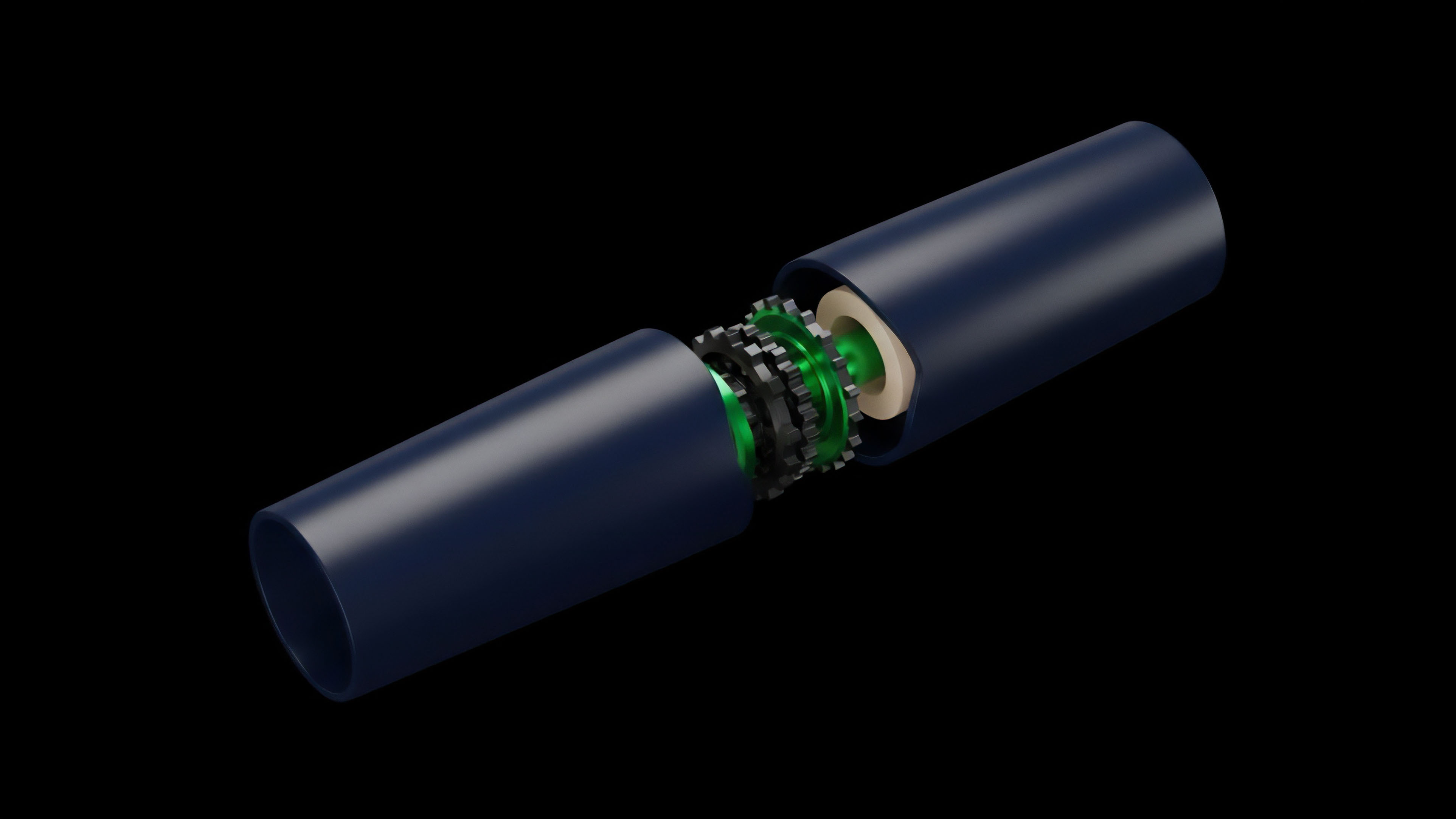
Sovereign risk engines mitigate systemic contagion by siloing counterparty exposure within encrypted computational environments.

Sovereign Risk Management
The architecture prioritizes the security of the individual participant while maintaining the solvency of the platform. By utilizing isolated execution environments, Private Margin Engines calculate real-time Greeks ⎊ Delta, Gamma, Vega, and Theta ⎊ to determine the probability of account insolvency. This shift from static collateralization to risk-based assessment allows for higher capital efficiency without increasing the probability of a ruinous event.

Data Privacy and Execution
Privacy in margin calculation is not a luxury; it is a requisite for institutional participation. These engines ensure that proprietary trading strategies remain confidential by processing margin checks in off-chain environments or via zero-knowledge proofs. This prevents predatory front-running by liquidators who might otherwise monitor public on-chain data to anticipate forced exits.


Origin
The necessity for specialized risk logic appeared during the transition from simple spot trading to sophisticated derivative structures in the digital asset sector.
Early platforms relied on crude initial margin requirements that failed to account for the non-linear risks inherent in options. As professional market makers entered the space, the demand for cross-margining and risk-based offsets led to the development of Private Margin Engines. These systems draw their lineage from traditional prime brokerage risk models, such as SPAN (Standard Portfolio Analysis of Risk).
However, the 24/7 nature of crypto markets and the absence of a central clearinghouse necessitated a more automated, programmatic solution. The failure of several high-profile protocols during volatility spikes highlighted the dangers of socialized risk, driving the move toward isolated, private computation.
| Era | Margin Model | Risk Distribution |
|---|---|---|
| Early Crypto | Fixed Percentage | Socialized Losses |
| Professional Shift | Cross-Margining | Insurance Fund Reliance |
| Modern Institutional | Private Margin Engines | Siloed Counterparty Risk |

From Socialized to Isolated Risk
The evolution was driven by the realization that collective insurance funds are often insufficient during black swan events. Private Margin Engines were designed to replace these fragile safety nets with robust, individualized risk barriers. This allowed platforms to offer more competitive gearing while ensuring that the cost of failure is borne only by the participant taking the risk.


Theory
The theoretical framework of Private Margin Engines rests on the rigorous application of Value at Risk (VaR) and Expected Shortfall (ES) within a multi-dimensional risk space.
These engines do not simply look at the current price of an asset; they simulate thousands of potential market paths to determine the likelihood of an account falling below its maintenance requirement. This probabilistic approach is vital for managing the convexity of option portfolios.

Risk-Based Margin Logic
The engine calculates the total risk of a portfolio by aggregating the sensitivities of all positions. For instance, a delta-neutral strategy with high negative gamma requires a different margin profile than a simple long position. Private Margin Engines use sophisticated algorithms to align collateral requirements with the actual tail risk of the portfolio.
- Delta Sensitivity: Adjusting collateral based on the directional exposure of the net position.
- Gamma Convexity: Accounting for the rate of change in delta, which can lead to rapid equity depletion.
- Vega Exposure: Monitoring the impact of volatility shifts on the total value of the option holdings.
- Theta Decay: Factoring in the time-value erosion of long options as a drain on available margin.
The transition from static collateral requirements to dynamic risk-based assessments marks the professionalization of decentralized liquidity.

Adversarial System Design
In an environment where code is the ultimate arbiter, Private Margin Engines must be designed to withstand adversarial market behavior. This includes protection against oracle manipulation and flash loan attacks that seek to artificially trigger liquidations. The engine operates as a closed-loop system, verifying the validity of price inputs before executing any margin calls.


Approach
Current implementation of Private Margin Engines involves a hybrid model where risk calculation occurs in high-speed, off-chain environments, while the final settlement and collateral locking remain on-chain.
This method balances the need for low-latency risk checks with the security of decentralized settlement. Professional trading venues use these engines to provide sub-millisecond margin verification for high-frequency strategies.

Hybrid Computational Models
By moving the heavy lifting of risk simulation off-chain, Private Margin Engines can process thousands of updates per second. This is paramount for maintaining the stability of the orderbook during periods of high volatility. The results of these calculations are then cryptographically signed and sent to the blockchain to update the state of the user’s account.
- Position Aggregation: The engine gathers all open orders and filled positions for a specific sub-account.
- Risk Simulation: Multiple stress tests are applied to the portfolio to determine potential losses.
- Collateral Verification: The engine checks the current value of deposited assets, applying appropriate haircuts.
- Execution Instruction: If the account is under-collateralized, the engine initiates a liquidation or margin call.

Collateral Optimization
Modern engines allow for the use of a wide range of assets as collateral, from stablecoins to liquid staking derivatives. Private Margin Engines apply variable haircuts to these assets based on their liquidity and volatility profiles. This ensures that the engine always has access to sufficient value to cover a failing position, even in a stressed market.
| Asset Type | Liquidity Profile | Typical Haircut |
|---|---|---|
| Stablecoins | High | 0% – 5% |
| Major Tokens (BTC/ETH) | High | 10% – 20% |
| Liquid Staking Tokens | Medium | 25% – 40% |
| Altcoins | Low | 50% – 90% |


Evolution
The trajectory of Private Margin Engines is moving toward total decentralization through the use of Zero-Knowledge (ZK) technology. This allows the engine to prove that a margin calculation was performed correctly without revealing the underlying positions. This evolution solves the long-standing tension between the need for transparency and the requirement for privacy in institutional finance.

Zero-Knowledge Risk Proofs
With ZK-proofs, a participant can demonstrate to the protocol that they are solvent without disclosing their specific trades. This prevents the leakage of alpha while maintaining the security of the platform. Private Margin Engines are becoming the standard for privacy-preserving DeFi, enabling a new wave of institutional capital to enter the space.
Private margin architectures enable institutional participants to deploy capital with surgical precision while maintaining cryptographic proof of solvency.

Integration with Layer 2 and Layer 3
As trading moves to more scalable layers, Private Margin Engines are being integrated directly into the sequencer logic of L2s and L3s. This allows for near-instantaneous risk checks and liquidations, significantly reducing the gap between market moves and margin enforcement. This reduction in latency is vital for preventing systemic bad debt.


Horizon
The future of Private Margin Engines lies in the development of autonomous, AI-driven risk agents that can adapt to market conditions in real-time.
These agents will not rely on static parameters but will instead use machine learning to predict volatility spikes and adjust margin requirements before a crisis occurs. This proactive risk management will create a more stable and efficient market for all participants.

Autonomous Risk Adjustment
Future engines will likely incorporate macro-crypto correlations and on-chain sentiment analysis to refine their risk models. By understanding the broader economic environment, Private Margin Engines can provide more flexible gearing during periods of stability and automatically tighten requirements when systemic risk increases. This will reduce the frequency of liquidations and improve the overall health of the derivative network.

Cross-Chain Margin Sovereignty
As the digital asset sector becomes increasingly fragmented across different blockchains, the need for a unified Private Margin Engine that can manage risk across multiple chains will become paramount. These cross-chain engines will allow participants to use collateral on one chain to back positions on another, greatly improving capital efficiency and reducing the need for fragmented liquidity pools. The final state is a global, private risk layer that underpins the entire decentralized financial system.

Glossary

Flash Loan Attacks

Non-Linear Risk Management

Private Margin Trading

Private Collateral Proof

Private Server Matching Engines

Black-Scholes Valuation

Autonomous Gatekeepers

Private State Transition

Private Clearing House