



Essence
Zero-knowledge cryptography represents a fundamental shift in how trust is established within decentralized financial systems. In the context of derivatives, where capital efficiency and counterparty risk are paramount, ZKPs allow a participant to prove a claim about their financial state without revealing the underlying data. The core problem ZKPs solve in derivatives is information asymmetry.
Current transparent blockchains expose all positions, which leads to strategic exploitation, front-running, and the inability to execute large block trades without incurring significant market impact. ZKPs provide a solution by decoupling verification from data exposure. A user can prove they possess sufficient margin collateral or meet specific solvency requirements for a complex derivatives position without revealing the specific assets held, the size of the position, or the identity of the counterparty.
This creates a new primitive for building decentralized exchanges and clearinghouses that retain the verifiability of a public blockchain while offering the privacy of traditional finance. The integrity of the system is secured not by human auditors or legal contracts, but by cryptographic proofs that are mathematically sound.
Zero-knowledge proofs allow for verifiable computation without data disclosure, fundamentally altering the incentive structures in decentralized financial markets.

Core Properties for Financial Systems
The value proposition of zero-knowledge cryptography in finance rests on three core properties, originally defined by Goldwasser, Micali, and Rackoff. These properties must hold true for a system to be considered a robust solution for derivatives.
- Completeness: If the statement being proven is true (e.g. a user’s account has sufficient collateral to cover a position), the prover must be able to convince the verifier of this fact. In financial terms, this means valid positions must always pass the system’s checks.
- Soundness: If the statement being proven is false (e.g. a user attempts to claim sufficient collateral when they do not possess it), the prover must not be able to convince the verifier otherwise. This property prevents fraudulent claims and ensures system integrity.
- Zero-Knowledge: If the statement being proven is true, the verifier learns nothing beyond the fact that the statement is true. The verifier gains no additional information about the underlying data. This property is essential for financial privacy, preventing front-running and strategic exploitation of market participants.


Origin
The theoretical foundation for zero-knowledge proofs was established in 1985 by Shafi Goldwasser, Silvio Micali, and Charles Rackoff in their seminal paper “The Knowledge Complexity of Interactive Proof Systems.” This work introduced the concept of interactive proof systems where a “prover” interacts with a “verifier” to demonstrate knowledge of a secret without revealing the secret itself. Early constructions of ZKPs were interactive, meaning the prover and verifier had to exchange multiple messages back and forth to complete the proof. This design, while mathematically elegant, proved impractical for large-scale, asynchronous systems like blockchains.
The subsequent evolution of ZKPs focused on achieving non-interactivity. The development of non-interactive zero-knowledge proofs (NIPs) and, later, specific constructions like zk-SNARKs (Zero-Knowledge Succinct Non-Interactive Arguments of Knowledge) were necessary to make the technology viable for decentralized applications. zk-SNARKs, in particular, offered a breakthrough in efficiency by creating proofs that were small in size and fast to verify, regardless of the complexity of the underlying computation. This transformation from theoretical cryptography to practical systems architecture provided the necessary primitive for building privacy-preserving financial applications on a global scale.
The core challenge in applying ZKPs to finance has always been to balance the computational overhead of generating proofs with the financial value derived from privacy. The transition from interactive proofs to non-interactive, succinct proofs enabled this balance.


Theory
The theoretical application of zero-knowledge cryptography in derivatives markets requires a re-evaluation of protocol physics and consensus mechanisms. The primary function of a ZKP in this context is to transform a complex financial calculation ⎊ such as the determination of a margin requirement based on a portfolio’s risk profile ⎊ into a verifiable proof.
The verifier, typically a smart contract, does not re-execute the calculation. Instead, it verifies the cryptographic proof that a specific output was derived correctly from a specific input, without ever seeing the input itself.

ZK-SNARKs and ZK-STARKs Comparison
The choice of ZKP implementation significantly impacts the system’s design and risk profile. The two most prominent constructions are zk-SNARKs and zk-STARKs. The differences between them represent a fundamental trade-off between efficiency and trust assumptions, a critical consideration for a derivative systems architect.
| Feature | zk-SNARKs | zk-STARKs |
|---|---|---|
| Trusted Setup | Required (for many constructions) | Not required (transparent) |
| Proof Size | Small (succinct) | Larger (scales linearly with computation) |
| Verification Speed | Fast | Slower than SNARKs |
| Quantum Resistance | Not quantum resistant | Quantum resistant |
| Underlying Cryptography | Elliptic curve pairings | Hash functions |
The “trusted setup” required by many zk-SNARK constructions presents a systemic risk. If the parameters generated during this setup are compromised, a malicious actor could generate fraudulent proofs that would pass verification. While multi-party computation ceremonies (MPC) mitigate this risk by distributing trust among multiple participants, the possibility of a flaw in the setup remains a point of vulnerability for systems built on these proofs. zk-STARKs avoid this issue entirely by relying on hash functions, which removes the need for a trusted setup and provides quantum resistance.
However, the resulting larger proof size and higher verification cost create different trade-offs in terms of computational efficiency and gas costs on the blockchain.

Protocol Physics and Verification Cost
The application of ZKPs introduces a new variable into protocol physics: the cost of verification. In a traditional transparent blockchain, every node re-executes every transaction. With ZKPs, nodes only verify the proof.
The computational cost shifts from execution to proof generation. This cost can be significant for complex derivatives calculations, such as determining a portfolio’s value at risk (VaR) or calculating the Greeks (Delta, Gamma, Vega) for an options position. The efficiency of the ZKP construction dictates the practical limits of the financial instruments that can be supported on a decentralized protocol.
The system’s architecture must be designed to optimize this trade-off between the complexity of the financial logic and the cost of proving its integrity.


Approach
The implementation of zero-knowledge cryptography in derivatives protocols is primarily focused on creating private settlement layers and mitigating market microstructure vulnerabilities. The primary vulnerability in a transparent DeFi market is front-running. In a transparent automated market maker (AMM) or order book, a participant can observe an incoming transaction and submit a higher-fee transaction to execute a profitable trade before the original transaction is confirmed.
ZKPs provide a mechanism to eliminate this vulnerability by creating a “private order flow.”

Private Order Books and Front-Running Mitigation
A ZKP-based approach to derivatives trading involves submitting encrypted orders to a matching engine. The system then uses ZKPs to verify that a trade can be executed without revealing the details of the order to other participants.
- Order Submission: A user encrypts their order details (asset, quantity, price) and generates a proof that the order adheres to the protocol’s rules and that they possess sufficient margin.
- Matching Engine: The matching engine receives these encrypted orders. The engine can match orders based on specific criteria, such as price, without revealing the full depth of the order book to external observers.
- Settlement Proof: After a match occurs, a ZKP is generated to prove that the resulting state change (e.g. a new position for the buyer and seller) is valid according to the protocol rules. This proof is then submitted to the main blockchain.
This approach effectively prevents front-running because the order details are never publicly exposed. The only information available on-chain is the cryptographic proof that a valid state transition occurred. This changes the behavioral game theory of the market, shifting the focus from information exploitation to fundamental analysis and strategic execution.

Risk Management and Margin Requirements
For derivatives protocols, ZKPs offer a method for private risk management. In a transparent system, a clearinghouse or protocol must see a user’s entire portfolio to calculate their margin requirement. This creates a single point of data exposure that can be exploited.
With ZKPs, a user can generate a proof that their portfolio meets the required margin thresholds without revealing the composition of the portfolio itself. The smart contract verifies the proof and confirms solvency without ever knowing the details. This allows for more complex, multi-asset margin calculations and cross-collateralization strategies while preserving user privacy.
The system gains the ability to enforce strict risk parameters without requiring full transparency, a significant advantage for institutional participation where privacy is a prerequisite.


Evolution
The evolution of zero-knowledge cryptography in decentralized finance mirrors the progression from basic privacy to complex systems architecture. Early applications focused on simple shielded transactions, essentially creating a private version of a public blockchain. This initial phase demonstrated the viability of ZKPs for hiding transaction data but did not address the complexity of derivatives calculations.
The next stage involved the development of zk-rollups, which leverage ZKPs to scale computation by bundling transactions off-chain and proving their validity on-chain. This marked a significant architectural shift.

Recursive Proofs and System Scaling
The introduction of recursive ZKPs represents the current frontier. Recursive proofs allow a proof to verify the correctness of another proof. This capability enables the construction of systems where a complex, multi-step calculation can be broken down into smaller, verifiable components.
For derivatives, this means that a single proof can attest to the validity of thousands of individual trades or margin calculations, dramatically increasing throughput and reducing on-chain costs. The system’s integrity is maintained by verifying a single, succinct proof, rather than re-executing every transaction. This recursive architecture is essential for creating derivatives platforms that can compete with traditional financial exchanges in terms of speed and volume.
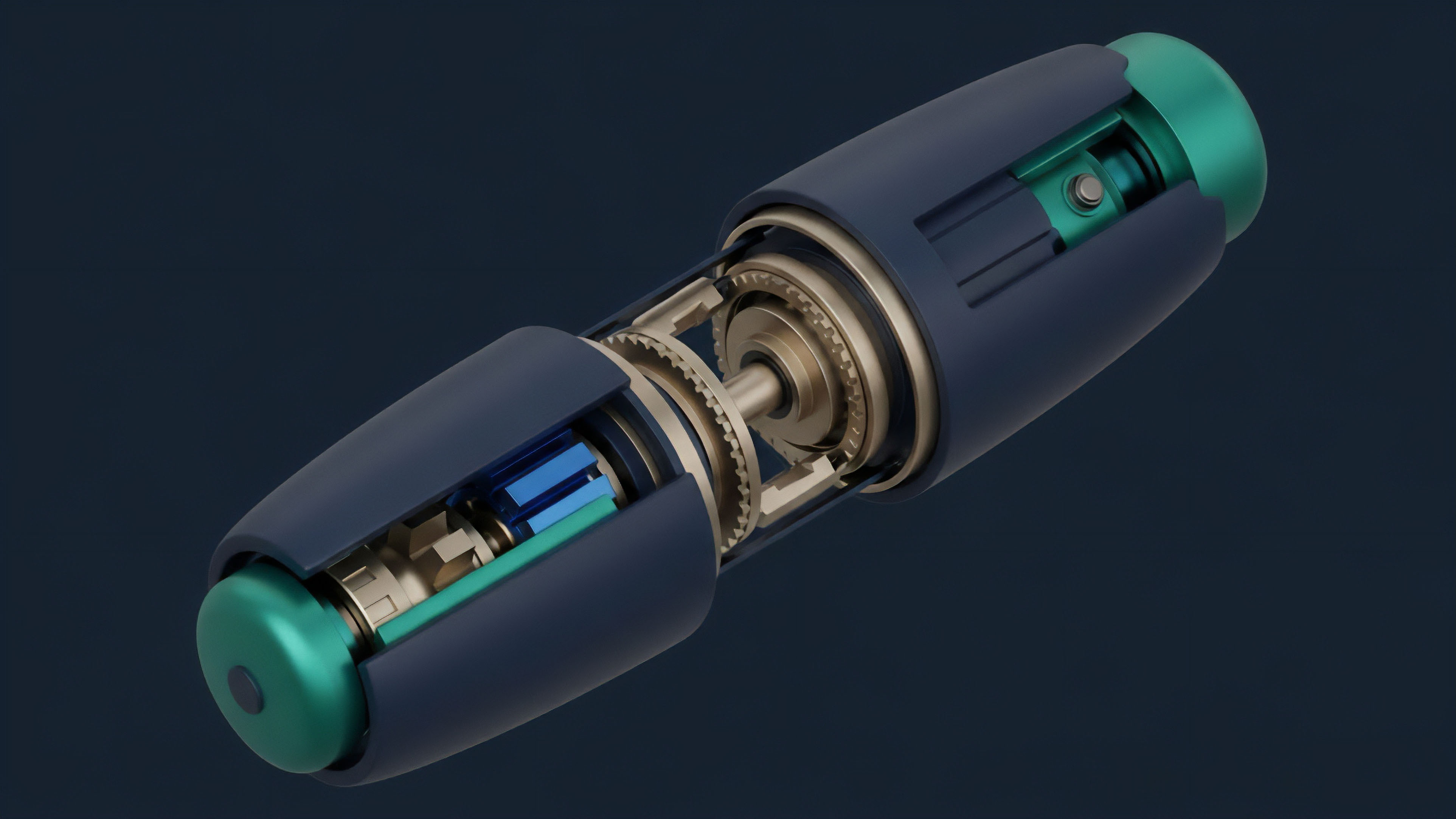
Recursive proofs enable the verification of vast numbers of computations through a single, succinct proof, making high-throughput derivatives trading viable on decentralized networks.
From Privacy to Verifiable Computation
The shift in ZKP application has been from “privacy” as an end goal to “verifiable computation” as a means to achieve both privacy and scalability. This distinction is crucial for understanding the technology’s impact on derivatives. The goal is not simply to hide information; it is to create a system where complex financial logic can be executed and verified trustlessly.
This enables new types of financial instruments where the calculation of a derivative’s value or payoff function can be performed off-chain and proven on-chain, opening the door for more complex and bespoke products that were previously impossible in a fully transparent environment. The progression from simple privacy to verifiable computation represents the maturation of ZKPs from a cryptographic tool to a core primitive of decentralized systems design.


Horizon
Looking forward, the integration of zero-knowledge cryptography into derivatives markets promises to resolve several deep-seated structural issues in decentralized finance. The ultimate goal is to create a market where verifiability and privacy coexist seamlessly, eliminating the current trade-off between transparency and efficiency.

Market Microstructure and Price Discovery
A fully ZKP-enabled derivatives market would operate with private order books and hidden liquidity. This changes the dynamics of price discovery. In a transparent system, liquidity providers are vulnerable to strategic exploitation.
In a private system, liquidity providers can offer deeper liquidity without fear of front-running. This should lead to tighter spreads and higher capital efficiency. The market microstructure shifts from one based on information advantage to one based on genuine supply and demand.

Regulatory Arbitrage and Compliance
The intersection of ZKPs and regulatory frameworks presents a powerful opportunity. A major hurdle for institutional adoption of DeFi derivatives is compliance with know-your-customer (KYC) and anti-money laundering (AML) regulations. ZKPs allow for “compliance without disclosure.” A user could generate a proof that they have passed KYC with a verified entity without revealing their identity to the protocol or other users.
Similarly, a protocol could prove to regulators that it holds sufficient collateral or operates within specific risk parameters without revealing proprietary information about user positions. This enables a new model of regulatory compliance where privacy is maintained while verifiability is provided to authorized parties.

Systemic Risk and Contagion
The use of ZKPs for private margin calculations introduces new considerations for systemic risk. While ZKPs can verify that individual positions are solvent, they also create a black box where the specific composition of a counterparty’s portfolio is hidden. If a system relies heavily on complex, recursive proofs, a failure in the underlying cryptographic assumptions or an exploit in the circuit design could have cascading effects. The opacity created by privacy could potentially hinder the rapid identification and containment of contagion events. The design challenge for future ZKP-based systems is to ensure that while individual privacy is protected, systemic risk can still be monitored and managed effectively through aggregate, verifiable metrics. The transition to fully private derivatives markets requires a careful balance between individual privacy and systemic stability.

Glossary

Zero Knowledge Proof Risk

Zero-Knowledge Starks

Computational Cryptography

Zero-Knowledge Privacy Framework

Zero-Knowledge Exposure Aggregation

Pairing Based Cryptography

Zero-Knowledge Validity Proofs

Zero-Knowledge Compliance

Interactive Proof Systems
