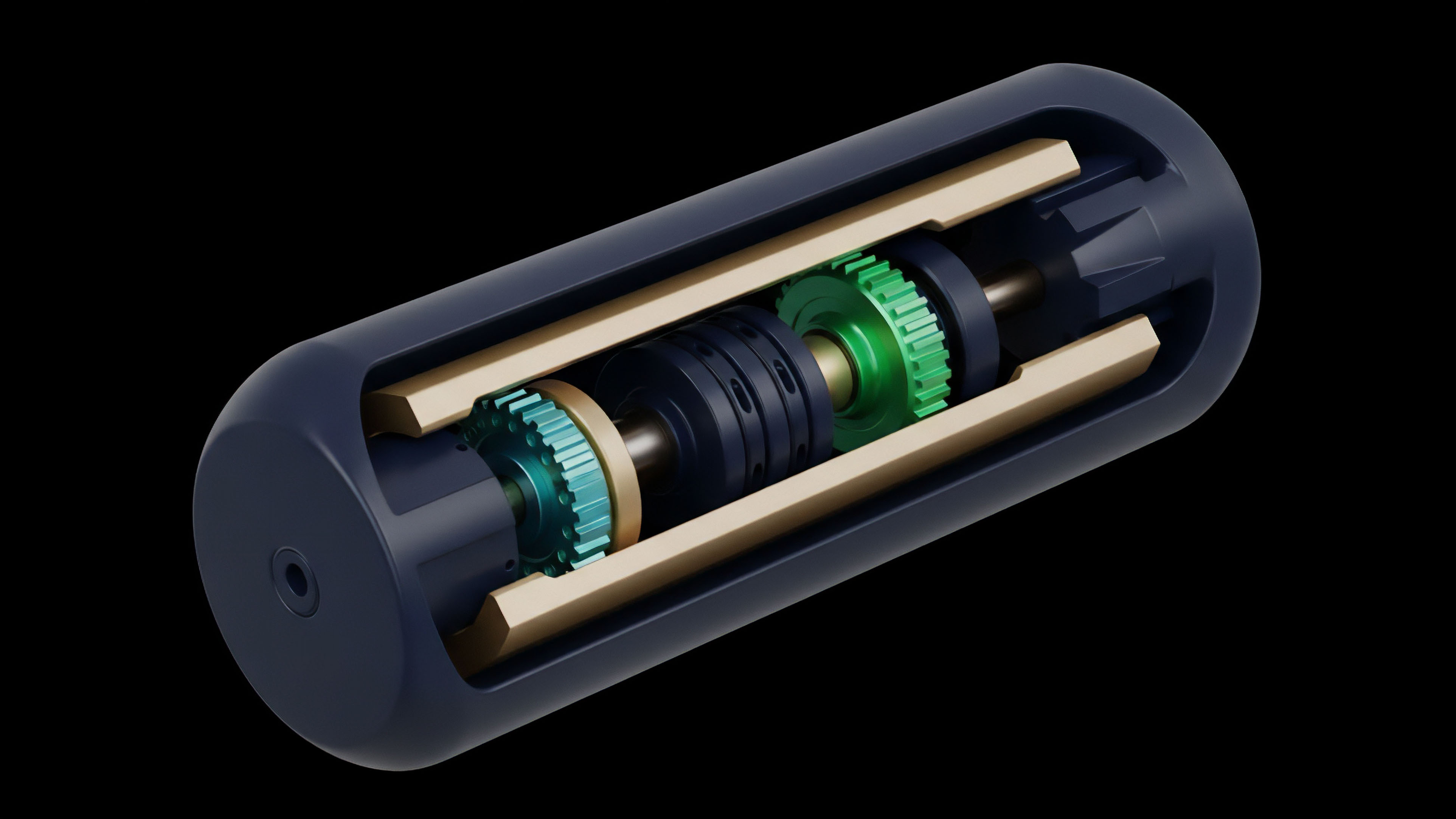
Liquidation fee futures represent a novel financial instrument where the payout is derived from the future stream of liquidation fees generated by a derivatives protocol. This allows market participants to speculate on or hedge against future market volatility and liquidation volume.
Fee
The underlying fee stream serves as a proxy for market stress and activity. A higher volume of liquidations, typically occurring during periods of high volatility, would increase the value of these futures contracts.
Instrument
As a financial instrument, liquidation fee futures provide a mechanism for risk transfer and price discovery related to protocol-specific risk. They enable traders to hedge against potential losses from providing liquidity or to take a directional view on market instability.
Meaning ⎊ The transaction fee market introduces non-linear costs and execution risks, fundamentally altering pricing models and risk management strategies for crypto options and derivatives.
Meaning ⎊ Gas fee derivatives allow protocols and market participants to hedge against the volatility of transaction costs, converting unpredictable network congestion risk into a manageable operational expense.
Meaning ⎊ Gas fee spike indicators quantify the risk of sudden transaction cost increases, fundamentally impacting on-chain options pricing and systemic risk management.
Meaning ⎊ Dynamic fee adjustment in crypto options protocols dynamically adjusts transaction costs based on market volatility to maintain liquidity and mitigate systemic risk.
Meaning ⎊ Fee Volatility refers to the unpredictable fluctuation of network transaction costs, which introduces systemic risk and complicates pricing models for crypto options by impacting dynamic hedging and exercise profitability.
Meaning ⎊ Fee Market Design in crypto options protocols structures incentives for liquidity providers and liquidators to ensure capital efficiency and systemic stability.
Meaning ⎊ Perpetual futures hedging utilizes non-expiring contracts to neutralize options delta risk, forming the core risk management strategy for market makers in decentralized finance.
Meaning ⎊ Gas fee volatility acts as a non-linear systemic risk in decentralized options markets, complicating pricing models and hindering capital efficiency.
Meaning ⎊ Fee burning in crypto options protocols creates deflationary pressure by programmatically reducing token supply based on transaction fees, directly aligning protocol usage with long-term token value.
Meaning ⎊ Gas fee impact modeling quantifies the non-linear cost and risk introduced by volatile blockchain transaction fees on decentralized options pricing and execution.
Meaning ⎊ Transaction fee reduction in crypto options involves architectural strategies to minimize on-chain costs, enhancing capital efficiency and enabling complex, high-frequency trading strategies for decentralized markets.
Meaning ⎊ Fee Payment Abstraction enables decentralized options protocols to decouple transaction costs from native gas tokens, enhancing capital efficiency and user experience by allowing payments in stable assets.
Meaning ⎊ Gas fee bidding is the competitive mechanism for blockchain blockspace, directly influencing liquidation efficiency and arbitrage profitability in decentralized derivatives markets.
Meaning ⎊ Fee Market Equilibrium defines the dynamic cost of execution and block space demand, fundamentally shaping the risk management and pricing models for decentralized crypto options.
Meaning ⎊ EIP-1559 fundamentally alters Ethereum's fee market by introducing a dynamic base fee and burning mechanism, transforming its economic model from inflationary to potentially deflationary.
Meaning ⎊ A dynamic fee structure for crypto options adjusts transaction costs based on real-time volatility and liquidity to ensure protocol solvency and fair risk pricing.
Meaning ⎊ Priority Fee Dynamics define the variable cost of temporal certainty for on-chain options, impacting execution speed and risk management strategies in decentralized markets.
Meaning ⎊ Funding Rate Futures allow market participants to isolate and trade the cost of leverage within perpetual markets, enabling sophisticated hedging and fixed-rate yield strategies.
Meaning ⎊ Futures margining manages counterparty risk in leveraged derivatives by requiring collateral, ensuring capital efficiency and systemic stability.
Meaning ⎊ EIP-1559's base fee dynamics reduce transaction cost volatility and create deflationary pressure on ETH supply, significantly impacting options pricing and market maker operational risk.
Meaning ⎊ Gas fee reduction for crypto options is a design challenge focused on optimizing state management and transaction execution to improve capital efficiency and enable complex strategies.
Meaning ⎊ Perpetual futures markets provide continuous leverage and price alignment through a funding rate mechanism, serving as a core component of digital asset risk management and speculation.
Meaning ⎊ Gas fee optimization for crypto options protocols involves architectural design choices to mitigate transaction costs and latency, enabling efficient market making and risk management.
Meaning ⎊ Gas fee volatility is a systemic risk that complicates options pricing and operational stability by introducing unpredictable transaction costs for on-chain actions.
Meaning ⎊ Fixed-fee liquidations are a protocol design choice that offers a predetermined reward to liquidators, prioritizing predictable execution over dynamic profit optimization during market stress.
Meaning ⎊ Non-linear fee curves dynamically adjust transaction costs in decentralized options protocols to compensate liquidity providers for risk and optimize capital efficiency.
Meaning ⎊ Gas fee dynamics are the variable computational costs that create transaction friction, fundamentally altering options pricing models and risk management strategies in decentralized markets.
Meaning ⎊ The liquidation bonus is a critical incentive in decentralized protocols that compensates liquidators for clearing undercollateralized positions, thereby ensuring systemic solvency.