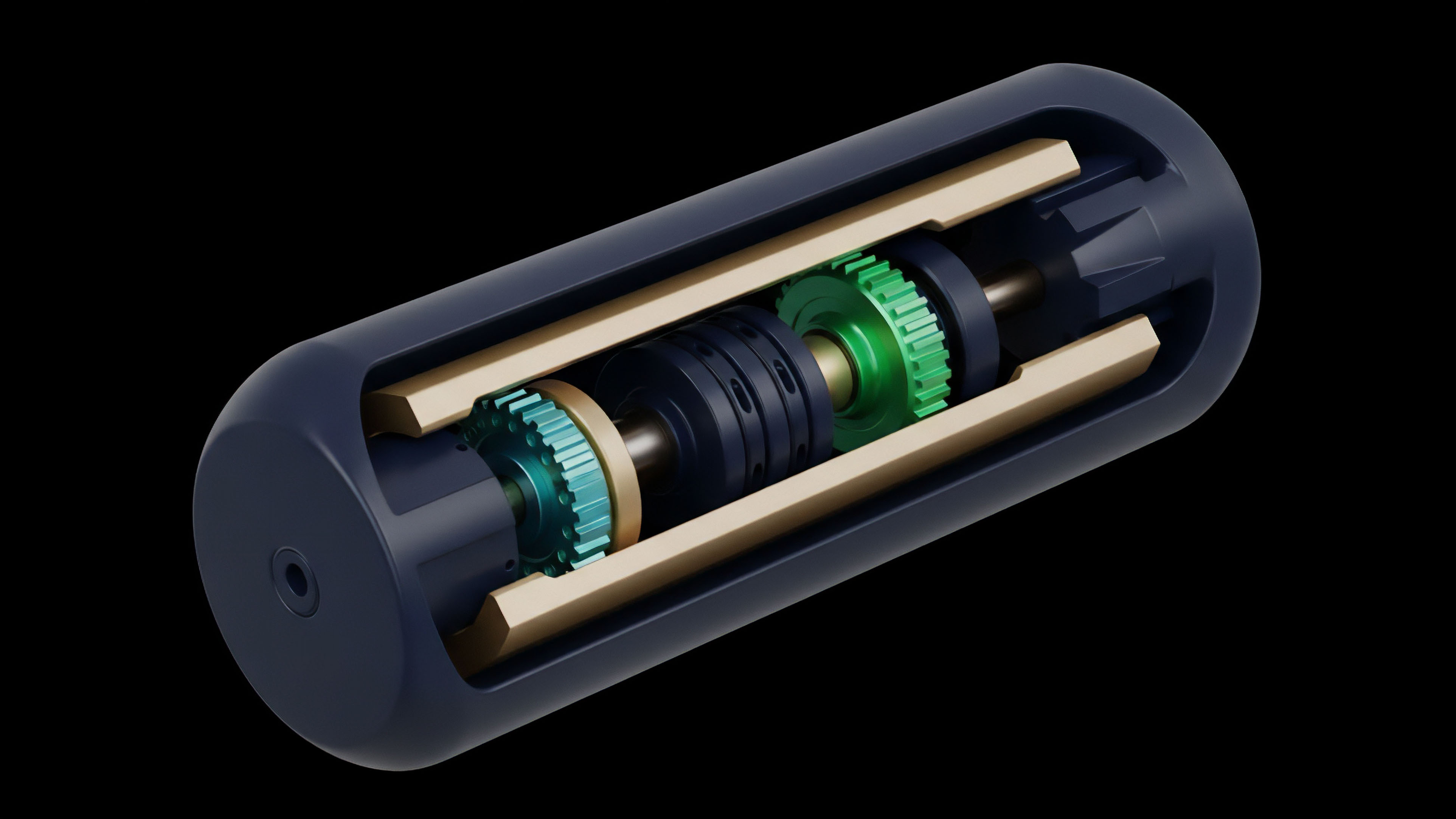

Verifiable Computational Integrity
Cryptographic integrity enables the decoupling of verification from data exposure. Within the architecture of decentralized finance, Zero-Knowledge Proofs function as mathematical certificates that validate the correctness of a computation without revealing the underlying inputs. This mechanism addresses the inherent tension between the transparency required for trustless settlement and the confidentiality required for sophisticated trading strategies.
By utilizing ZK-proof Based Systems, protocols can compress massive batches of transactions into a single proof, ensuring that every state transition adheres to the predefined rules of the network.
ZK-proof Based Systems facilitate the validation of complex financial transactions while maintaining complete data confidentiality for market participants.
The systemic relevance of these systems lies in their ability to provide high-fidelity assurance in adversarial environments. In traditional markets, clearinghouses act as intermediaries that assume counterparty risk; in decentralized options markets, the math itself becomes the clearinghouse. Succinct Non-Interactive Arguments of Knowledge (SNARKs) allow a prover to convince a verifier of a statement’s truth with minimal communication.
This efficiency is vital for maintaining low-latency execution in derivatives where price discovery happens in milliseconds.
- Computational proofs replace the need for third-party audits by providing mathematical certainty of solvency.
- Data minimization protocols limit the exposure of sensitive order book information to prevent front-running by predatory actors.
- Batching mechanisms aggregate multiple option strikes and expiries into a single proof to reduce the per-transaction footprint on the base layer.


Mathematical Foundations of Privacy
The conceptual framework for these systems emerged from the 1985 research by Goldwasser, Micali, and Rackoff, which introduced the idea of knowledge complexity. Their work demonstrated that it is possible to prove the validity of a mathematical assertion without conveying any information beyond the assertion’s truth. This breakthrough remained largely theoretical until the requirements of blockchain scalability and privacy necessitated practical implementations.
The transition from interactive proofs to Non-Interactive Zero-Knowledge (NIZK) proofs was a significant leap, removing the requirement for the prover and verifier to be online simultaneously. The integration into crypto-financial systems was catalyzed by the need for Privacy-Preserving Settlement. Early decentralized protocols suffered from total transparency, which exposed institutional liquidity providers to toxic flow and MEV (Maximal Extractable Value) exploits.
The introduction of zk-SNARKs in early privacy-centric assets provided the first production-ready application of these principles. As the industry moved toward more complex instruments, the focus shifted from simple asset transfers to General Purpose ZK-Rollups capable of executing arbitrary smart contract logic for options and futures.


Architectural Constraints and Arithmetization
The technical execution of a ZK-proof Based System requires transforming financial logic into a format that the proof system can interpret. This process, known as arithmetization, converts code into a series of polynomial constraints over a finite field.
The efficiency of the system depends on the Circuit Complexity, which measures the number of gates required to represent a specific financial operation, such as an Option Pricing Model or a Margin Requirement Calculation.
The arithmetization of financial logic into polynomial constraints ensures that protocol rules are enforced by mathematical laws rather than human intervention.
Different proof systems offer various trade-offs between proof size, verification time, and setup requirements. STARKs (Scalable Transparent Automated Arguments of Knowledge) utilize hash-based functions to eliminate the need for a trusted setup, making them quantum-resistant and highly scalable for large-scale data sets. Conversely, SNARKs often produce smaller proofs that are faster to verify on-chain, which is a significant advantage for Layer 2 Derivatives Platforms seeking to minimize gas costs.
| Property | SNARKs (Groth16) | STARKs | Bulletproofs |
|---|---|---|---|
| Proof Size | Very Small (~200 bytes) | Large (up to 100 KB) | Medium (~1 KB) |
| Verification Speed | Constant Time | Polylogarithmic | Linear |
| Trusted Setup | Required | Not Required | Not Required |
| Quantum Resistance | No | Yes | No |
The Fiat-Shamir Heuristic is often employed to convert interactive protocols into non-interactive ones, allowing the proof to be generated once and verified by any participant at any time. This is particularly effective for Multi-Asset Collateral Pools where the state of the pool must be verified by all users without exposing individual positions. The use of Polynomial Commitment Schemes like KZG or FRI determines how the prover commits to the data, directly impacting the performance of the Margin Engine.


Implementation in Derivatives Markets
Current strategies for deploying ZK-proof Based Systems focus on Validium and ZK-Rollup architectures.
In a ZK-Rollup, the data required to reconstruct the state is posted on-chain, ensuring maximum security. Validiums, by contrast, store data off-chain, which significantly increases throughput and privacy but introduces different trust assumptions regarding data availability. For high-frequency Crypto Options Trading, the Validium model is often preferred due to the lower latency and reduced cost of frequent order updates.
The Prover Market is becoming a distinct sector within the infrastructure. Specialized hardware, such as Zero-Knowledge Processing Units (ZKPUs), is being developed to accelerate the generation of proofs. This reduces the time between a trade execution and its final settlement on the base layer.
Market makers utilize these systems to provide Dark Pool Liquidity, where the size and price of orders are hidden from the public until the moment of execution, preventing adverse price movement.
| Model | Data Availability | Security Level | Throughput |
|---|---|---|---|
| ZK-Rollup | On-chain (L1) | Highest (Inherits L1) | High |
| Validium | Off-chain (DAC) | High (Depends on DAC) | Very High |
| Volition | User Choice | Variable | Variable |
The integration of Recursive Proofs allows a single proof to verify the validity of other proofs. This creates a hierarchical structure where an entire day’s worth of global options trading can be compressed into a single mathematical statement. This approach solves the State Bloat problem, as the blockchain only needs to store the latest state root and the proof of its validity, rather than every individual transaction history.


Shift toward General Purpose Computation
The transition from application-specific circuits to ZK-EVM (Zero-Knowledge Ethereum Virtual Machine) represents a massive leap in the utility of these systems.
Previously, developers had to write custom circuits for every financial instrument, a process prone to Smart Contract Vulnerabilities. With the advent of ZK-EVM, existing Solidity-based options protocols can migrate to a ZK-environment with minimal changes. This democratization of the technology has led to a surge in ZK-Native Derivatives that offer the same user experience as centralized exchanges but with decentralized security.
Systemic risks have also evolved. While ZK-proof Based Systems eliminate certain classes of failure, such as dishonest state transitions, they introduce risks related to Prover Centralization and potential bugs in the complex cryptographic libraries. The industry has responded by moving toward Multi-Prover Architectures, where different proof systems must agree on the state before it is finalized.
This redundancy ensures that a flaw in a single implementation does not lead to a total loss of funds.


Hyper-Scaling and Sovereign Liquidity
The future of ZK-proof Based Systems involves the creation of Hyperchains ⎊ interconnected layers that use recursive proofs to settle transactions across disparate networks instantly. This will eliminate Liquidity Fragmentation, allowing a trader on one ZK-rollup to access the liquidity of an options vault on another without waiting for long withdrawal periods. The mathematical proof serves as the universal language of value, enabling Atomic Cross-Chain Settlement with zero counterparty risk.
Recursive proof composition will enable the unification of fragmented liquidity into a single, mathematically verified global derivatives market.
Expect a shift toward Client-Side Proving, where users generate proofs of their own eligibility or collateralization on their local devices. This enhances privacy to the maximum degree, as the protocol never sees the user’s data, only the proof that the data meets the required criteria. This evolution will likely redefine Regulatory Compliance, as users can provide Zero-Knowledge Compliance Proofs to verify they are not on a sanctions list without revealing their identity or total net worth.
- Recursive scaling enables the nesting of proofs to achieve infinite throughput without compromising the security of the underlying settlement layer.
- Privacy-centric compliance frameworks allow for the coexistence of institutional requirements and individual financial sovereignty through selective disclosure.
- Hardware acceleration through specialized silicon will drive proof generation times toward real-time execution, mirroring the performance of centralized finance.

Glossary

Blockchain Based Oracle Solutions

Governance in Decentralized Systems

Pull Based Oracle

Threshold Based Triggers

Market Microstructure

Decentralized Finance

Zk-Proof Risk Validation

Derivative Margin Proof

Community-Based Risk System