

Essence
Zero-Knowledge Validity Proofs establish mathematical certainty in decentralized environments. This technology permits a prover to demonstrate the validity of a statement without exposing the specific data points that comprise it. In digital asset derivatives, this mechanism ensures that trade executions and state transitions adhere to protocol rules while maintaining data confidentiality.
Market participants confirm that a counterparty possesses the required collateral for a leveraged position without the counterparty revealing their total balance or specific asset allocation. This architecture provides a foundation for financial systems where privacy and auditability coexist.
Zero-Knowledge Validity Proofs transform probabilistic trust into deterministic verification by ensuring that all state transitions are mathematically valid before they are finalized.
The systemic implication involves the removal of central clearing counterparty risk. Traditional markets rely on intermediaries to verify solvency. In a system driven by Zero-Knowledge Validity Proofs, the proof itself serves as the guarantee.
This reduces the capital overhead required for margin safety, as the system verifies the integrity of the margin engine in real-time. The result is a more efficient use of liquidity across global venues.


Origin
The theoretical foundation of Zero-Knowledge Validity Proofs emerged from academic research into interactive proof systems during the mid-1980s. The objective was to determine if a party could convince another of a mathematical truth without providing the proof itself.
Early protocols required significant communication between the prover and the verifier, which limited their practical utility in asynchronous networks. The transition to non-interactive succinct arguments of knowledge enabled by the Fiat-Shamir heuristic allowed for the single-message proofs used in modern blockchain architectures. This development enabled the integration of these proofs into distributed ledgers.
Initial applications focused on transactional privacy, shielding sender and receiver identities. The subsequent expansion into general-purpose computation allowed for the verification of complex smart contract logic, setting the stage for decentralized derivative platforms.


Theory
The mathematical structure of Zero-Knowledge Validity Proofs relies on arithmetic circuits and polynomial commitments. A computation is represented as a sequence of gates ⎊ additions and multiplications ⎊ that form a circuit.
The prover generates a witness, which is the set of private inputs that satisfy the circuit. This witness is encoded into a polynomial. Verification involves checking the properties of this polynomial at random points.
The soundness of the system depends on the Schwartz-Zippel Lemma, which states that two distinct polynomials of a certain degree can intersect at only a limited number of points. If the prover’s polynomial matches the expected polynomial at a randomly chosen point, the verifier accepts the proof with a high degree of certainty.
The succinctness of the proof allows for verification time that scales logarithmically or stays constant regardless of the complexity of the underlying transaction batch.
| Feature | SNARKs | STARKs |
|---|---|---|
| Trusted Setup | Required for most versions | Not Required |
| Proof Size | Small (bytes) | Large (kilobytes) |
| Quantum Resistance | No | Yes |
| Verification Speed | Very Fast | Fast |
Succinctness is the defining characteristic for financial applications. A proof is succinct if its size is significantly smaller than the witness and the verification time is faster than the time required to execute the computation. This allows a low-power device to verify the integrity of a massive batch of derivative trades processed on a specialized secondary layer.


Approach
Current implementations prioritize ZK-Rollups to manage the computational load of derivative order books.
By executing matching and margin calculations off-chain, these systems achieve high throughput and low latency. The off-chain operator generates a Zero-Knowledge Validity Proof for every batch of trades, which is then submitted to the main ledger.
- State Commitment: A Merkle tree or similar structure that stores the current balances and positions of all users.
- Circuit Logic: The set of rules governing trade execution, including price feeds, margin requirements, and liquidation thresholds.
- Prover Key: A set of parameters used by the off-chain engine to generate the validity proof for a batch of transactions.
- On-chain Verifier: A smart contract that checks the proof against the state commitment and updates the ledger if the proof is valid.
| Metric | On-chain Execution | ZK-Rollup Execution |
|---|---|---|
| Throughput (TPS) | Low (15-50) | High (2,000+) |
| Settlement Finality | Probabilistic | Immediate upon proof verification |
| Data Availability Cost | High | Low (Compressed state diffs) |


Evolution
The transition from specialized privacy coins to general-purpose ZK-EVMs represents a significant shift in the market. Early platforms were limited to simple transfers. Modern architectures support the full complexity of perpetual futures, options, and structured products.
This progression has been driven by the need for capital efficiency in a fragmented liquidity environment. Market participants initially viewed Zero-Knowledge Validity Proofs as a tool for scaling. The focus has since expanded to include regulatory compliance and institutional-grade privacy.
Institutions require the ability to prove they are compliant with Anti-Money Laundering (AML) and Know Your Customer (KYC) regulations without leaking their trade history to competitors. Zero-Knowledge Validity Proofs enable proof of compliance, where a user proves they are not on a sanctions list while keeping their identity and transaction details private.
Private margin engines enable institutional participation by shielding proprietary trading strategies from public scrutiny while maintaining verifiable solvency.


Horizon
The future of Zero-Knowledge Validity Proofs involves the integration of recursive proofs and hardware acceleration. Recursive proofs allow a proof to verify another proof. This creates a chain of validity that can compress an entire day’s worth of global trading activity into a single proof.
This technology will lead to the creation of hyperchains or app-specific layers that are interconnected and maintain independent execution environments.
- ASIC Provers: Specialized hardware designed to reduce the time and energy cost of generating proofs, making real-time verification feasible.
- Recursive SNARKs: The ability to aggregate multiple proofs into one, enabling horizontal scaling and cross-chain interoperability.
- Data Availability Sampling: Techniques that allow verifiers to confirm data exists without downloading the entire dataset, reducing costs.
- Post-Quantum Cryptography: The development of hash-based systems that remain secure against future quantum computing threats.
The convergence of these technologies will redefine the role of centralized exchanges. We are moving toward a future where the user retains custody of their assets, the exchange provides the matching engine, and Zero-Knowledge Validity Proofs provide the guarantee of fair execution and solvency. This hybrid model combines the performance of centralized systems with the security and transparency of decentralized protocols.

Glossary

Latency

Recursive Proofs

Soundness Error

Hyperchains

Throughput

Zk-Evm

Margin Engines
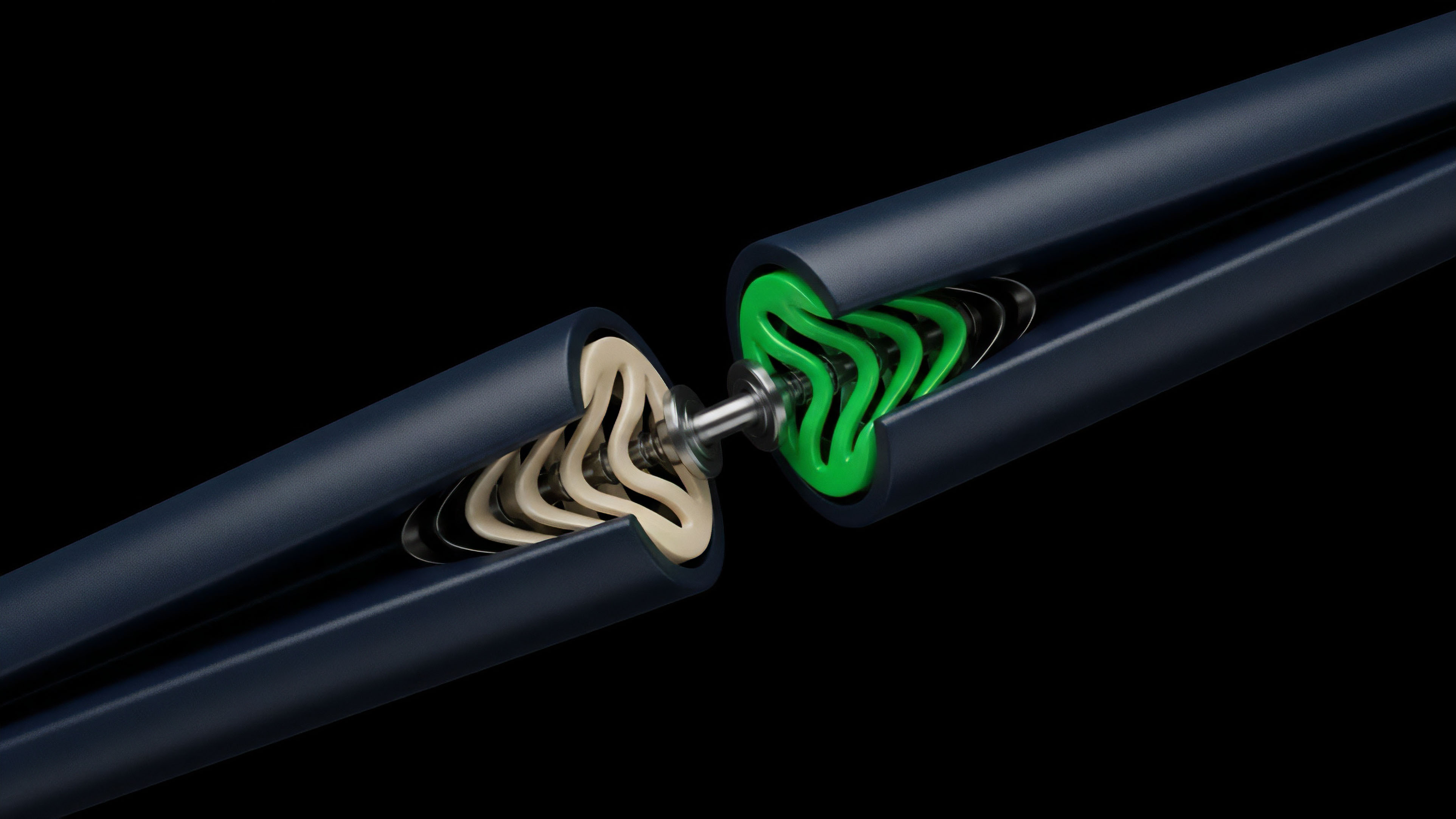
Zero-Knowledge Starks

Private Smart Contracts