

Essence
Zero-Knowledge Proofs (ZKPs) represent a shift in the verification of financial data, allowing for the validation of truth without the transmission of the underlying information. This cryptographic primitive enables a prover to demonstrate to a verifier that a specific statement is accurate while withholding any data regarding the inputs used to generate that proof. Within the digital asset derivatives market, this capability facilitates the execution of complex options contracts and margin requirements without exposing sensitive order flow or proprietary trading strategies to the broader network.
The reliance on mathematical certainty rather than institutional trust creates a system where solvency and compliance are verifiable in real-time.

Confidential Verification
The application of this technology in decentralized finance addresses the tension between transparency and privacy. Traditional blockchains require every node to see the details of every transaction to verify its validity, which exposes the positions of large market participants to predatory front-running. ZKPs resolve this by allowing nodes to verify the correctness of a transaction through a succinct proof, while the actual trade parameters remain encrypted.
This architecture supports the creation of private dark pools where institutional liquidity can interact without the risk of information leakage.
Zero-Knowledge Proofs facilitate the verification of computational integrity without exposing the underlying data parameters.
The systemic implication of this technology is the decoupling of data availability from data validity. By ensuring that only the proof of a correct state transition is broadcasted, the network achieves a level of privacy previously reserved for centralized financial institutions, but with the added security of decentralized settlement. This provides a robust framework for professional traders who require confidentiality to maintain their competitive edge in volatile markets.


Origin
The conceptual roots of this technology are found in the 1985 research by Goldwasser, Micali, and Rackoff, which introduced interactive proof systems.
These researchers demonstrated the possibility of proving properties of a number without revealing the number itself, shifting the focus of cryptography from securing communication to securing the integrity of computation. This research established the three properties required for a valid proof: completeness, soundness, and zero-knowledge.

Cryptographic Foundations
The transition from theoretical academic research to practical financial applications required the development of Non-Interactive Zero-Knowledge (NIZK) proofs. Early interactive versions necessitated a back-and-forth exchange between the prover and the verifier, which was unsuitable for the asynchronous nature of blockchain networks. The Fiat-Shamir heuristic provided the mechanism to convert these interactive processes into non-interactive ones by using a hash function as a random oracle.
| Property | Definition | Financial Significance |
|---|---|---|
| Completeness | Honest provers can convince honest verifiers | Guarantees trade execution for valid orders |
| Soundness | Dishonest provers cannot deceive verifiers | Prevents fraudulent margin or collateral claims |
| Zero-Knowledge | No data beyond the truth is revealed | Protects proprietary trading strategies |
The subsequent introduction of ZK-SNARKs (Succinct Non-Interactive Argument of Knowledge) in the early 2010s enabled the first production-grade implementations. These systems allowed for proofs that were small enough to be verified on-chain with minimal computational cost. This advancement made it possible to move the heavy computation of derivatives pricing and margin calculation off-chain while maintaining the security guarantees of the base layer.


Theory
The mathematical structure of a ZK-SNARK involves the transformation of computational logic into algebraic representations.
This process, known as arithmetization, converts a computer program or a financial contract into a set of polynomial equations over a finite field. By representing a trade as a circuit, the system generates a proof that the state transition follows the predefined rules of the protocol.

Mathematical Architecture
Proof generation begins by expressing the computation as an Arithmetic Circuit, which is then converted into a Rank-1 Constraint System (R1CS). This system consists of vectors representing the gates of the circuit. The R1CS is further transformed into a Quadratic Arithmetic Program (QAP), allowing the entire computation to be represented as a single polynomial identity.
The prover uses a polynomial commitment scheme, such as KZG or IPA, to commit to this polynomial and prove its evaluation at a specific point without revealing the polynomial itself.
Arithmetization transforms logical constraints into polynomial identities suitable for cryptographic commitment.
The security of these systems often relies on elliptic curve cryptography and the hardness of the discrete logarithm problem. While SNARKs typically require a trusted setup to generate the initial parameters, STARKs (Scalable Transparent Automated Arguments of Knowledge) utilize hash functions, removing the requirement for a trusted setup and providing resistance against potential quantum computing threats.
- Arithmetic Circuits: The representation of computational logic as a series of addition and multiplication gates.
- Polynomial Commitments: Cryptographic schemes that allow a prover to commit to a polynomial and later prove its evaluation.
- Fiat-Shamir Heuristic: A technique used to convert interactive proofs into non-interactive ones by using a hash function.


Approach
Current implementations in the derivatives space utilize ZK-Rollups to achieve high throughput and low latency. By bundling thousands of transactions into a single batch and submitting a validity proof to the base layer, these protocols circumvent the high costs associated with on-chain computation. This methodology is vital for options markets where frequent updates to the Greeks and margin requirements are necessary.

System Implementation
Order books using ZKPs match buy and sell orders for options without revealing the size or price of the orders until the trade is settled. This prevents front-running and toxic order flow extraction. Margin engines leverage ZKPs to verify that a trader has sufficient collateral to cover their positions.
The system calculates the risk of the portfolio off-chain and generates a proof that the margin requirements are met, which is then verified on-chain.
| Feature | ZK-SNARK | ZK-STARK |
|---|---|---|
| Proof Size | Small (Bytes) | Large (Kilobytes) |
| Trusted Setup | Required | Not Required |
| Quantum Resistance | No | Yes |
The integration of these proofs into the settlement layer ensures that only valid transactions are processed. If a prover attempts to submit an invalid state transition, such as an undercollateralized trade, the mathematical verification will fail, and the transaction will be rejected. This automated enforcement of protocol rules reduces the need for manual oversight and liquidator intervention.


Evolution
The progression from Groth16, which required a specific trusted setup for every individual circuit, to universal SNARKs like Plonk and Marlin, marked a significant advancement in the flexibility of these systems.
These newer constructions allow a single trusted setup to be used for any circuit within a certain size limit, simplifying the deployment of new financial instruments.
Technical Progression
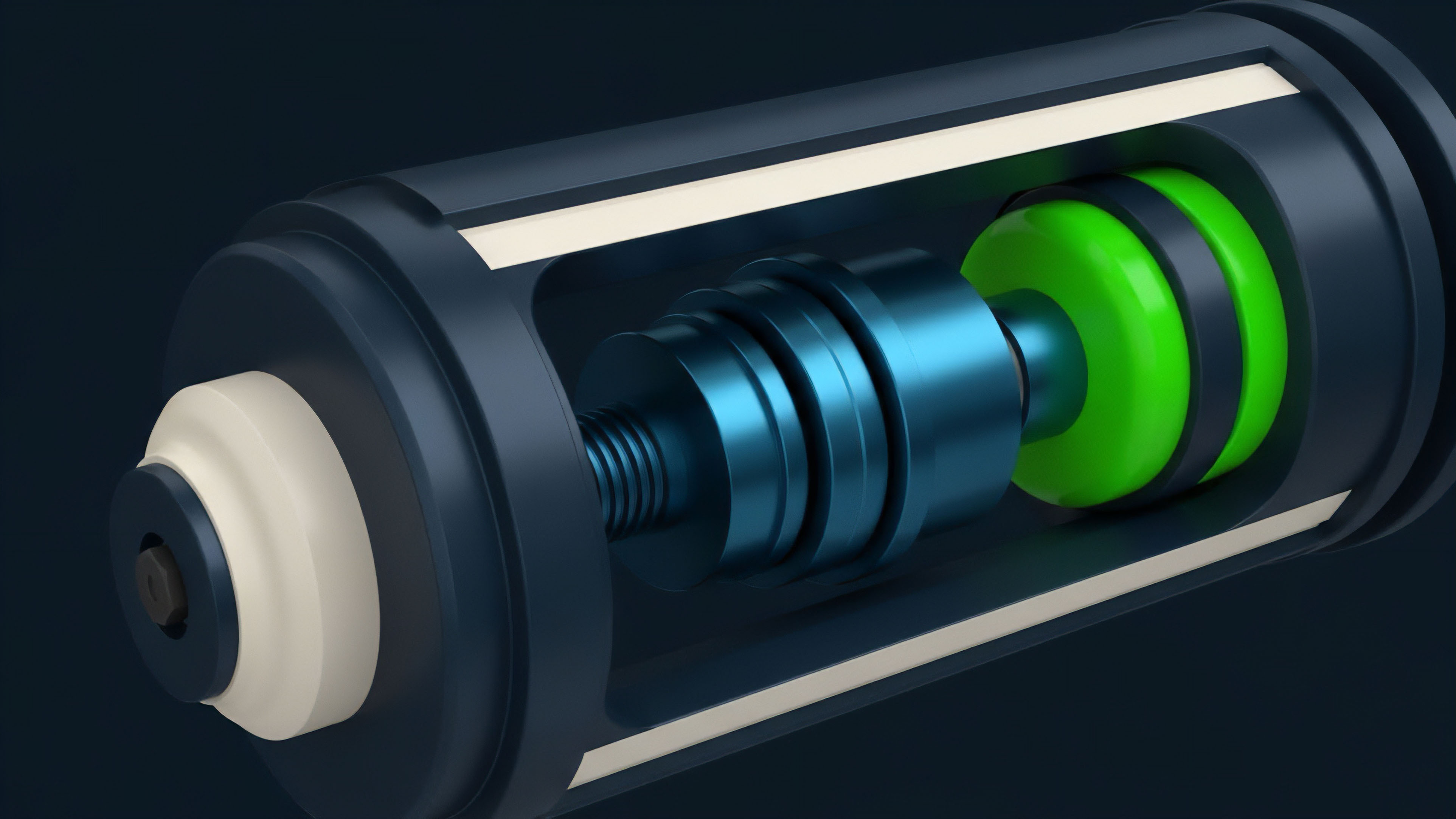
Recent developments have focused on improving the efficiency of the prover. Generating proofs for complex financial models is computationally intensive, often requiring specialized hardware. The industry is seeing a shift toward hardware acceleration, using ASICs and FPGAs to reduce proof generation time.
Simultaneously, the introduction of recursive proof composition has allowed for the aggregation of multiple proofs into a single verification, significantly increasing the scalability of the network.
Recursive proof composition enables the compression of an entire blockchain history into a single constant-sized verification.
The shift toward STARKs and other transparent proof systems has reduced the reliance on trusted ceremonies, increasing the decentralized nature of the infrastructure. These advancements have moved ZKPs from theoretical curiosity to the primary scaling solution for the next generation of financial protocols.


Horizon
The future trajectory of ZKPs in crypto options lies in the development of ZK-coprocessors and cross-chain state proofs. These technologies will allow for trustless, cross-chain margin accounts where a user can use collateral on one network to back an options position on another without relying on centralized bridges.
This will unify liquidity across fragmented networks, creating a more efficient global market.

Future Trajectory
The emergence of fully private dark pools with regulatory selective disclosure will allow institutional participants to meet compliance requirements while maintaining their privacy. By using ZKPs to prove that a trader is not on a sanctions list or that they meet certain accreditation standards without revealing their identity, the system can bridge the gap between decentralized finance and traditional regulatory frameworks.
- Capital Efficiency: Private margin proofs allow for lower collateral requirements by proving the health of a portfolio without revealing its contents.
- Systemic Stability: Real-time validity proofs prevent the propagation of invalid states, reducing the risk of cascading failures.
- MEV Mitigation: Confidential order submission through ZKPs prevents front-running and other forms of toxic order flow extraction.
As proof generation times continue to decrease, we will see the integration of real-time ZK-verified risk management systems. These systems will allow for the execution of high-frequency options strategies with the security of on-chain settlement, effectively merging the performance of centralized exchanges with the trustless nature of decentralized protocols.

Glossary

Mathematical Certainty

Rank 1 Constraint System

Inner Product Argument

Institutional Privacy

Toxic Order Flow

Financial Privacy Standards

Order Flow Confidentiality

Solvency Verification

Proof Aggregation