



Essence
Zero Knowledge Proof Derivatives represent a specialized class of financial instruments where the validation of contract states, collateral sufficiency, or counterparty solvency occurs without revealing the underlying private data. These instruments leverage cryptographic primitives to prove the truth of a statement ⎊ such as a margin requirement being met ⎊ without disclosing the specific account balance or trade history.
Zero Knowledge Proof Derivatives utilize cryptographic verification to confirm financial contract conditions while maintaining total participant privacy.
The architecture relies on zk-SNARKs or zk-STARKs to compress complex computational proofs into succinct, verifiable outputs. This enables a shift from trust-based margin engines to verification-based systems, where the protocol guarantees settlement integrity through mathematical certainty rather than centralized oversight.

Origin
The genesis of these instruments stems from the intersection of cryptographic engineering and the demand for institutional-grade privacy in public decentralized ledgers. Early efforts focused on simple token transfers, but the evolution toward Zero Knowledge Proof Derivatives emerged from the need to hide order flow and position sizing to prevent predatory front-running and signal leakage.
- Cryptographic Primitives provided the initial mathematical foundation for verifiable computation.
- Decentralized Exchanges highlighted the vulnerability of transparent order books to latency-based exploitation.
- Financial Engineering adapted these proofs to secure complex derivatives like perpetual swaps and options.
This trajectory reflects a broader movement to decouple transparency of state verification from transparency of sensitive user information. By adopting Zero Knowledge standards, protocols solve the tension between the public nature of blockchain settlement and the necessity of private strategy execution.

Theory
The mechanical operation of Zero Knowledge Proof Derivatives centers on the separation of the Prover, typically the user or a decentralized sequencer, and the Verifier, which is the smart contract governing the derivative pool. The Prover generates a proof asserting that their position satisfies risk parameters, such as the maintenance margin, without exposing the exact collateral amount.
| Parameter | Transparent Derivatives | Zero Knowledge Derivatives |
| Margin Validation | Public State Disclosure | Cryptographic Proof |
| Order Book | Fully Visible | Private Encrypted |
| Settlement Risk | Counterparty Trust | Mathematical Verification |
The mathematical rigor required to maintain this system involves high computational overhead during proof generation. As systems scale, the Prover must balance the latency of proof creation with the necessity of near-instantaneous trade execution.
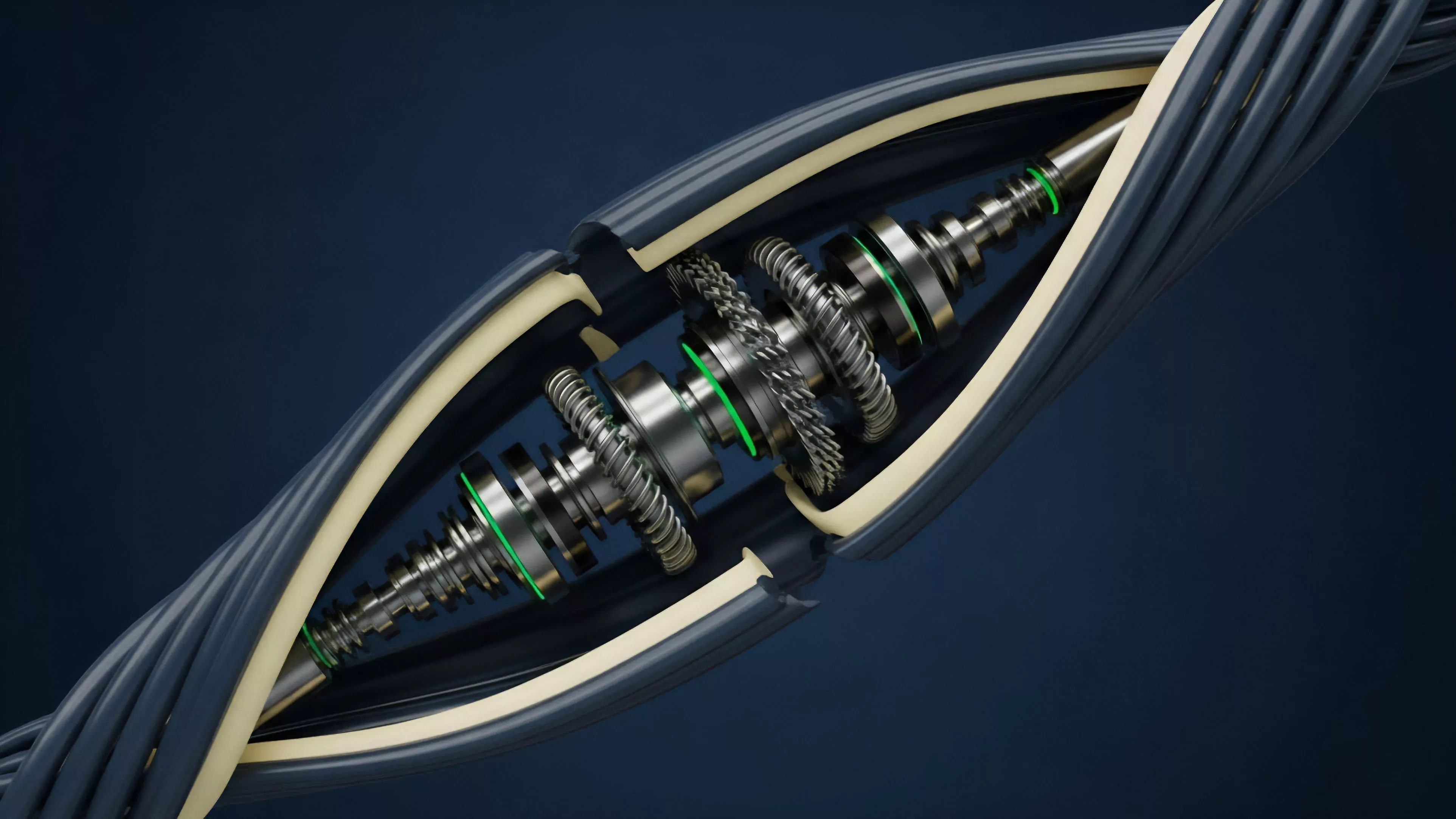
Verification of derivative solvency occurs through zero-knowledge proofs that replace transparent state updates with immutable cryptographic evidence.
This domain also intersects with Game Theory, where participants must ensure that the Verifier remains unbiased and that the proof generation process cannot be censored. The adversarial nature of these systems necessitates robust Smart Contract Security, as a failure in the proof circuit could lead to catastrophic insolvency without immediate detection.
Approach
Current implementation strategies focus on the integration of zk-Rollups to handle the heavy computational load of derivative settlement. By aggregating multiple trade proofs into a single batch, protocols significantly reduce gas costs and latency, allowing for more frequent margin updates and liquidation checks.
- Circuit Optimization reduces the time required for generating proofs of solvency.
- Recursive Proofs allow for the verification of multiple derivative contracts within a single transaction.
- Off-chain Sequencers manage order flow, while the on-chain contract only processes the final Zero Knowledge state proof.
This approach shifts the burden of proof from the blockchain to the participant, who must now maintain the cryptographic keys and computation power to generate valid state transitions. The systemic implication is a highly efficient, private market structure that mimics the speed of centralized venues while retaining the security of decentralized settlement.

Evolution
The path toward Zero Knowledge Proof Derivatives has moved from academic research into production-ready infrastructure. Early iterations struggled with prohibitive computation costs, which limited their use to simple spot trading.
Modern architectures have moved toward Application-Specific Circuits, which are highly optimized for derivative-specific operations like calculating Greeks or determining liquidation thresholds.
Recursive proof structures allow derivative protocols to scale by validating complex trade sequences through compact, aggregated cryptographic proofs.
This evolution mirrors the maturation of Zero Knowledge technology itself, which has transitioned from experimental, slow-moving systems to highly optimized, performant networks. The current phase involves creating Interoperable Proof Layers that allow derivative positions to be managed across different chains without compromising the privacy of the underlying collateral. The technical constraints of proof generation have forced developers to innovate on Hardware Acceleration, utilizing FPGAs and ASICs to perform the heavy lifting.
This shift toward hardware-backed proof generation signals the next phase of institutional adoption, where the infrastructure becomes robust enough to support high-frequency trading strategies.

Horizon
The future of Zero Knowledge Proof Derivatives lies in the democratization of sophisticated risk management tools. As the cost of proof generation continues to decline, we expect to see the emergence of Private Order Books that compete directly with centralized dark pools. These venues will provide the liquidity and privacy required for large-scale institutional participants to enter the decentralized market.
| Development Stage | Expected Impact |
| Proof Aggregation | Increased Transaction Throughput |
| Hardware Acceleration | Latency Reduction |
| Cross-Chain Verification | Unified Liquidity Pools |
The ultimate outcome is a financial system where privacy is a default, not an elective feature. By embedding Zero Knowledge proofs into the fabric of derivative contracts, we establish a framework where trust is entirely eliminated, replaced by the mathematical inevitability of the proof. This represents the final step in the transition from traditional, opaque derivatives to transparent, verifiable, and private decentralized finance.