

Essence
Zero-Knowledge Processing Units represent the transition from general-purpose silicon to specialized cryptographic engines designed for mathematical verification. These hardware accelerators provide the computational power required to generate proofs of validity for complex financial transactions without exposing underlying data. This specialization addresses the massive overhead inherent in zero-knowledge protocols, where the prover time often limits the scalability of decentralized systems.
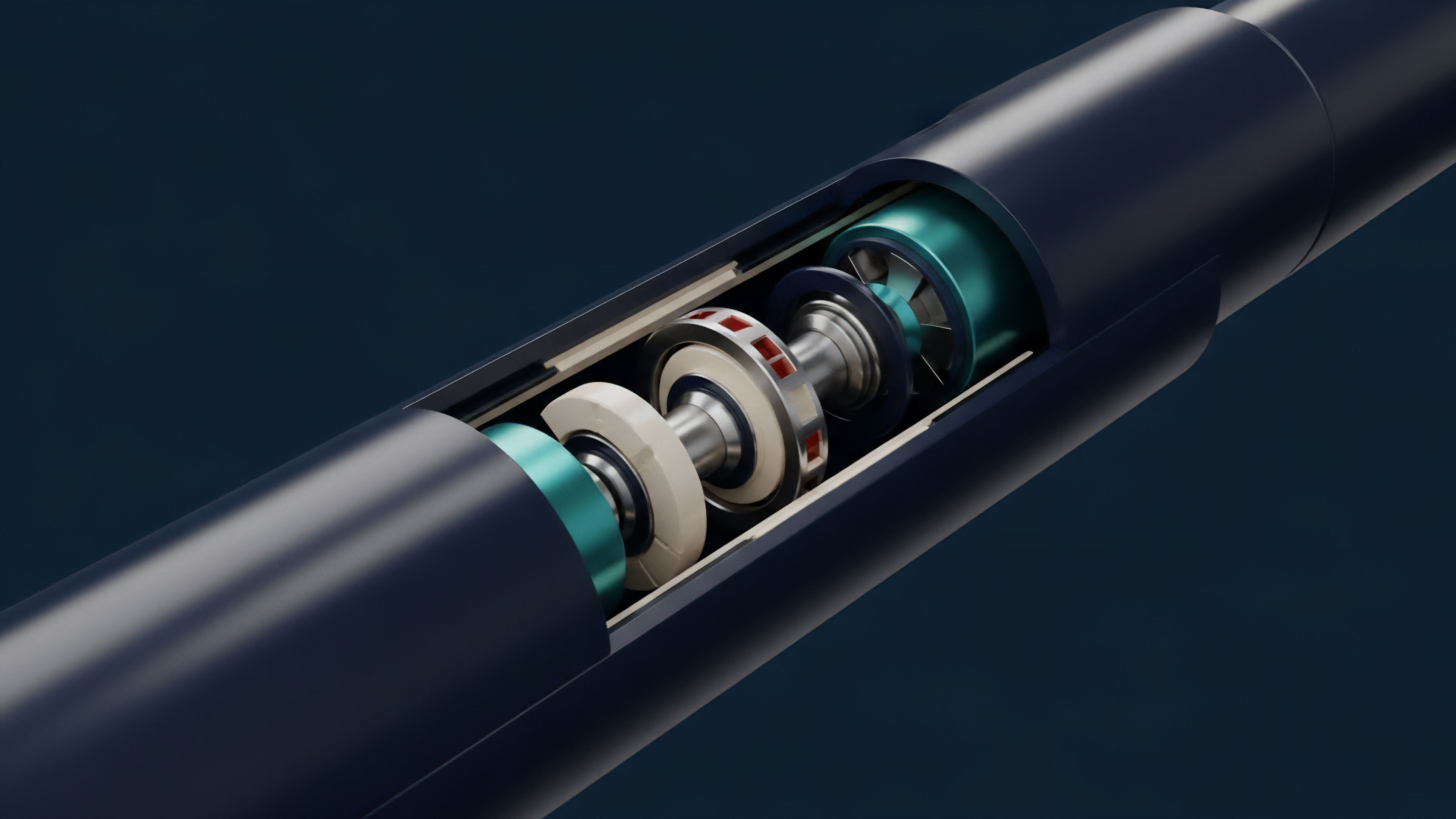
Zero-Knowledge Processing Units function as specialized hardware accelerators designed to minimize the computational latency of cryptographic proof generation in decentralized markets.
By offloading the most taxing mathematical operations to dedicated silicon, these units enable a level of privacy and security that software-based solutions cannot achieve at scale. The shift toward specialized hardware signifies a move away from trust-based systems toward a model where every transaction is verified by physics and mathematics. This development is vital for the growth of private derivatives markets where trade details must remain confidential while settlement remains verifiable.
The presence of these units within a network changes the economic calculus of proof generation. High-speed verification allows for the creation of complex financial instruments that require frequent state updates, such as high-leverage options and automated market makers with private order books. The speed of these units dictates the throughput of the entire financial architecture, making them the silicon foundation of the next generation of global markets.


Origin
The transition from general-purpose CPUs to specialized cryptographic units mirrors the historical shift in Bitcoin mining from software to hardware.
Initially, software-based provers sufficed for low-volume transactions on networks like Zcash. As decentralized finance expanded, the latency of software-only proofs became an insurmountable barrier for high-frequency derivatives and complex on-chain settlement. Early developers relied on GPUs to parallelize the intense mathematical workloads required for zk-SNARKs and zk-STARKs.
While GPUs offered a significant performance boost over CPUs, they remained inefficient in terms of power consumption and memory bandwidth for specific cryptographic primitives. This inefficiency led to the development of FPGAs (Field Programmable Gate Arrays) as a middle ground, allowing for hardware-level optimization without the massive capital expenditure of custom silicon.
Specialized cryptographic hardware emerged from the necessity to scale privacy-preserving protocols beyond the limitations of general-purpose central processing units.
Specialized Zero-Knowledge Processing Units in their current form represent the final stage of this hardware evolution. They are built to handle specific operations like Multi-Scalar Multiplication and Number Theoretic Transforms with maximum efficiency. This specialization recalls the 2010s arms race in microwave towers for high-frequency trading, where physical speed dictated market dominance.
The shift to custom ASICs (Application-Specific Integrated Circuits) for zero-knowledge proofs is the natural conclusion of a market demanding both privacy and extreme performance.


Theory
The architecture of these units focuses on optimizing two primary mathematical bottlenecks: Multi-Scalar Multiplication (MSM) and Number Theoretic Transforms (NTT). These operations dominate the prover time in most zero-knowledge systems. MSM involves calculating the sum of points on an elliptic curve, while NTT is a specialized version of the Fast Fourier Transform used for polynomial multiplication in finite fields.
| Operation Type | Computational Bottleneck | Hardware Optimization |
|---|---|---|
| Multi-Scalar Multiplication | Point addition and doubling | Parallelized elliptic curve units |
| Number Theoretic Transform | Memory bandwidth and data shuffling | High-bandwidth memory and butterfly networks |
| Hash Functions | Recursive hashing cycles | Dedicated logic gates for Poseidon or Rescue |
The mathematical efficiency of a Zero-Knowledge Processing Unit is determined by its ability to parallelize elliptic curve operations and manage high-speed memory access.
Optimizing these primitives requires a hardware-software co-design that prioritizes data throughput over raw clock speed. Memory access patterns in NTT operations require high-throughput interconnects to prevent the processor from idling while waiting for data. The gate-level design of these units is stripped of the branch prediction and cache management logic found in CPUs, focusing instead on the repetitive, parallel nature of cryptographic math.
This architectural purity allows for a massive increase in proofs per second per watt.


Approach
Current implementation involves offloading these primitives to dedicated hardware within a prover market. In this model, decentralized applications send transaction data to specialized prover nodes equipped with Zero-Knowledge Processing Units. These nodes compete to generate proofs in exchange for fees, creating a competitive environment that drives down the cost of privacy.
- Hardware Selection: Provers select between FPGAs for flexibility in changing protocols and ASICs for maximum efficiency in established standards.
- Pipeline Optimization: The prover software breaks down the proof generation into stages, ensuring that the hardware remains fully utilized throughout the process.
- Memory Management: Large-scale proofs require massive amounts of RAM, necessitating the use of High Bandwidth Memory to avoid data bottlenecks.
- Network Integration: The generated proofs are transmitted to the blockchain for verification, where the cost of verification is significantly lower than the cost of generation.
The integration of these units into the broader financial architecture requires a standardized interface between the hardware and the cryptographic protocols. This standardization allows different decentralized exchanges to utilize the same hardware resources, improving capital efficiency across the network. The result is a more resilient system where proof generation is a commodity service rather than a centralized bottleneck.


Evolution
The transition from experimental hardware to production-grade Zero-Knowledge Processing Units has been marked by a focus on cost reduction and energy efficiency.
Early FPGAs were expensive to program and maintain, limiting their use to well-funded research projects. As the demand for zk-rollups grew, the market saw the introduction of more accessible hardware solutions and specialized prover services.
| Hardware Generation | Primary Advantage | Market Suitability |
|---|---|---|
| CPU Clusters | High flexibility | Development and testing |
| GPU Farms | Massive parallelization | Early-stage rollups |
| FPGA Arrays | Programmable logic | Evolving protocols |
| Custom ASICs | Maximum efficiency | Mature, high-volume markets |
This evolution has shifted the focus from whether a proof can be generated to how cheaply and quickly it can be done. The cost of prover generation remains a primary friction point for on-chain options and derivatives. Reducing this cost via specialized silicon changes the margin engine math, allowing for more frequent liquidations and tighter spreads.
The maturity of the hardware market is now a leading indicator for the scalability of private decentralized finance.


Horizon
Future markets will see these units integrated directly into clearinghouse architectures and high-frequency trading venues. As the hardware becomes more commoditized, the focus will shift toward the development of zero-knowledge virtual machines that can execute any arbitrary code with mathematical certainty. This will enable the creation of fully private, verifiable dark pools and complex derivatives that are currently impossible to implement on-chain.
- Real-time settlement: The reduction in proof generation time will enable sub-second settlement for private transactions.
- Cross-chain privacy: Specialized hardware will facilitate the generation of proofs that can be verified across different blockchain networks.
- Regulatory compliance: Zero-knowledge proofs will allow traders to prove compliance with local laws without revealing their entire trade history.
- Institutional adoption: High-performance hardware will provide the security guarantees required for large-scale institutional capital to enter the space.
The ultimate goal is a global financial system where privacy is the default and verification is instantaneous. The continued development of these processing units is the primary driver of this transition. As the silicon becomes more efficient, the barriers between traditional finance and decentralized markets will continue to erode, leading to a more transparent and resilient global economy.
The future of decentralized finance depends on the ability of hardware to keep pace with the mathematical complexity of privacy-preserving protocols.

Glossary

Systems Risk Management

Greeks Risk Analysis

Trustless Settlement

Transaction Privacy

Value Accrual

Number Theoretic Transform
Number Theoretic Transforms

Fundamental Analysis

Finite Field Arithmetic