
Essence
Structural health within a decentralized financial apparatus relies on the verifiable execution of state transitions. Systemic Integrity represents the mechanical certainty that a financial protocol operates according to its mathematical specifications regardless of external market pressure. This structural state allows for the removal of human discretion in settlement, replacing subjective trust with cryptographic proof.
The architecture of a derivative platform must withstand adversarial attempts to drain liquidity or manipulate price feeds.
Systemic Integrity functions as the mathematical assurance that a protocol remains solvent during extreme market dislocations.
The immune system of a protocol resides in its ability to maintain equilibrium. When market volatility increases, the internal logic of the smart contract must trigger defensive actions without delay. This deterministic behavior ensures that the system remains functional even when participants act against the collective stability.
The value of a synthetic asset depends entirely on the robustness of these automated safeguards.

Architectural Sovereignty
The independence of a protocol from centralized intermediaries defines its resilience. By utilizing distributed ledger technology, a derivative system achieves settlement finality that cannot be reversed by a single entity. This sovereignty protects users from the arbitrary seizure of assets or the suspension of trading during periods of high stress.
The mathematical rigor of the code serves as the ultimate arbiter of truth.

Incentive Alignment
The stability of the system depends on the participation of rational actors who seek to maximize their own utility. By designing rewards for liquidators and penalties for under-collateralized borrowers, the protocol ensures that the market remains balanced. This alignment of self-interest with system health creates a self-correcting mechanism that operates without manual intervention.


Origin
The requirement for immutable settlement emerged from the failures of centralized counterparty risk management.
Historical financial crises demonstrated that opaque balance sheets and discretionary liquidations create contagion. Decentralized finance addresses this by moving the ledger to a public, verifiable environment. The transition from legal contracts to smart contracts marks a shift toward deterministic financial outcomes.
- Byzantine Fault Tolerance: The mathematical foundation for reaching consensus in an adversarial environment where participants may be malicious.
- Settlement Finality: The point at which a transaction becomes irreversible, providing the certainty needed for complex derivative contracts.
- Triple Entry Accounting: The use of a public blockchain to verify transactions, ensuring that the state of the system is always transparent.
Historical precedents in traditional markets often involved clearinghouses that could fail under extreme pressure. In contrast, Systemic Integrity in crypto options is maintained through transparent collateral pools. The shift toward on-chain verification removes the need for periodic audits, as the state of the system is verifiable in real-time by any participant.
Robustness in decentralized finance arises from the alignment of incentive structures with the technical limitations of the underlying blockchain.
The evolution of these systems began with simple asset transfers and progressed to complex financial instruments. Each stage of development required more sophisticated methods of ensuring that the protocol could not be exploited. The current state of the market reflects years of iterative testing in live, adversarial environments where capital is always at risk.


Theory
Mathematical models for Systemic Integrity focus on the relationship between collateral value and debt obligations.
A margin engine calculates the liquidation threshold based on asset volatility and liquidity depth. This calculation must account for the time required to execute a trade on the blockchain, as delays can lead to the accumulation of bad debt.
| Feature | Centralized Finance | Decentralized Finance |
| Verification | Audited Statements | On-chain Proof |
| Settlement | Delayed Cycles | Atomic Finality |
| Risk Engine | Discretionary | Programmatic |
The solvency of a derivative protocol depends on the velocity of its liquidation engine relative to the volatility of the underlying asset. If the price of an asset drops faster than the system can liquidate positions, the protocol becomes insolvent. To prevent this, developers implement safety buffers and tiered liquidation models that prioritize the health of the system over the individual trader.

Risk Sensitivity
Quantitative analysis of Systemic Integrity involves measuring the sensitivity of the system to various market parameters. Delta, Gamma, and Vega risks must be managed at the protocol level to ensure that the insurance fund is not depleted. This requires a sophisticated understanding of how different assets correlate during a market crash.

Liquidity Feedback Loops
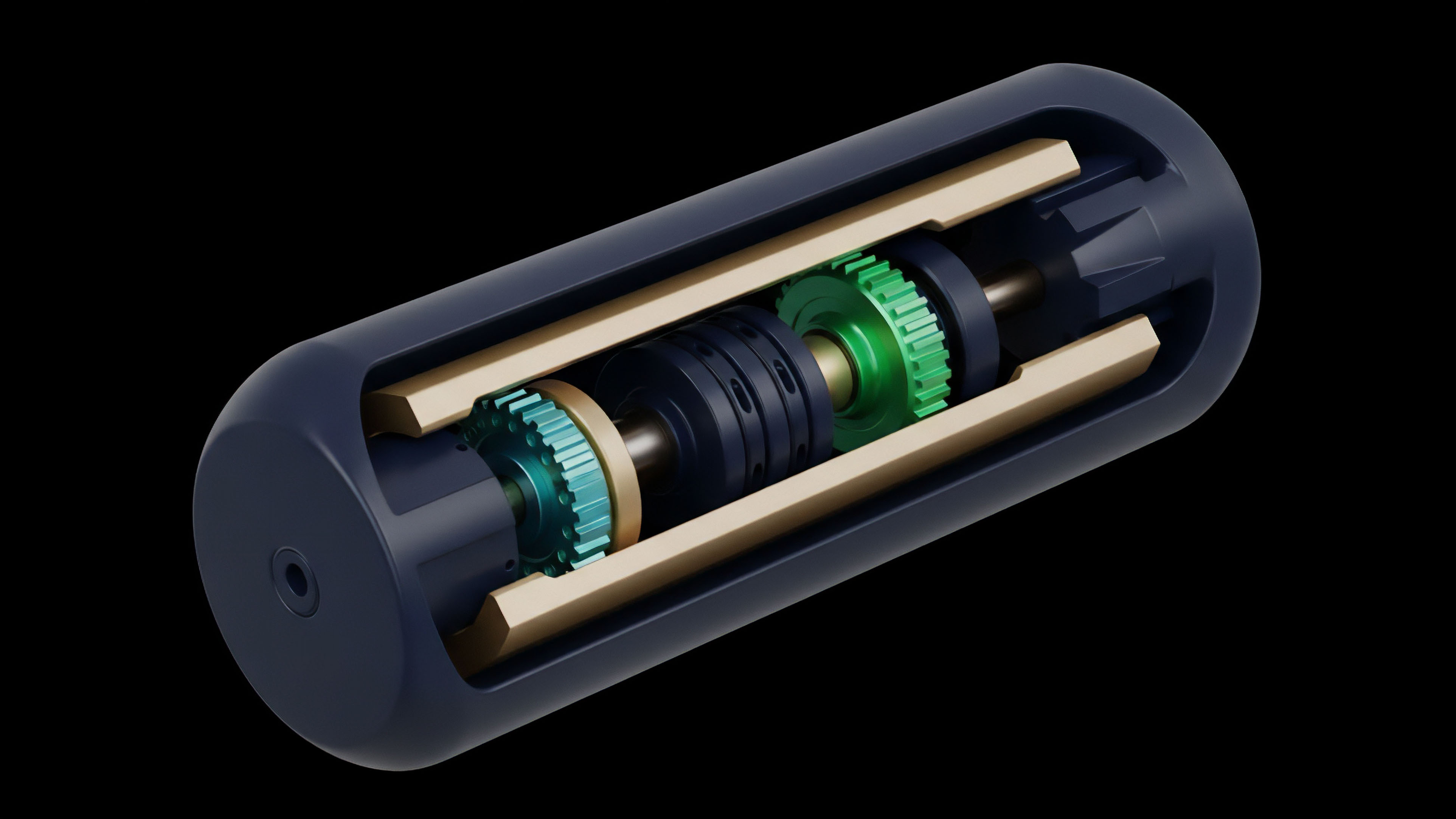
A primary threat to stability is the recursive nature of liquidations. When a large position is closed, it can drive the price down further, triggering more liquidations. This feedback loop can lead to a total collapse of the system if not managed correctly.
Robust protocols use slippage limiters and auction-based liquidations to mitigate this effect.

Approach
Current implementations utilize over-collateralization and insurance funds to protect the protocol from bad debt. These mechanisms ensure that the system remains solvent even during rapid price declines. The operational methodology involves continuous monitoring of oracle feeds to ensure that the price data used by the protocol is accurate and timely.
- Multi-Source Oracles: Aggregating price data from multiple independent sources to prevent manipulation.
- Tiered Collateralization: Assigning different risk weights to assets based on their liquidity and volatility profiles.
- Automated Deleveraging: Forcibly closing positions when the insurance fund reaches a critical level to prevent total insolvency.
Failure in a synthetic asset system often stems from a mismatch between the speed of price discovery and the execution of automated risk management.
The management of Systemic Integrity requires a proactive stance toward risk. Developers must constantly stress-test their protocols against various attack vectors, including oracle manipulation and flash loan exploits. By identifying vulnerabilities before they are exploited, the community can maintain the long-term stability of the ecosystem.

Operational Methodology
The execution of risk management policies must be transparent and predictable. Users need to know exactly when their positions will be liquidated and what the penalties will be. This transparency builds trust in the system and encourages more participants to provide liquidity.

Emergency Procedures
In extreme cases, a protocol may need to enter a “pause” state or trigger a global settlement. These emergency procedures are designed to protect the remaining collateral and ensure a fair distribution of assets to all stakeholders. While these measures are a last resort, their presence is a necessary component of a complete risk management strategy.


Evolution
The transition from isolated liquidity pools to cross-margin systems has increased capital efficiency.
Protocols now support multi-asset collateral, allowing users to offset risks across different positions. This progression has led to a more integrated and resilient financial ecosystem where liquidity can flow more freely.
| Phase | Architecture | Risk Management |
| V1 | Isolated Pools | Simple Over-collateralization |
| V2 | Cross-Margin | Insurance Funds |
| V3 | Multi-Asset | Dynamic Risk Parameters |
As the market matured, the focus shifted from simple lending protocols to complex derivative platforms. This required a higher level of mathematical precision and more robust technical infrastructure. The introduction of layer-2 scaling solutions has also allowed for faster and cheaper transactions, improving the efficiency of liquidation engines.

Systemic Progression
The history of decentralized finance is a series of lessons learned from failures. Each exploit or collapse has led to the development of better security practices and more resilient protocol designs. This iterative process is similar to how biological systems adapt to new threats, becoming stronger over time.

Cross-Protocol Interconnection
The increasing interconnection between different protocols has created new risks and opportunities. While shared liquidity can improve efficiency, it also creates the potential for contagion. If one protocol fails, it can have a ripple effect across the entire ecosystem.
Managing this risk requires a holistic view of the market and a focus on Systemic Integrity at the network level.


Horizon
Future risks involve the intersection of Miner Extractable Value (MEV) and liquidation cascades. As trading speed increases, the latency of oracle updates becomes a primary vulnerability. The projected path for the industry involves the integration of zero-knowledge proofs to provide privacy-preserving solvency audits.
| Parameter | Effect on Solvency | Mitigation Strategy |
| Oracle Latency | High | Multi-source Feeds |
| Slippage | Medium | Tiered Liquidations |
| Contract Risk | High | Formal Verification |
The development of decentralized circuit breakers will provide an additional layer of protection against flash crashes. These mechanisms will automatically pause trading or liquidations when certain conditions are met, allowing the market to stabilize. This will prevent the type of cascading failures that have plagued both traditional and decentralized markets in the past.

Future Trajectory
The integration of artificial intelligence into risk management engines will allow for more dynamic and responsive protocols. AI models can analyze vast amounts of on-chain data to identify emerging risks and adjust parameters in real-time. This will lead to a more stable and efficient financial system that can withstand even the most extreme market conditions.

Global Regulatory Integration
As decentralized finance continues to grow, it will inevitably come under more scrutiny from regulators. The challenge will be to maintain Systemic Integrity and decentralization while complying with new legal requirements. This will require a high degree of technical innovation and a commitment to the foundational principles of the industry.

Glossary

Margin Engine Architecture

Financial Infrastructure

Insurance Fund Management

Byzantine Fault Tolerance

Price Discovery Latency

Liquidity Depth

Decentralized Finance

Trustless Finance

Delta Neutrality