Essence
Real-time risk calculation in crypto options represents the continuous, automated assessment of a derivatives portfolio’s exposure to market variables. The core function is to maintain the solvency of collateralized positions against the backdrop of extreme volatility and fragmented liquidity inherent to digital asset markets. This process extends far beyond traditional mark-to-market valuations; it involves the dynamic calculation of a position’s “Greeks” ⎊ specifically Delta, Gamma, and Vega ⎊ to understand how rapidly the portfolio’s value changes in response to price movement, volatility shifts, and time decay.
A critical aspect of this calculation is the determination of collateral health, where the system must continuously verify that the collateral value exceeds the risk-adjusted liability of the option position. This calculation serves as the trigger for automated liquidations, which are necessary to prevent systemic losses and ensure the integrity of the protocol’s insurance fund. The speed of these calculations is paramount in crypto, where market movements can occur in seconds, leaving little room for human intervention or delayed batch processing.
The calculation of Greeks is essential for understanding the instantaneous change in portfolio value relative to market variables, allowing for precise risk management in highly volatile environments.
The underlying challenge for real-time risk calculations in decentralized finance (DeFi) options protocols is the deterministic nature of smart contracts. Unlike traditional finance, where risk managers have discretion over margin calls and liquidation thresholds, DeFi protocols must pre-program these rules. The risk calculation engine must be efficient enough to update positions frequently to prevent a death spiral where undercollateralized positions cannot be liquidated quickly enough to cover losses, yet robust enough to withstand high gas fees and network congestion during periods of market stress.
This requirement forces a trade-off between capital efficiency and systemic security.


Origin
The concept of real-time risk calculation originates in traditional finance (TradFi) with the advent of electronic trading and complex derivatives. Early models, such as Black-Scholes, provided a theoretical framework for option pricing and risk sensitivity (the Greeks), but their real-time application required significant computational resources.
The shift from over-the-counter (OTC) markets to centralized exchanges necessitated the development of sophisticated risk engines capable of processing high-frequency data and managing margin requirements across large portfolios. The core principles were established to prevent a single counterparty failure from causing systemic contagion, a lesson learned from numerous financial crises. When applied to crypto, these principles were initially replicated by centralized exchanges (CEXs) that offered options and perpetual futures.
However, the true innovation began with the emergence of decentralized options protocols. These protocols had to fundamentally re-architect risk calculation to function without a centralized clearinghouse or trusted intermediary. Early DeFi protocols often relied on simple overcollateralization ⎊ a brute-force method of risk management where a position required significantly more collateral than its potential loss.
This approach, while secure, was highly capital inefficient. The evolution of DeFi risk calculation was driven by the need to increase capital efficiency while maintaining a trustless environment. This required moving beyond simple collateral ratios to dynamic, real-time calculations that continuously adjust collateral requirements based on a position’s changing risk profile, effectively automating the role of a traditional risk manager within a smart contract.


Theory
The theoretical foundation of real-time risk calculation in crypto options rests on the application of quantitative finance models to an adversarial and non-stationary environment. The primary theoretical challenge is the breakdown of key assumptions from classical models. The Black-Scholes model assumes continuous trading, constant volatility, and normally distributed price movements ⎊ none of which hold true for crypto markets.
Volatility in crypto exhibits significant “fat tails” (extreme price moves are more frequent than a normal distribution predicts) and volatility clustering (periods of high volatility tend to follow high volatility). To address this, real-time risk calculation engines often rely on more sophisticated models that account for these non-standard properties. This includes stochastic volatility models, which allow volatility to change over time, and jump-diffusion models, which account for sudden, discontinuous price changes.
The calculation of the Greeks must be adapted to these models, resulting in a more complex risk surface. A critical component is the dynamic calculation of implied volatility (IV), which is derived from market prices rather than historical data. In real-time, the system must continuously construct and update the “volatility surface,” a three-dimensional plot of IV against strike price and time to expiration.

The Greeks and Liquidation Dynamics
The core theoretical framework for risk management in options protocols revolves around the Greeks. These sensitivities dictate the required collateral adjustments in real time.
| Greek | Definition | Real-Time Risk Implication in Crypto Options |
|---|---|---|
| Delta | Sensitivity of option price to changes in the underlying asset price. | Used to calculate the “hedge ratio.” A high delta means the position is highly exposed to price changes. Real-time delta calculation determines the amount of collateral needed to cover potential losses from a small price move. |
| Gamma | Sensitivity of Delta to changes in the underlying asset price. | Measures the rate at which a position’s risk exposure changes. High gamma indicates a rapid increase in risk near the strike price, requiring frequent and large collateral adjustments. It is a key factor in calculating the required buffer for sudden market movements. |
| Vega | Sensitivity of option price to changes in implied volatility. | Measures the risk associated with changes in market sentiment. In crypto, vega risk is significant because implied volatility can spike dramatically. Real-time vega calculation ensures the collateral buffer accounts for sudden increases in expected future volatility. |
| Theta | Sensitivity of option price to the passage of time. | Measures the rate of time decay. Real-time theta calculation allows for the gradual release of collateral as time passes and the option’s value decreases, improving capital efficiency for the option writer. |


Approach
The implementation of real-time risk calculations in DeFi protocols requires a specific architectural approach to overcome the limitations of blockchain latency and cost. The most common solution involves a hybrid architecture that balances on-chain security with off-chain computational efficiency.
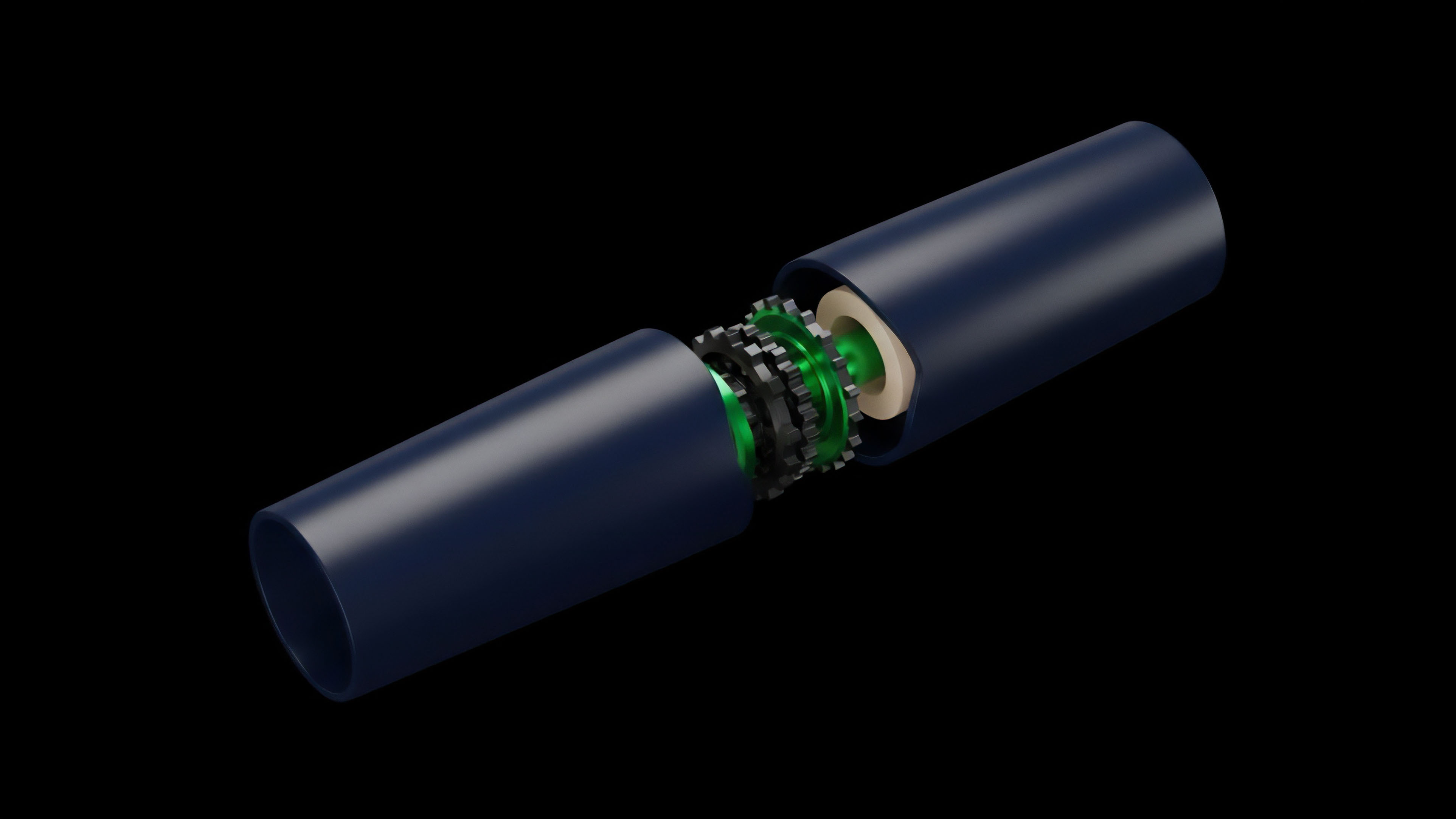
The hybrid architecture of real-time risk calculations utilizes off-chain computation for speed and on-chain verification for security, mitigating the limitations of blockchain processing.
The core challenge is the “oracle problem.” To calculate risk in real time, the protocol needs continuous, accurate price feeds for both the underlying asset and the collateral. The latency of these oracles ⎊ the delay between a price change and the smart contract’s awareness of it ⎊ creates a window for arbitrage and liquidation front-running. Sophisticated market participants can observe a price change on a CEX, calculate the resulting collateral shortfall on a DeFi protocol, and execute a liquidation transaction before the protocol’s oracle updates, profiting from the information asymmetry.
The current approach to mitigating this involves a multi-layered system:
- Off-Chain Calculation Engine: The heavy computational work ⎊ calculating Greeks, updating the volatility surface, and assessing portfolio health ⎊ is performed off-chain by dedicated “keepers” or “bots.” These systems monitor market data feeds continuously and perform complex simulations to determine if a position is approaching the liquidation threshold.
- On-Chain Liquidation Logic: The smart contract itself contains the final, deterministic logic for liquidation. The off-chain keeper merely triggers this logic by providing proof that the position has fallen below the collateral threshold. The smart contract verifies this proof against a set of predefined rules and executes the liquidation.
- Dynamic Margin Requirements: Protocols are moving away from fixed collateral ratios. Instead, the real-time risk calculation engine dynamically adjusts the required collateral based on the position’s Greeks. For example, a position with high gamma ⎊ meaning its risk changes rapidly ⎊ will require a larger collateral buffer to absorb sudden price movements.
- Market Data Aggregation: To prevent manipulation of a single price feed, risk calculation engines often rely on aggregated data from multiple oracles. This reduces the risk of a single point of failure and makes manipulation significantly more expensive.

Evolution
The evolution of real-time risk calculation in crypto options has mirrored the increasing complexity of the underlying financial products. Early systems were rudimentary, focusing on simple overcollateralization where a user had to lock significantly more collateral than the value of the option being written. This approach was secure but inefficient.
The first major step forward involved the introduction of “dynamic margin” where collateral requirements were tied to a position’s Delta, a single-factor risk metric. This allowed for greater capital efficiency by reducing the required collateral for positions with lower delta exposure. The current state of the art involves a transition from single-asset collateral to multi-asset collateral, where users can post a variety of tokens to secure their positions.
This increases capital efficiency by allowing users to use less volatile assets as collateral while holding riskier assets. The calculation engine must then perform a cross-margin risk assessment, where the risk of the entire portfolio ⎊ not just a single position ⎊ is calculated in real time. This requires complex algorithms to calculate the correlation between different collateral assets and the underlying option asset.
The next phase of evolution involves a move toward “portfolio margining,” where the risk of a user’s entire portfolio, including both long and short positions across multiple assets, is netted against each other. This allows for significant capital efficiency by recognizing that a short position in one asset may partially hedge a long position in another. The real-time risk calculation must then be sophisticated enough to model these complex relationships, moving from simple single-position risk to systemic portfolio risk.
This requires a shift from “Mark-to-Market” to “Mark-to-Model,” where the value of illiquid positions is determined by a pricing model rather than an active market price.


Horizon
Looking ahead, the future of real-time risk calculations in crypto options will be defined by three key developments: the integration of machine learning for predictive modeling, the use of zero-knowledge proofs for off-chain calculation verification, and the development of cross-chain risk primitives. The current challenge in real-time risk calculation is its reliance on historical data and deterministic models for implied volatility.
The next generation of risk engines will likely integrate machine learning models to predict volatility changes and identify emerging risks more accurately. These models could analyze order book data, sentiment analysis, and on-chain activity to provide a more forward-looking risk assessment. The key challenge here is how to deploy these complex models in a decentralized and verifiable manner without sacrificing transparency.
The future of real-time risk calculations lies in integrating predictive machine learning models and zero-knowledge proofs to enhance both accuracy and privacy in decentralized systems.
A second critical development is the use of zero-knowledge proofs (ZKPs). The current hybrid approach relies on off-chain calculations that are inherently opaque to the on-chain smart contract. ZKPs allow an off-chain calculation engine to prove to the smart contract that a calculation was performed correctly, without revealing the inputs or the methodology. This provides a mechanism for verifying complex risk calculations while maintaining the privacy of proprietary risk models and preventing front-running of liquidation triggers. Finally, the development of cross-chain risk primitives will be essential for scaling DeFi. As protocols spread across different blockchains, a single risk calculation engine will need to manage collateral and positions across multiple chains simultaneously. This requires a new architecture for communication and settlement, where a risk event on one chain can trigger a liquidation on another. The ability to manage real-time risk across a fragmented multi-chain landscape will determine the long-term viability of decentralized derivatives as a foundational layer for global finance.

Glossary

Real-Time Probabilistic Margin

Machine Learning

Automated Liquidations

Real-Time Risk Measurement

Real-Time Solvency Checks

Real Time Pnl

Real-Time Balance Sheet

Real-Time Risk Dashboard

Real-Time Solvency Monitoring