

Essence
High-fidelity financial settlement within decentralized environments necessitates an unbroken cryptographic tether to external market reality. Real-Time Data Oracles function as this mandatory bridge, translating stochastic external price discovery into deterministic on-chain state updates. These systems eliminate the isolation of the virtual machine, allowing smart contracts to react to exogenous stimuli with the precision required for complex financial instruments.
Without this constant stream of verified data, decentralized derivatives would remain static, unable to adjust collateral requirements or execute liquidations in response to shifting market conditions. The functional identity of these systems resides in their ability to provide verifiable truth under adversarial conditions. Real-Time Data Oracles do not simply report numbers; they provide a consensus-backed representation of external state that is resistant to manipulation and censorship.
This process involves multiple layers of data aggregation, cryptographic signing, and economic incentives to ensure that the information delivered to the blockchain remains accurate even when individual data sources or nodes fail.
Real-Time Data Oracles represent the architectural boundary where external market volatility meets deterministic on-chain logic.
Architecturally, these systems operate as middleware that continuously monitors off-chain exchanges, liquidity pools, and traditional financial venues. They transform raw data points into structured payloads that the blockchain can ingest and verify. This transformation is the primary driver of liquidity in the decentralized options market, as it provides the certainty required for market makers to quote spreads and for traders to manage delta-neutral positions.
The systemic reliance on these feeds creates a dependency where the security of the oracle becomes the security of the entire protocol.


Origin
The necessity for high-frequency data delivery emerged from the early limitations of static blockchain architectures. Initial iterations of decentralized applications relied on manual price updates or centralized feeds, which introduced significant latency and single points of failure. As the complexity of on-chain finance increased, the demand for a decentralized solution to the “Oracle Problem” became the primary focus for developers seeking to build resilient derivatives platforms.
The transition from basic price reporting to Real-Time Data Oracles was driven by the explosive growth of decentralized finance in the late 2010s. Early protocols faced catastrophic failures during high-volatility events because their data feeds could not keep pace with rapid price movements on centralized exchanges. These events highlighted the requirement for a more robust, low-latency infrastructure capable of providing updates within seconds rather than minutes.

Early Data Transmission Models
- Centralized API Integrations utilized single-source data points, creating immense systemic risk and vulnerability to simple data corruption.
- On-Chain Reference Contracts provided periodic updates that were often stale by the time a transaction reached the settlement layer.
- Aggregated Decentralized Feeds introduced the first layer of resilience by requiring consensus among multiple independent nodes before updating the state.
Technological advancements in networking and consensus algorithms allowed for the development of push-based and pull-based architectures. These innovations enabled Real-Time Data Oracles to reduce the temporal gap between price discovery and on-chain confirmation. The shift toward specialized data networks marked the beginning of a new era where data delivery is treated as a first-class citizen in the decentralized financial stack, rather than an afterthought.


Theory
The mathematical foundation of Real-Time Data Oracles rests on the optimization of three competing variables: latency, accuracy, and cost.
In the context of crypto options, latency is the most significant risk factor. If an oracle reports a price that is even seconds behind the actual market, it creates an arbitrage opportunity that can drain a protocol’s liquidity. This “Latency Arbitrage” is a constant threat that architects must mitigate through sophisticated data aggregation techniques and high-frequency update cycles.
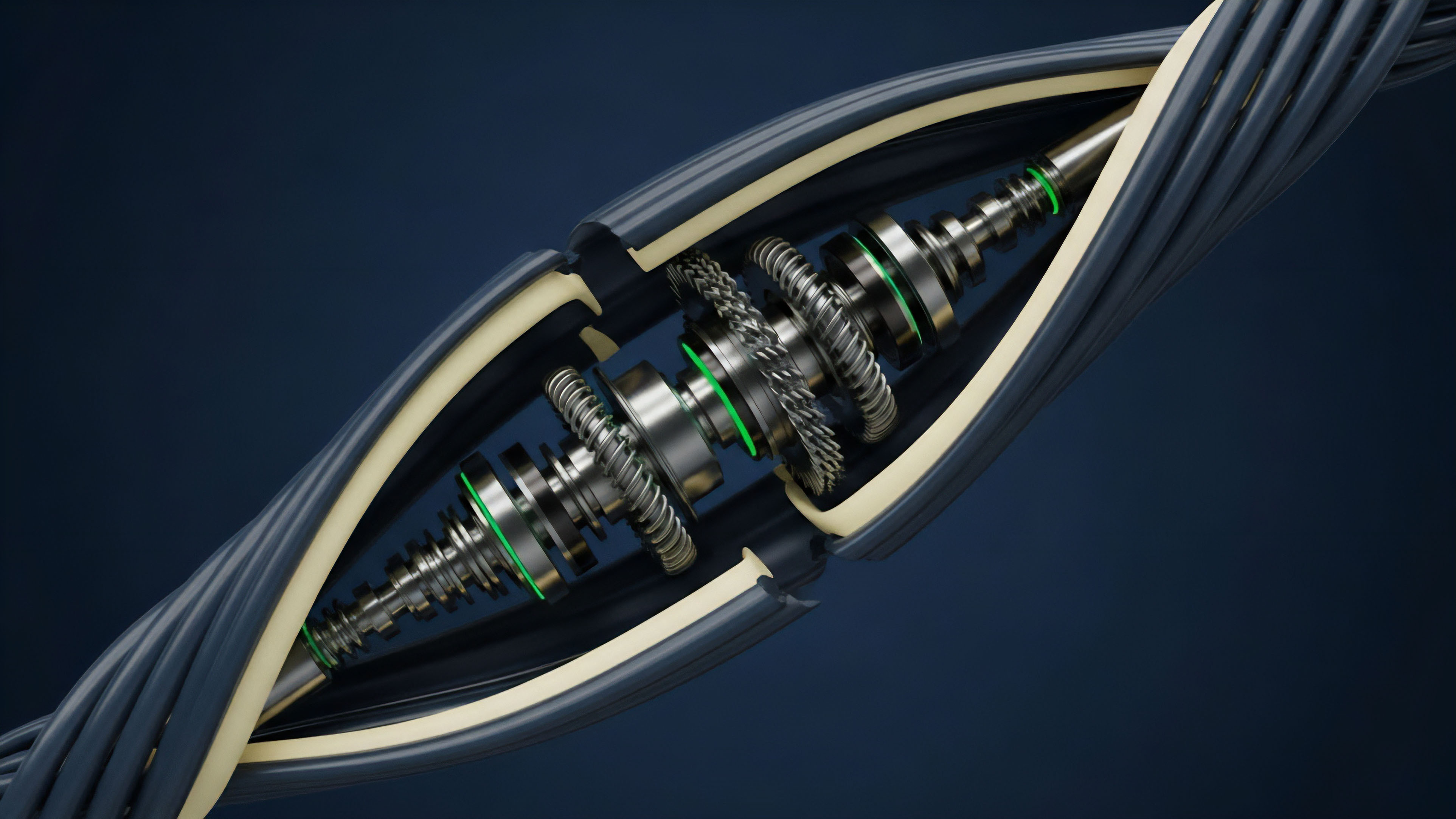
Biological nervous systems offer a compelling parallel to this technical requirement; just as a reflex action requires near-instantaneous signal transmission from the periphery to the central nervous system to maintain homeostasis, a derivatives protocol requires immediate data delivery to maintain solvency during market shocks. This transmission must occur through a path of least resistance while maintaining cryptographic integrity.
Architecture Parameters
| Parameter | Description | Impact on Derivatives |
|---|---|---|
| Deviation Threshold | The percentage change in price required to trigger an update. | Determines the sensitivity of liquidations and margin calls. |
| Heartbeat Interval | The maximum time allowed between updates regardless of price change. | Prevents stale data during periods of low volatility. |
| Quorum Requirement | The minimum number of nodes that must agree on a data point. | Balances security against the speed of consensus. |
Settlement precision in decentralized options depends entirely on the minimization of the temporal gap between price discovery and cryptographic confirmation.

Aggregation Logic and Variance Mitigation
To ensure accuracy, Real-Time Data Oracles employ various mathematical models to filter out noise and manipulation. The most common method is the Medianized Price Feed, which takes the median value from a set of independent data providers. This approach is robust against outliers ⎊ if one exchange experiences a flash crash or a node provider is compromised, the median remains stable.
More advanced systems utilize Volume Weighted Average Price (VWAP) or Time Weighted Average Price (TWAP) models to provide a more comprehensive view of market liquidity and prevent manipulation through low-volume trades on obscure venues.


Approach
Current implementations of Real-Time Data Oracles have bifurcated into two primary architectural styles: Push-based and Pull-based. Push-based systems, such as the original Chainlink model, involve nodes continuously monitoring price changes and “pushing” updates to the blockchain whenever a specific threshold is met. This ensures that the on-chain price is always relatively current, but it incurs significant gas costs, especially during periods of high volatility when updates are frequent.
Conversely, Pull-based systems, exemplified by protocols like Pyth or API3, allow users or the protocol itself to “pull” the latest data point onto the blockchain only when it is needed for a specific transaction. This shift in responsibility significantly reduces the overhead for the oracle network and allows for much higher update frequencies off-chain. When a trader opens an option position, the protocol fetches the most recent price signature and verifies it on-chain as part of the transaction.

Comparison of Delivery Mechanisms
| Feature | Push Architecture | Pull Architecture |
|---|---|---|
| Gas Efficiency | Low (Protocol pays for every update) | High (User pays only when needed) |
| Update Frequency | Limited by block times and cost | Near-instantaneous off-chain |
| Reliability | On-chain state is always available | Requires external trigger for update |

Security and Verification Protocols
The security of Real-Time Data Oracles is maintained through a combination of economic incentives and cryptographic proofs. Node operators are often required to stake native tokens as collateral, which can be slashed if they provide inaccurate data or fail to maintain uptime. This creates a Game Theoretic Equilibrium where the most profitable strategy for a node is to act honestly.
Furthermore, many modern oracles utilize Threshold Signatures or Zero-Knowledge Proofs to aggregate multiple data points into a single, compact proof that can be efficiently verified on-chain, ensuring that the data has not been tampered with during transmission.


Evolution
The progression of data delivery has moved from general-purpose feeds toward highly specialized, application-specific infrastructure. Early oracles were designed to provide a broad range of data to any protocol that requested it. However, the specific needs of derivatives ⎊ such as sub-second latency and high-precision volatility indices ⎊ have led to the rise of App-Specific Oracles.
These systems are optimized for the unique requirements of a single protocol, allowing for tighter spreads and more aggressive leverage. A significant shift in the landscape is the emergence of Oracle Extractable Value (OEV). This concept recognizes that the update of an oracle price often creates a profitable opportunity for liquidators or arbitrageurs.
In traditional systems, this value is captured by miners or validators who front-run the oracle update. Modern Real-Time Data Oracles are being redesigned to capture this value and return it to the protocol or its users. By auctioning off the right to be the first to act on a price update, protocols can create a new revenue stream and improve the overall efficiency of their liquidation engines.
This represents a move toward a more integrated financial stack where data delivery and value capture are inextricably linked, creating a more sustainable economic model for both the oracle providers and the decentralized applications they support. This integration is not a minor adjustment; it is a fundamental restructuring of how information and value flow through the decentralized web. The ability to internalize OEV changes the incentive structure for all market participants, turning what was once a systemic leak into a controlled and productive mechanism for protocol growth.
We are seeing the death of the passive data feed and the birth of the active financial agent, where the oracle is no longer just a reporter but a central participant in the market’s mechanical execution. This evolution is mandatory for the survival of decentralized finance as it begins to compete directly with the latency and efficiency of centralized institutions.
The transition toward application-specific data feeds represents a strategic shift from general-purpose information to high-fidelity financial infrastructure.


Horizon
The future of Real-Time Data Oracles lies in the total elimination of latency and the integration of privacy-preserving technologies. As layer-2 and layer-3 scaling solutions continue to mature, the bottleneck for data delivery will shift from blockchain throughput to the speed of light itself. We are moving toward a state of Hyper-Latency Data Transmission, where on-chain prices are updated in lockstep with global markets, enabling the creation of decentralized high-frequency trading venues.
The integration of Zero-Knowledge Oracles will allow for the verification of sensitive or private data without revealing the underlying information. This will open the door for decentralized options based on private financial records, credit scores, or proprietary corporate data. Furthermore, the development of Cross-Chain Data Synchronization will enable oracles to provide a unified view of liquidity across multiple disparate networks, reducing fragmentation and improving price discovery for all participants.

Future Technical Milestones
- ZK-Proof Data Validity ensures that the data source itself is verified without revealing the API keys or the specific origin of the information.
- Decentralized Volatility Oracles will provide real-time, on-chain calculations of implied volatility, allowing for the automated pricing of complex options.
- Autonomous Oracle Governance will utilize AI agents to dynamically adjust deviation thresholds and quorum requirements based on market conditions.
The ultimate goal is the creation of a Sovereign Data Layer that exists independently of any single blockchain. This layer will serve as the global source of truth for all decentralized financial activity, providing a resilient and transparent foundation for the next generation of global markets. The convergence of cryptography, game theory, and high-speed networking will ensure that Real-Time Data Oracles remain the most imperative component of the decentralized financial architecture.

Glossary

High-Fidelity Oracles

Real-Time Financial Operating System

Risk Aggregation Oracles

On-Chain Risk Oracles

Decentralized Risk Oracles

Decentralized Data Oracles Ecosystem and Governance Models

Identity Oracles

Proactive Oracles

Push Oracles