



Essence
Protocol Physics Implementation defines the translation of financial risk parameters into deterministic code within decentralized derivatives architectures. It operates as the mechanical bridge between abstract mathematical models ⎊ such as Black-Scholes or local volatility surfaces ⎊ and the immutable execution environment of a blockchain. By codifying margin requirements, liquidation logic, and settlement finality, these systems establish a rigid operational boundary that replaces discretionary human oversight with verifiable algorithmic constraints.
Protocol Physics Implementation functions as the technical bridge between abstract financial risk models and immutable blockchain execution.
This implementation necessitates a precise mapping of market events to contract states. When a protocol executes a trade, it does not merely process data; it enforces a specific version of market reality. The stability of the entire derivative venue depends on the accuracy with which these physical properties ⎊ leverage, collateralization, and time-decay ⎊ are rendered into smart contract logic.
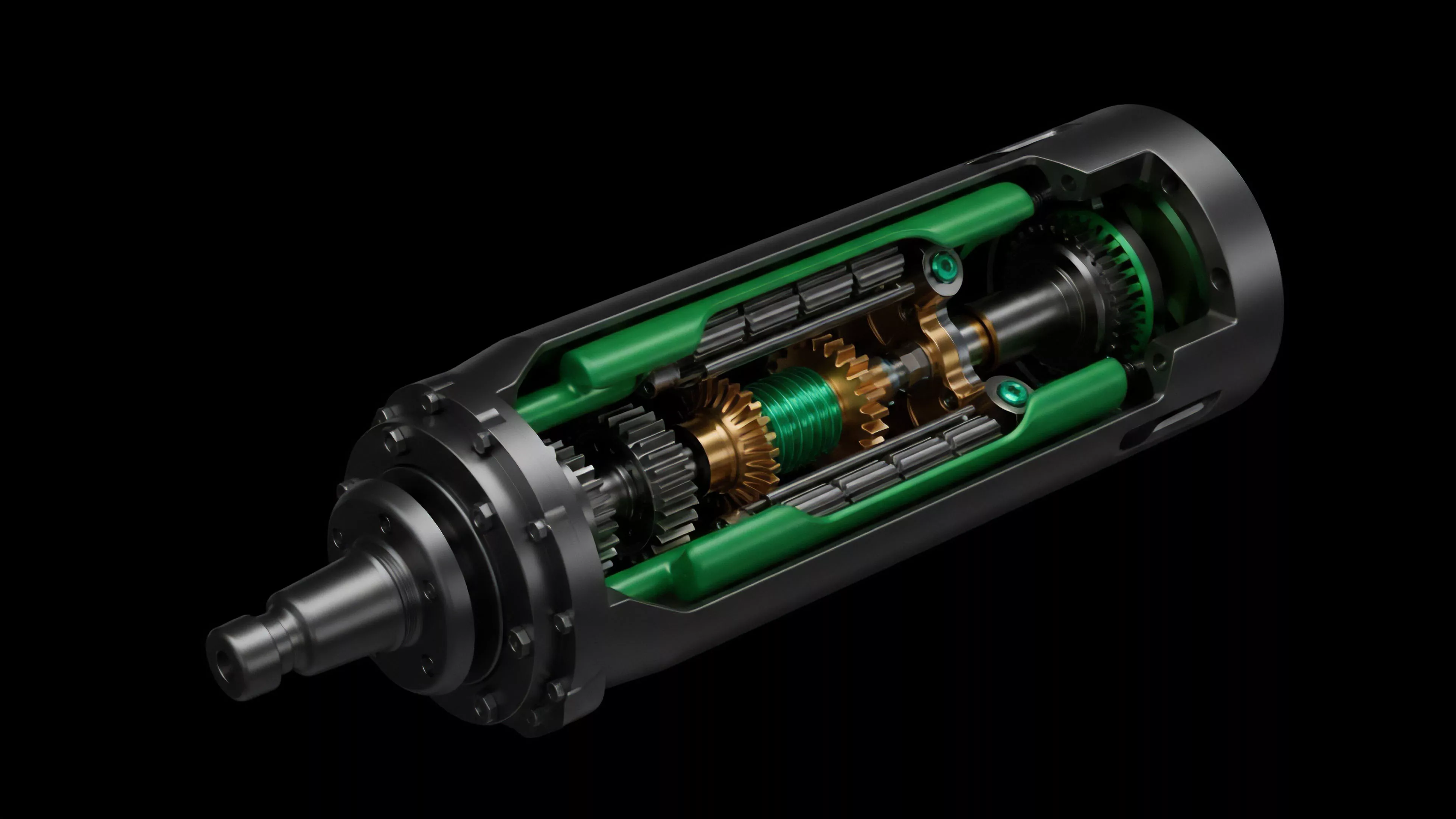
Systemic Integrity
The architecture of Protocol Physics Implementation dictates the resilience of the market under stress. If the code fails to capture the velocity of price movements or the correlation between collateral assets, the protocol faces systemic collapse. Participants rely on the predictability of these rules to manage their own risk, making the transparency of the underlying code a requirement for institutional participation.

Origin
The genesis of Protocol Physics Implementation traces back to the initial attempts to replicate traditional order books on-chain.
Early decentralized finance experiments relied on simplistic collateralization ratios that proved insufficient during periods of high volatility. Developers realized that to achieve maturity, protocols needed to incorporate more sophisticated risk engines capable of handling non-linear payoffs and rapid liquidation cycles.
Early decentralized derivative attempts prioritized accessibility over robust risk modeling, leading to the current focus on mechanical precision.
This shift originated from the recognition that traditional finance models could not be directly ported to decentralized environments without accounting for latency, oracle dependency, and gas costs. Engineers began to treat smart contracts as physical systems where every state change must be accounted for within the constraints of the network.
- Oracle Dependencies forced architects to design systems that handle data feed failure gracefully.
- Liquidation Engines evolved from basic threshold checks into complex auction-based mechanisms.
- Margin Requirements moved toward dynamic calculations based on real-time portfolio risk.

Theory
Protocol Physics Implementation relies on the rigorous application of quantitative finance to decentralized environments. At its core, it requires the conversion of continuous-time models into discrete-time execution steps that match the block production cadence of the underlying network. This introduces specific challenges regarding precision, rounding, and the handling of state transitions.
| Parameter | Mechanism |
| Delta Neutrality | Automated rebalancing of synthetic exposure |
| Liquidation Threshold | Deterministic triggers based on collateral health |
| Funding Rates | Algorithmic balancing of open interest |
The mathematical models underpinning these systems must account for the reality that decentralized markets exhibit unique volatility patterns. Unlike centralized exchanges, these protocols operate in a space where liquidity is often fragmented and participants react to smart contract risks alongside market risks. Sometimes I consider the way a protocol handles a sudden drop in collateral value as similar to a structural engineer calculating the load-bearing capacity of a bridge under extreme seismic activity.
The physics of the system remain constant even when the environment becomes unpredictable.
Quantitative rigor within decentralized protocols requires translating continuous-time models into discrete-time blockchain state transitions.

Approach
Current implementation strategies focus on maximizing capital efficiency while maintaining strict safety buffers. Developers now utilize modular architectures where the risk engine is separated from the trading interface, allowing for independent audits and upgrades of the core logic. This approach mitigates the risk of a single point of failure within the system.
- Modular Design enables isolated updates to risk parameters without disrupting the entire liquidity pool.
- Off-chain Computation provides a method for calculating complex Greeks while keeping settlement on-chain.
- Stress Testing involves simulating adversarial market conditions to identify potential liquidation gaps.
This methodology requires a deep understanding of the interplay between market microstructure and the constraints of the blockchain. Architects must balance the need for fast execution with the necessity of verifying every trade against the protocol’s internal risk invariants.

Evolution
The trajectory of Protocol Physics Implementation has moved from opaque, monolithic structures toward transparent, composable frameworks. Early iterations were often black boxes where users had to trust the protocol’s internal math.
Today, the shift toward open-source, verifiable risk engines has become the standard for any venue seeking to attract serious capital.
Evolution in this space moves toward total transparency and composability, replacing trust with verifiable algorithmic enforcement.
The integration of cross-chain liquidity and advanced synthetic assets has further pushed the boundaries of what these systems can handle. As protocols grow, they increasingly adopt techniques from high-frequency trading to optimize order flow and reduce slippage, ensuring that the physics of the system remain efficient even during high-volume events.

Horizon
The future of Protocol Physics Implementation lies in the development of autonomous risk management systems that adjust parameters in real-time based on network conditions. These systems will likely incorporate machine learning to predict volatility spikes and preemptively adjust margin requirements, creating a self-healing market structure.
| Feature | Anticipated Development |
| Predictive Liquidation | AI-driven margin adjustments |
| Cross-Protocol Risk | Unified collateral health monitoring |
| Dynamic Fees | Volatility-adjusted transaction pricing |
The ultimate goal is to create a financial environment where the rules of exchange are as reliable as the laws of physics. By embedding risk management directly into the protocol, we move toward a system that remains stable regardless of the participants or the underlying assets, providing a foundation for global, permissionless derivatives. What remains unknown is whether the inherent latency of decentralized networks can ever fully match the requirements of global, millisecond-level derivative pricing, or if a new class of hybrid settlement layers will be required to resolve this fundamental tension?