

Essence
The primary challenge in decentralized derivatives markets is the cost of capital, specifically the friction created by over-collateralization requirements. Protocol Capital Efficiency (PCE) measures how effectively a protocol utilizes locked assets to facilitate risk transfer. In traditional finance, capital efficiency is achieved through sophisticated prime brokerage relationships and portfolio margining systems that recognize offsetting risks.
Decentralized protocols, however, operate in a trustless environment where every position must be secured on-chain, often leading to significant capital lockup. A protocol with high PCE maximizes the amount of risk exposure (notional value) that can be supported by a given amount of collateral. This optimization is critical for reducing trading costs, increasing liquidity provision incentives, and making decentralized options viable for sophisticated strategies.
The systemic goal is to reduce the capital cost of participation to approach the efficiency levels of centralized exchanges, without sacrificing the non-custodial nature of the underlying technology.
Protocol Capital Efficiency is the measure of how much risk exposure a derivatives protocol can support per unit of collateral locked in the system.
The core conflict arises from the necessity of on-chain verification. Early DeFi protocols were forced to use simple, static collateral ratios, typically requiring 100% or more collateral for every position. This approach, while secure, renders capital dormant and unattractive for professional market makers.
High capital requirements directly increase the cost of carry for options strategies, making them less competitive against centralized counterparts. The pursuit of PCE is therefore the central design challenge for options protocols seeking to attract significant liquidity and volume. It represents the transition from a naive, collateral-heavy design to a sophisticated, risk-managed architecture.


Origin
The concept of capital efficiency in derivatives originates in traditional financial engineering, where it underpins the structure of margin accounts. In the traditional context, a prime broker provides a consolidated view of a client’s portfolio, allowing for cross-margining across different asset classes and instruments. The calculation of margin requirements is based on a Value-at-Risk (VaR) model, where a single margin account secures multiple positions with potentially offsetting risks.
The advent of decentralized finance introduced the capital lockup problem. Early protocols like Hegic or Opyn v1 utilized simple vaults where liquidity providers locked capital to underwrite options. Each option sold required full collateralization, meaning capital could not be reused across different positions.
This architecture resulted in extremely low capital efficiency, often requiring a 1:1 ratio of collateral to potential liability. The capital efficiency problem was further exacerbated by the fragmented liquidity across different options protocols, preventing any form of systemic cross-margining. The initial design choices of DeFi options protocols were heavily influenced by the limitations of the Ethereum Virtual Machine (EVM).
High gas costs made frequent on-chain risk calculations prohibitively expensive. The need for trustless, immediate settlement necessitated over-collateralization to prevent insolvencies during periods of network congestion or price volatility. The first attempts to improve efficiency focused on basic vault design optimizations, such as allowing liquidity providers to specify a price range where their capital would underwrite options, similar to concentrated liquidity in AMMs.
This was a necessary step to move beyond simple, full-collateralization models and start addressing the cost of capital for liquidity providers.


Theory
The theoretical foundation of Protocol Capital Efficiency rests on the transition from static, position-based collateral to dynamic, portfolio-based margining. Static margining, where each position requires a fixed percentage of collateral regardless of other positions in the portfolio, is computationally simple but capital inefficient.
Dynamic margining, in contrast, calculates margin requirements based on the aggregate risk of the entire portfolio. This approach relies on a robust risk engine that simulates potential market movements and determines the maximum potential loss across all positions. The key financial concept here is portfolio risk offset , where a short call position on an asset might be offset by a long put position on the same asset, reducing the overall margin requirement compared to calculating each position individually.
The mathematical challenge for protocols is to accurately calculate this portfolio risk in real-time on-chain. This requires moving beyond simplistic models and implementing advanced risk metrics.
- Risk-Based Margining (RBM): This approach uses a risk model (like VaR or Expected Shortfall) to calculate margin requirements. The margin is not a fixed percentage of the notional value but rather a function of the portfolio’s potential loss under adverse market conditions. This allows for significantly lower collateral requirements for well-hedged portfolios.
- Implied Volatility Surface Modeling: Capital efficiency in options protocols is highly dependent on accurately pricing risk. A protocol must dynamically adjust its pricing based on the market’s implied volatility skew and term structure. A failure to accurately model the skew can lead to either mispricing options (and thus, losses for liquidity providers) or excessive collateral requirements to compensate for the uncertainty.
- Cross-Margining Mechanics: The most significant efficiency gains come from allowing collateral to be shared across different positions. This requires a sophisticated risk engine that can calculate the combined risk of multiple assets and derivatives. For example, a protocol must allow a user to use a short position in ETH to offset a long position in BTC, or to use stablecoin collateral to secure both.
A protocol’s capital efficiency can be quantitatively measured by comparing the total value locked (TVL) in collateral to the total notional value of open interest (OI). A high OI/TVL ratio indicates strong capital efficiency. The theoretical limit of PCE is achieved when the protocol’s margin requirements approach the minimum capital required to cover potential losses at a specified confidence level, a standard practice in traditional risk management.


Approach
Current protocols utilize two primary architectures to achieve capital efficiency: order book models and automated market maker (AMM) models. Each approach presents distinct trade-offs in terms of capital utilization and risk management.

Order Book Models
Order book protocols centralize liquidity on a single platform, similar to traditional exchanges. Capital efficiency is achieved through sophisticated risk engines that process orders and calculate margin requirements dynamically. This approach allows for true portfolio margining, where collateral from one position can be used to back another.
- Dynamic Margining Engine: The protocol calculates a single margin requirement for the user’s entire portfolio. This calculation typically involves a VaR model or a proprietary risk framework that considers correlations between assets and the Greeks (Delta, Gamma, Vega) of all positions.
- Liquidation Mechanism: To maintain capital efficiency, these protocols must have a robust liquidation system. If a user’s portfolio value falls below the required maintenance margin, the protocol automatically liquidates positions to prevent insolvency. The efficiency gain comes from minimizing the initial collateral required, which in turn necessitates a highly efficient liquidation process.

AMM Models
AMM-based options protocols achieve efficiency differently. Instead of an order book, they use liquidity pools where liquidity providers (LPs) act as the counterparty to all trades. The efficiency challenge here is to ensure LPs receive sufficient premiums to compensate for the risk of being short options, while also allowing capital to be used efficiently.
- Concentrated Liquidity: Similar to Uniswap v3, some options AMMs allow LPs to concentrate their capital within specific price ranges. This ensures that capital is only used to underwrite options near the current market price, increasing capital efficiency compared to a uniform distribution across all possible strike prices.
- Dynamic Fee Structures: AMMs must dynamically adjust premiums and fees based on current market volatility and the pool’s risk exposure. When a pool’s inventory becomes unbalanced (e.g. too many short positions relative to long positions), the protocol must adjust pricing to incentivize rebalancing.
| Feature | Order Book Model | AMM Model |
|---|---|---|
| Collateral Management | Portfolio-based, dynamic margining | Pool-based, often single-asset collateralization |
| Risk Calculation | Real-time VaR or stress testing on individual portfolios | Aggregate pool risk calculation and dynamic pricing adjustments |
| Liquidity Provision | Market makers provide quotes, requiring active management | Passive liquidity provision, capital concentration required |
| Efficiency Source | Risk offsetting within a single portfolio | Concentrated capital utilization and dynamic fees |


Evolution
The evolution of Protocol Capital Efficiency reflects a transition from simplistic, over-collateralized designs to complex, risk-managed systems. Early options protocols were essentially “short option vaults” where LPs took on significant risk for limited reward. The first generation focused on single-asset collateralization, where an ETH option required ETH collateral.
This created a high degree of basis risk and limited capital utilization. The second generation introduced multi-asset collateral and basic risk models. Protocols began to allow users to post collateral in stablecoins or other major assets.
The most significant advance in this stage was the implementation of portfolio margining, allowing users to cross-margin different positions within the same protocol. This represented a fundamental shift from treating each position in isolation to assessing the overall risk profile of the user’s account.
The move from single-asset collateralization to portfolio margining marked the most significant leap in decentralized derivatives capital efficiency.
The current iteration of protocols is focused on inter-protocol efficiency. This involves allowing collateral to be used across multiple protocols simultaneously. For example, a user’s collateral locked in a lending protocol could potentially be used to secure positions in an options protocol.
This requires standardized risk assessment frameworks and a high degree of trust in the security of other protocols. The challenge here is not just technical but also one of systemic risk, as the failure of one protocol could trigger a cascade of liquidations across multiple linked systems.


Horizon
The future of Protocol Capital Efficiency lies in achieving capital parity with traditional finance while maintaining decentralized properties.
This will be achieved through several key developments in risk management and protocol integration. The most significant development will be the implementation of fully integrated, cross-chain collateral systems. This allows users to leverage assets on different blockchains to secure positions on a single options protocol.
This requires advanced bridging technology and a standardized risk framework across different ecosystems.
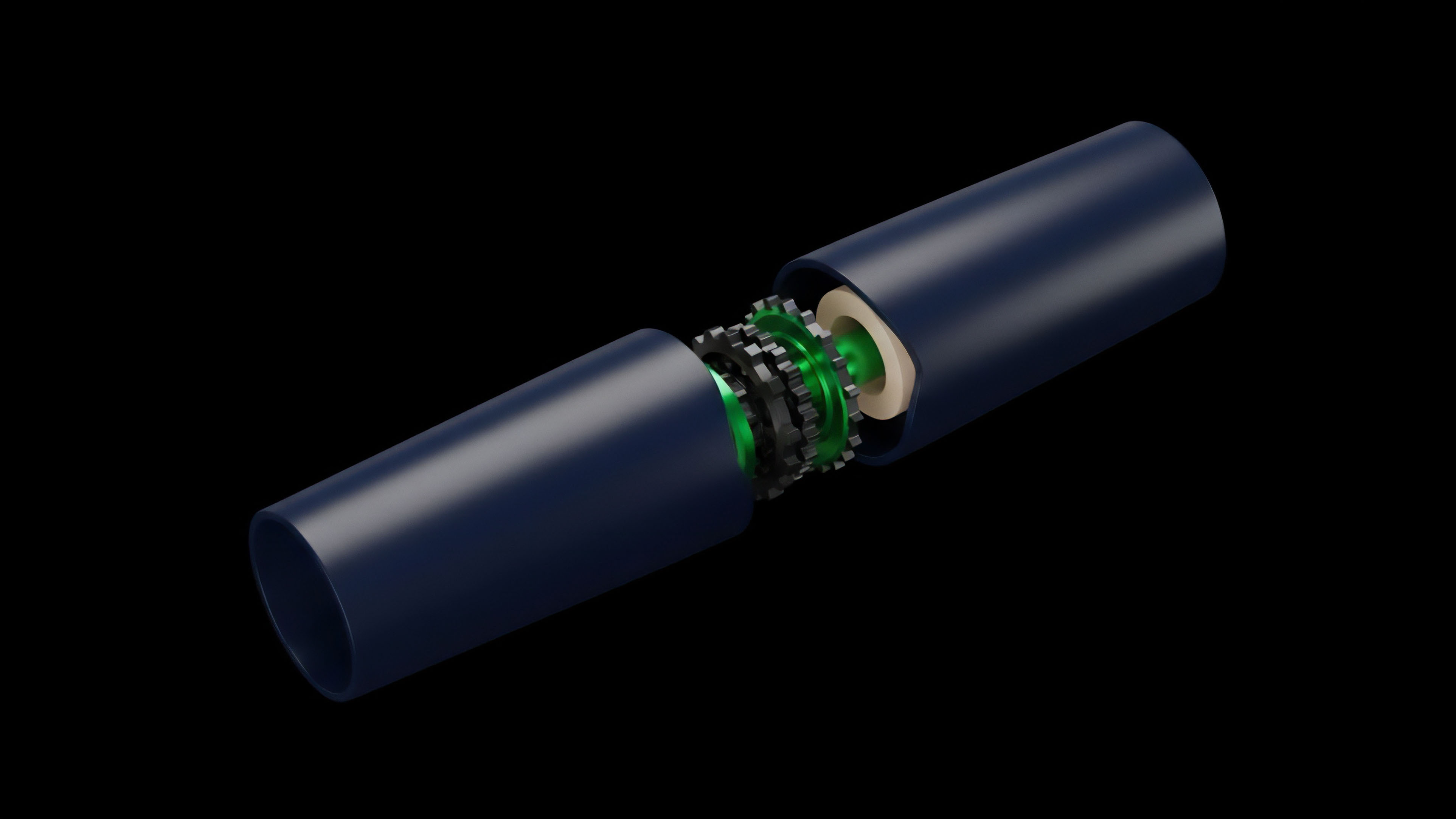
Zero Knowledge Margin Calculation
A major challenge in current decentralized margining is privacy. To calculate portfolio risk, a protocol must know all positions and collateral held by a user. This transparency can be exploited by adversarial actors.
The use of zero-knowledge proofs (ZKPs) could allow a protocol to verify that a user’s margin requirements are met without revealing the specific positions or collateral held. This preserves privacy while maintaining capital efficiency.

Dynamic Risk Pricing and Liquidity Incentives
Future protocols will move beyond static incentive structures. Liquidity providers will receive variable incentives based on the risk they are taking and the specific needs of the protocol. This dynamic pricing of risk will optimize capital allocation in real-time.
A protocol might incentivize LPs to provide capital for specific strike prices or expiries that are currently in high demand, leading to a more efficient allocation of capital where it is most needed.

Systemic Risk Modeling
As protocols become more interconnected, capital efficiency gains will be balanced by increased systemic risk. The next generation of protocols will incorporate advanced risk modeling to simulate contagion events. This allows protocols to set higher collateral requirements for correlated assets or during periods of high market stress, preventing a single point of failure from cascading through the ecosystem. The ultimate goal is to build a robust financial system where capital efficiency is maximized, but not at the expense of systemic stability.

Glossary

Governance Mechanism Capital Efficiency

Capital Efficiency Constraints

Behavioral Game Theory

Capital Efficiency Stack

Derivative Market Efficiency

Capital Efficiency Maximization

Protocol-Level Capital Efficiency

Capital Efficiency Constraint

Block Validation Mechanisms and Efficiency Analysis