

Essence
The Oracular Risk Processor functions as the high-frequency mathematical substrate for decentralized option markets. It executes the intensive floating-point operations required for Black-Scholes pricing and Greeks derivation outside the restrictive environment of the base layer. This architecture preserves the decentralization of settlement while achieving the performance of institutional trading desks.
By shifting the heavy lifting of Delta, Gamma, and Vega calculations to a specialized environment, the system maintains market liquidity without taxing the underlying blockchain state.
The Oracular Risk Processor enables high-fidelity financial modeling by decoupling complex risk calculations from the latency constraints of distributed ledgers.
The Oracular Risk Processor operates as a verifiable computation layer. It ingests real-time price feeds and volatility surfaces to generate Margin Requirements and Liquidation Thresholds. This specialized node ensures that the collateralization of every position remains verifiable and solvent.
The presence of such a system allows for the existence of Cross-Margining and complex Structured Products that would otherwise be computationally impossible on-chain.

Systemic Utility
The Oracular Risk Processor acts as the gatekeeper of systemic stability. In an environment where asset prices fluctuate with extreme velocity, the ability to recalculate Portfolio Risk in milliseconds prevents cascading failures. It provides the necessary data for Automated Market Makers to adjust their quotes dynamically, protecting liquidity providers from toxic flow and Impermanent Loss.
This computational efficiency is the primary driver of capital efficiency in modern decentralized derivative protocols.


Origin
The genesis of the Oracular Risk Processor lies in the inherent limitations of the Ethereum Virtual Machine and its successors. Early attempts at on-chain derivatives suffered from prohibitive gas costs and arithmetic precision errors. The EVM was designed for state transitions, not for the iterative solvers required to calculate Implied Volatility.
As the demand for sophisticated hedging tools grew, developers realized that the blockchain must serve as a judge, not a calculator.
Early architectural constraints necessitated the migration of mathematical modeling to specialized environments to support professional-grade derivative trading.
Historical market events, such as the liquidity crunches of 2020, exposed the fragility of on-chain risk engines. When network congestion spiked, liquidation bots could not access the chain, leading to bad debt. The Oracular Risk Processor was conceived as a solution to this bottleneck, providing a dedicated lane for risk data that operates independently of general-purpose network traffic.
This shift mirrors the evolution of traditional finance, where specialized hardware like FPGAs is used for high-speed risk assessment.

Technological Ancestry
The lineage of this technology traces back to Optimistic Rollups and Sidechains. Developers adapted the concept of off-chain execution with on-chain verification to the specific needs of quantitative finance. By utilizing Trusted Execution Environments and Zero-Knowledge Proofs, the Oracular Risk Processor transitioned from a centralized server to a trust-minimized component of the decentralized stack.
This evolution allowed protocols to offer Portfolio Margin and Multi-Asset Collateral, features previously reserved for centralized exchanges.


Theory
The mathematical integrity of the Oracular Risk Processor rests on deterministic execution. Every calculation, from the Standard Normal Cumulative Distribution Function to the Newton-Raphson method for finding roots, must yield identical results across all nodes. This determinism is achieved through fixed-point arithmetic libraries that simulate floating-point precision without the non-deterministic behavior of different hardware architectures.
| Computation Model | Verification Method | Latency Profile |
|---|---|---|
| Centralized Compute | Reputation Based | Ultra-Low |
| Trusted Execution (TEE) | Hardware Attestation | Low |
| Zero-Knowledge (ZKP) | Cryptographic Proof | High |
| Optimistic Compute | Fraud Proofs | Medium |

Risk Sensitivity Analysis
The engine prioritizes the derivation of Second-Order Greeks. While Delta measures the first-order change in option price relative to the underlying, the Oracular Risk Processor focuses on Gamma and Vanna. These metrics are vital for understanding how a portfolio’s risk profile shifts during periods of high volatility.
The engine models these sensitivities across a Volatility Surface, ensuring that the Margin Engine accounts for the non-linear risks inherent in short-dated options.
Deterministic execution pathways ensure that complex derivative pricing remains consistent and verifiable across a distributed network of participants.

Adversarial Game Theory
In a decentralized context, the Oracular Risk Processor must withstand attempts at Oracle Manipulation. The engine employs robust Medianizer algorithms and Time-Weighted Average Prices to filter out noise and malicious price spikes. Participants are incentivized through Staking and Slashing mechanisms to provide accurate data.
This creates a Nash Equilibrium where the most profitable strategy for any node is to maintain the accuracy of the risk calculations, as any deviation would result in the loss of their staked capital.


Approach
Implementation of the Oracular Risk Processor requires a multi-layered data pipeline. The process begins with the ingestion of raw order book data and Mark Prices from multiple liquidity venues. This data is then normalized and fed into the Calculation Engine, which resides in a high-performance environment.
The output is a signed Risk Attestation that the on-chain smart contract can verify before executing any trade or liquidation.
- Data Ingestion Layer: Aggregates real-time spot and futures prices from decentralized and centralized sources.
- Computation Layer: Executes the Black-Scholes or Jump-Diffusion models to determine fair value.
- Verification Layer: Generates a cryptographic proof or hardware attestation of the calculation’s validity.
- Settlement Layer: Updates the on-chain state with new margin requirements and position health scores.

Verification Methodology
The choice of verification determines the protocol’s security assumptions. Some systems utilize Intel SGX enclaves to run the Oracular Risk Processor in a secure “black box” that even the host cannot tamper with. Others favor ZK-STARKs, which allow the engine to prove that a specific Margin Call was calculated correctly without revealing the underlying proprietary trading strategy.
This privacy-preserving feature is highly valued by institutional participants who wish to remain anonymous while proving their solvency.
| Feature | TEE Approach | ZK Approach |
|---|---|---|
| Privacy | Hardware Dependent | Mathematically Guaranteed |
| Throughput | High Transactions | Limited by Proof Generation |
| Hardware Risk | Vulnerable to Side-Channels | No Hardware Dependency |

Operational Resilience
To ensure continuous uptime, the Oracular Risk Processor is often deployed across a Decentralized Compute Network. This prevents a single point of failure from halting the market. If one node goes offline, the Consensus Mechanism selects another to provide the risk data.
This redundancy is vital for Perpetual Swaps and Options, where a few minutes of downtime during a market crash can lead to massive insolvency.


Evolution
The transition from monolithic risk engines to modular Oracular Risk Processors represents a significant shift in protocol design. Initially, risk management was a secondary concern, often handled by simple Price Oracles. As the market matured, the need for Dynamic Margining led to the development of off-chain sidecars.
These sidecars have now evolved into fully autonomous Computation Networks that can handle thousands of concurrent Risk Evaluations.
The shift toward modular risk processing allows decentralized protocols to match the capital efficiency of centralized financial institutions.
Recent advancements in Parallel Execution have further refined the engine’s capabilities. Modern Oracular Risk Processors can process multiple Option Chains simultaneously, allowing for the creation of Volatility Indices and Complex Spreads. The integration of Machine Learning models for Volatility Forecasting is the latest stage in this progression, enabling the engine to predict liquidity shocks before they occur and adjust Initial Margin requirements accordingly.

Architectural Decoupling
The decoupling of the Execution Environment from the Settlement Layer has allowed for cross-chain risk management. An Oracular Risk Processor can now monitor a user’s collateral on one chain while they trade derivatives on another. This Interoperability is the foundation of the Omnichain Liquidity movement, where the engine acts as a universal risk coordinator.
This removes the silos that previously fragmented the crypto derivative landscape.


Horizon
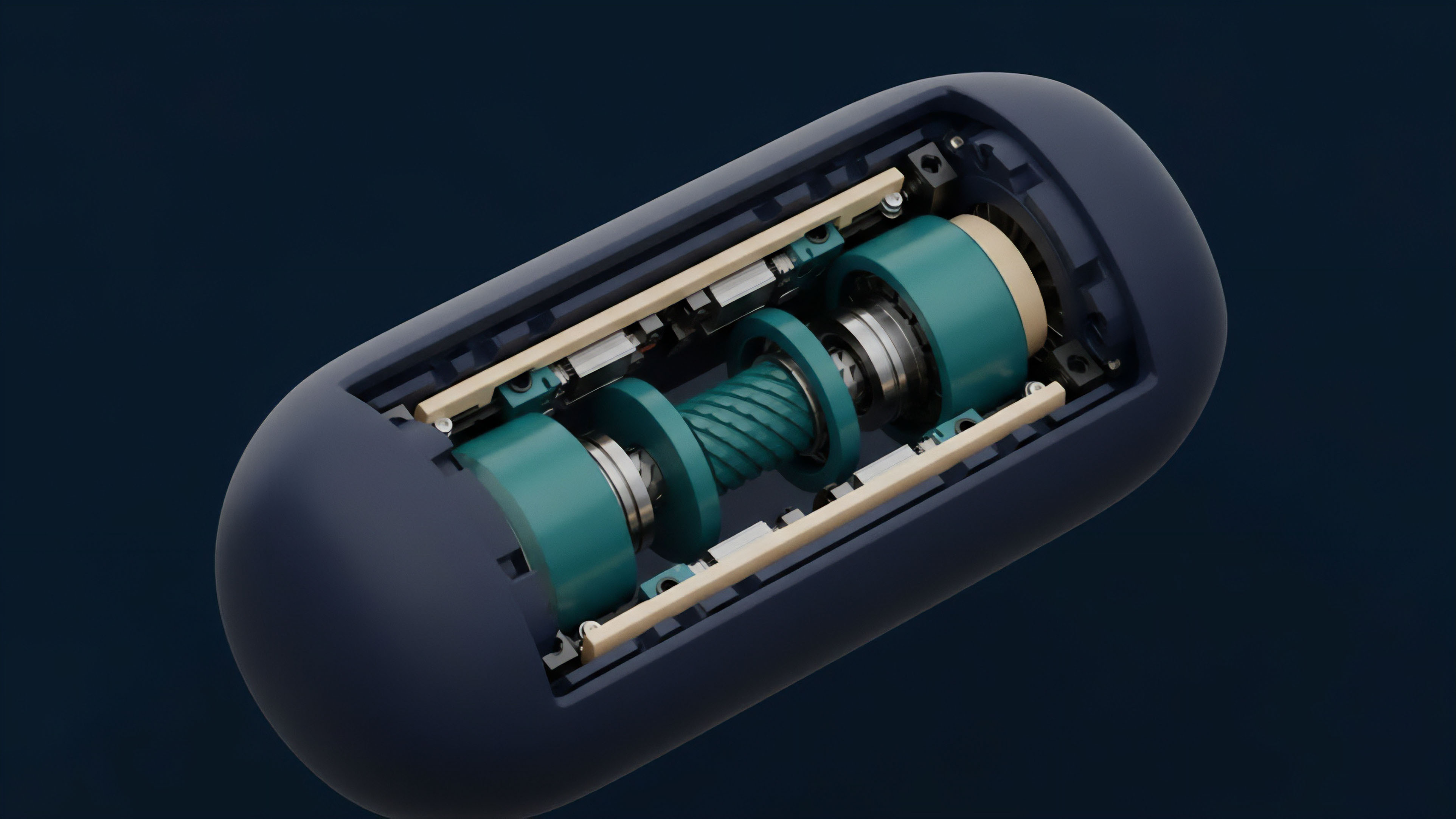
The future of the Oracular Risk Processor points toward the total automation of Financial Stability. We are moving toward a state where the engine does not just report risk but actively mitigates it through Autonomous Hedging. In this scenario, the Oracular Risk Processor would have the authority to rebalance Liquidity Provider positions or hedge Protocol-Wide Delta in real-time, creating a self-stabilizing market.
Hyper-Verifiable Finance
As Zero-Knowledge technology scales, the Oracular Risk Processor will likely become fully on-chain in its verification while remaining off-chain in its execution. This creates a “trustless calculator” that provides the speed of a centralized server with the security of a blockchain. This will enable the creation of Undercollateralized Lending for derivatives, as the engine can provide Real-Time Solvency Proofs for every participant in the system.
- Real-Time Volatility Surfaces: The engine will generate continuous, sub-second updates to the implied volatility of all assets.
- AI-Driven Risk Parameters: Automated agents will tune the Margin Engine based on macro-economic data and on-chain flow.
- Universal Risk Standards: The emergence of a common Risk Communication Protocol will allow different engines to share data.
The integration of Quantum-Resistant Cryptography will eventually secure the Oracular Risk Processor against future computational threats. As we build toward a global, permissionless financial operating system, this engine remains the critical component that ensures the Mathematical Laws of finance are upheld without the need for centralized intermediaries. The ultimate destination is a market that is both infinitely liquid and perfectly solvent, governed by the cold logic of Verifiable Compute.

Glossary
Volga

Dual Gamma

Trusted Execution Environment

Fraud Proofs
Solvency Proofs
Omnichain Liquidity

Delta Neutrality

Undercollateralized Lending

Vega Risk