



Essence
Non-Linear Risk Surfaces represent the multi-dimensional mapping of portfolio sensitivity relative to underlying asset price movements, volatility shifts, and time decay. Unlike linear exposures, these surfaces account for the convex and concave characteristics inherent in options contracts, where delta, gamma, vega, and theta interact dynamically. This framework visualizes how risk profiles warp under extreme market stress, revealing hidden vulnerabilities in decentralized liquidity pools.
Non-Linear Risk Surfaces quantify the complex interaction between option Greeks and underlying asset dynamics to map portfolio sensitivity across varied market states.
The architectural significance lies in identifying regimes where traditional delta-hedging strategies fail. In decentralized finance, where collateral is often subject to automated liquidation, understanding these surfaces prevents catastrophic feedback loops. Market participants utilize these models to anticipate how systemic leverage responds to rapid price discovery, ensuring capital resilience against sudden liquidity contractions.

Origin
The lineage of Non-Linear Risk Surfaces traces back to the Black-Scholes-Merton model, which introduced the necessity of accounting for volatility as a dynamic parameter rather than a constant.
Early derivatives trading relied on static Greek approximations, yet practitioners soon recognized that such simplifications ignored the second-order effects ⎊ gamma and vanna ⎊ that dominate during high-volatility events. Digital asset markets accelerated this evolution by introducing 24/7 trading cycles and programmable collateral. The emergence of automated market makers and on-chain options protocols necessitated a shift from institutional, periodic risk reporting to continuous, algorithmic surface monitoring.
- Black-Scholes Foundation: Provided the mathematical bedrock for modeling non-linear payoffs.
- Volatility Skew Analysis: Identified the market pricing of tail risk beyond normal distributions.
- Automated Liquidation Mechanisms: Forced the integration of risk surfaces into smart contract design to maintain protocol solvency.
These developments shifted the focus from simple price direction to the structural integrity of the derivative position itself. The requirement to manage risk within permissionless environments forced developers to encode these surfaces directly into the protocol logic.

Theory
The construction of a Non-Linear Risk Surface relies on the rigorous application of partial differential equations to model how an option’s value changes across a grid of price and volatility inputs. At the heart of this analysis is the Taylor expansion of the option price, where higher-order derivatives provide the curvature required to understand extreme outcomes.
| Parameter | Mathematical Sensitivity | Systemic Impact |
| Gamma | Second derivative of price | High-speed hedging requirements |
| Vega | Sensitivity to volatility | Liquidity contraction risk |
| Vanna | Delta sensitivity to volatility | Feedback loop acceleration |
Non-Linear Risk Surfaces map the second-order sensitivity of portfolios to ensure that automated hedging mechanisms remain effective during periods of extreme price volatility.
The geometry of the surface dictates the stability of the entire system. When the surface exhibits high curvature, small moves in the underlying asset necessitate massive rebalancing, which can overwhelm on-chain order books. This creates a state where the protocol’s own hedging activity drives the market, a phenomenon known as reflexive volatility.
Sometimes I ponder if the entire DeFi space is just a massive, distributed experiment in high-frequency gamma management, testing whether decentralized code can withstand the pressures that previously collapsed centralized trading desks. Anyway, the stability of these surfaces depends on the liquidity available to absorb these delta-adjustment flows.

Approach
Modern risk management utilizes real-time monitoring of these surfaces to adjust margin requirements and liquidation thresholds. Participants track the Delta-Gamma Neutrality of their positions, adjusting for the fact that these Greeks are not constant but change rapidly as the underlying asset approaches strike prices.
- Continuous Rebalancing: Algorithms monitor the surface to maintain neutral exposure as prices shift.
- Stress Testing: Simulating extreme volatility spikes to determine the breaking point of collateral pools.
- Liquidity Buffer Calibration: Adjusting capital reserves based on the current steepness of the volatility surface.
The current approach demands a deep understanding of protocol physics. Because smart contracts execute liquidations without human intervention, the surface must be calculated with extreme precision. If the model underestimates the curvature of the risk, the resulting liquidation cascades can drain liquidity from the entire protocol, creating systemic contagion.
Evolution
The trajectory of these models has moved from simple desktop-based calculators to integrated, on-chain risk engines.
Early decentralized derivatives were plagued by static margin requirements, which were inefficient and prone to exploitation. The shift toward dynamic, risk-adjusted margin models allows for higher capital efficiency while maintaining safety.
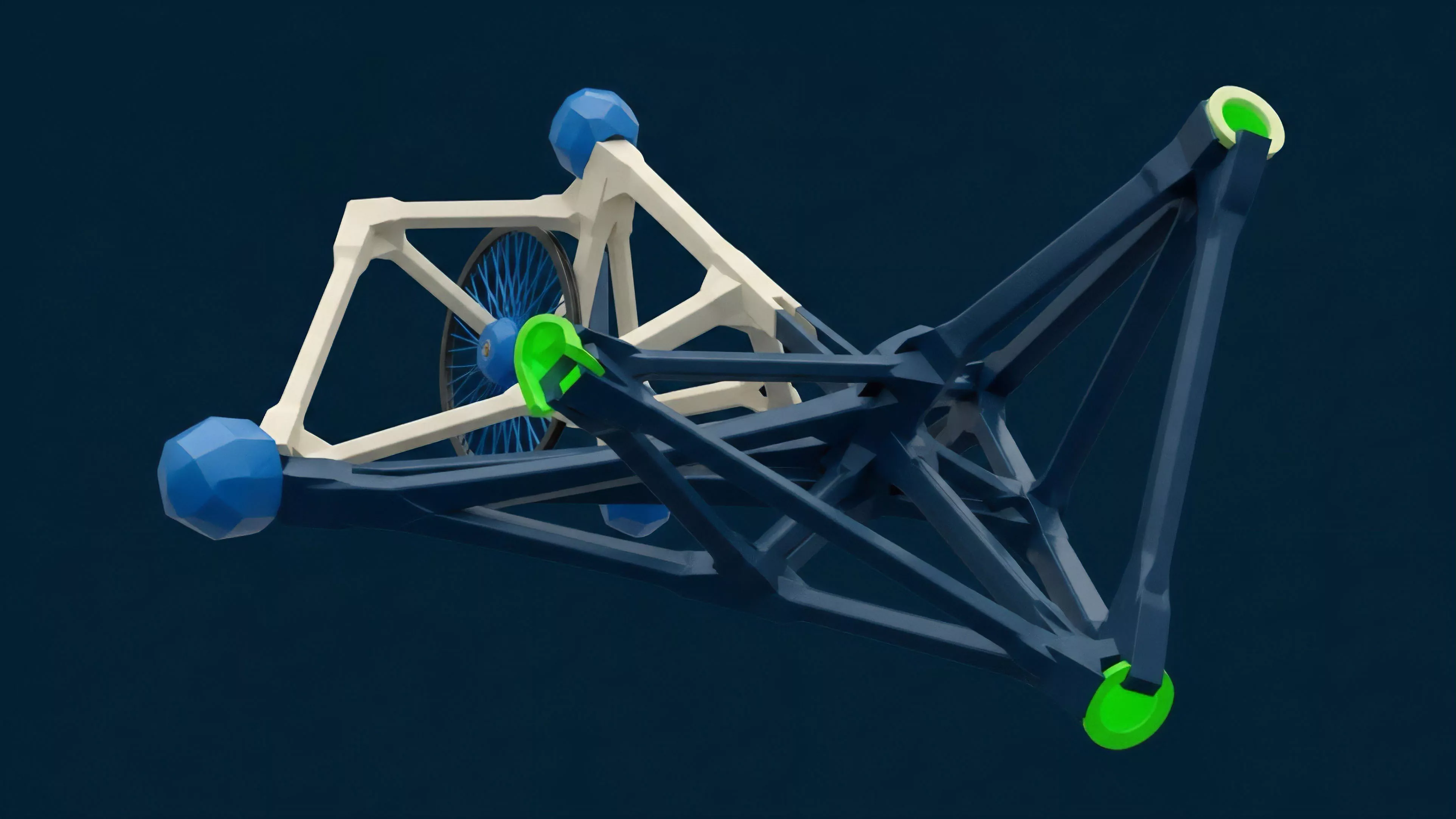
Dynamic risk modeling represents the transition from static margin requirements to responsive, surface-aware collateral systems that protect protocol solvency.
This evolution reflects a broader trend toward institutional-grade infrastructure within decentralized networks. As protocols compete for liquidity, the robustness of their risk surfaces becomes a primary differentiator. Sophisticated participants now demand transparency regarding how these surfaces are calculated, favoring protocols that provide verifiable, on-chain risk telemetry.

Horizon
The future of Non-Linear Risk Surfaces lies in the integration of machine learning to predict volatility regimes and automate the hedging of complex, multi-legged strategies.
As decentralized markets grow in complexity, the ability to visualize and mitigate cross-protocol risk will become the primary determinant of success for both liquidity providers and traders.
| Future Development | Objective |
| Cross-Protocol Risk Aggregation | Identifying systemic exposure across platforms |
| Predictive Vanna Hedging | Automating responses to volatility shifts |
| On-Chain Volatility Oracles | Standardizing data inputs for risk models |
The ultimate goal is the creation of a self-stabilizing financial architecture where risk surfaces are transparently managed by decentralized agents. This requires moving beyond current limitations in data latency and computational overhead. The next phase of development will focus on minimizing the gap between the theoretical model and the realized market outcome, effectively neutralizing the impact of flash crashes on derivative solvency. What happens when these models become so accurate that they predict their own failure points, potentially creating new forms of algorithmic equilibrium?