

Essence
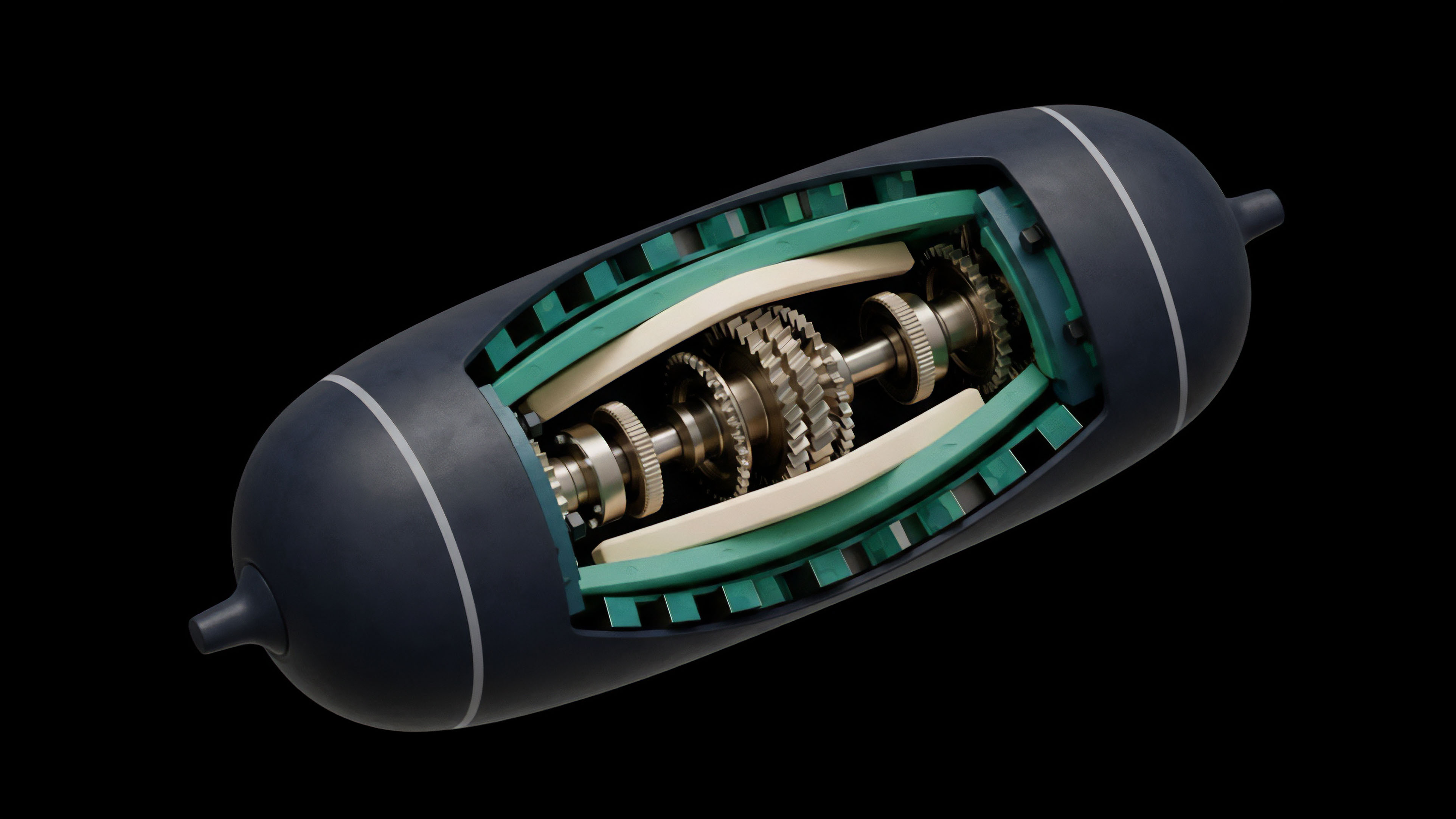
The Decentralized Liquidity Hybrid (DLH) Architecture represents the necessary structural compromise between the efficiency of centralized systems and the trustlessness of decentralized finance. It is the architectural answer to the core problem of crypto options: how to maintain permissionless, on-chain settlement while achieving the low-latency price discovery and capital efficiency demanded by institutional market makers. The DLH is a composite financial primitive ⎊ a synthetic engine where the strengths of two distinct models are fused to mitigate their individual systemic weaknesses.

Core Problem of Pure Models
The initial attempts at decentralized options failed because they forced a single, monolithic structure onto a complex financial instrument. Pure Automated Market Maker (AMM) models, while capital-efficient for simple calls and puts, suffered from severe slippage and were structurally incapable of accurately pricing volatility skew or tail risk without massive impermanent loss for liquidity providers. Conversely, pure Central Limit Order Book (CLOB) models, while providing superior price discovery, suffered from thin liquidity, were vulnerable to front-running on-chain, and incurred prohibitive gas costs for every order placement or cancellation.
The DLH resolves this dichotomy.
The Decentralized Liquidity Hybrid Architecture is a synthetic engine fusing CLOB price discovery with AMM liquidity provision to solve the trilemma of efficiency, trustlessness, and capital depth in crypto options.

The DLH’s Functional Synthesis
The DLH operates on a principle of functional separation: the high-frequency, adversarial process of order matching is handled off-chain, while the trust-critical, final-state process of collateral management and option settlement remains on-chain. This division respects the physics of the underlying protocol. It acknowledges that the blockchain is a state-machine, not a high-speed message bus.
- Order Matching Layer: Utilizes a high-throughput, off-chain matching engine ⎊ often run by a decentralized sequencer or a network of validators ⎊ to allow for zero-gas, instant order placement and cancellation, which is essential for professional market-making.
- Liquidity Backstop Layer: An embedded AMM acts as a liquidity sink, providing guaranteed execution against a codified volatility surface. This AMM absorbs small-to-medium trades and provides a constant floor and ceiling for the order book, preventing liquidity vacuums.
- Settlement and Margin Layer: Smart contracts on the underlying L1 or L2 handle all final execution, margin calls, liquidation logic, and collateral custody. This is the trustless core that makes the entire system decentralized.


Origin
The DLH concept did not spring forth fully formed; it is an artifact of necessity, born from the collective memory of market crises. Its genesis lies in the late 2020s, after the widespread failure of initial DeFi options protocols during periods of extreme volatility ⎊ specifically, the liquidation cascades driven by under-collateralized AMM positions.

Failure of AMM Options
First-generation options AMMs struggled with the inherent difficulty of options pricing. Unlike spot assets, options have non-linear payoff profiles and a complex dependency on volatility and time decay. When the market experienced sudden, large moves, the fixed bonding curves of these AMMs could not adjust fast enough, leading to toxic flow and the systematic depletion of liquidity provider pools.
The capital locked in these pools was inefficiently deployed, incapable of being dynamically re-hedged or re-priced in real-time. This structural rigidity was a systemic weakness.

The CLOB Compromise
Protocols attempting a pure on-chain CLOB quickly discovered the economic absurdity of paying high gas fees to manage a typical options strategy ⎊ a strategy that requires constant re-pricing, adjustments to Greeks, and order book manipulation. The high transaction cost served as an insurmountable barrier to entry for any high-frequency strategy, reserving the protocol for slow, directional, or speculative positions that were not enough to generate deep, continuous liquidity. The solution required an escape from the block-by-block finality for order management.
The DLH is a structural acknowledgment that the high-frequency nature of derivatives trading cannot be reconciled with the high-cost, low-throughput reality of base-layer blockchain execution.

Architectural Synthesis as Survival
The move to the DLH was a survival mechanism for decentralized options. It acknowledged that the market microstructure of options ⎊ which relies on a constant, aggressive interaction between market makers and speculators ⎊ requires speed. The DLH architecture essentially offloads the “gossip” of the market to a faster, semi-trusted environment, reserving the “contract” for the fully trustless, slow-moving blockchain.
This dual-system approach is a pragmatic concession to the laws of physics that govern distributed systems.


Theory
The theoretical foundation of the DLH architecture rests on the partitioning of financial risk and computational load, guided by principles from quantitative finance and protocol physics. This is where the pricing model becomes truly elegant ⎊ and dangerous if ignored.

Quantitative Partitioning and Greeks
The CLOB and the AMM layers interact through the Implied Volatility (IV) Surface.
- CLOB as IV Discovery: The bids and asks on the CLOB generate the most granular, real-time data on market sentiment. The prices executed here are inverted to produce the “market-implied” volatility for specific strikes and expirations.
- AMM as IV Anchor: The AMM’s pricing function is a generalized Black-Scholes or a stochastic volatility model (like Heston), where the input volatility parameter is not static but is derived from a dynamically adjusted curve ⎊ the DLH Volatility Curve. This curve is the system’s “belief” about future volatility, acting as a backstop against illiquidity.
The AMM’s pricing curve is designed to steepen aggressively in response to one-sided order flow ⎊ a mechanism that mathematically simulates the natural volatility skew observed in traditional markets, where demand for out-of-the-money puts drives up their implied volatility. Our inability to respect the skew is the critical flaw in single-curve models. This whole process, in a way, mirrors the brain’s dual processing ⎊ the CLOB is the slow, deliberate System 2 analysis, while the AMM is the fast, heuristic System 1 reaction.

Risk Modeling and Margin Engines
The DLH requires a sophisticated, unified risk engine that can view the CLOB and AMM positions as a single portfolio. This necessitates a move beyond simple isolated margin.

Unified Portfolio Margining
The system calculates the risk of a user’s entire options portfolio ⎊ including long, short, and hedged positions across different strikes and expirations ⎊ using a Value-at-Risk (VaR) or Expected Shortfall (ES) methodology, rather than calculating the margin requirement for each option individually.
| Metric | Isolated Margin | Portfolio Margin (DLH Standard) | Functional Benefit |
|---|---|---|---|
| Collateral Requirement | High (Sum of worst-case loss per leg) | Low (Net loss of the entire portfolio) | Increased Capital Efficiency |
| Risk View | Linear, Leg-by-Leg | Non-Linear, Correlated | Accurate Hedge Recognition |
| Liquidation Threshold | Frequent, Small Triggers | Less Frequent, Larger Triggers | Reduced Systemic Overhead |
Protocol Physics and Settlement
The DLH leverages Layer 2 (L2) scaling solutions ⎊ often optimistic or zero-knowledge rollups ⎊ to achieve its speed goals. The CLOB’s off-chain matching engine publishes a compressed batch of executed trades to the L2, where the state transition is validated and finalized. This is the core of the Protocol Physics compromise: low-latency interaction with eventual, trustless finality.
The smart contract security of the margin engine is paramount, as a vulnerability here could lead to a cascading failure of the entire system’s collateral base.


Approach
The implementation of the Decentralized Liquidity Hybrid (DLH) Architecture is a complex engineering task, demanding a rigorous approach to security, latency, and incentive alignment. The functional relevance of this architecture is its ability to attract and retain institutional-grade liquidity providers (LPs).

Market Microstructure of the DLH
The operational reality of the DLH involves a continuous, low-latency loop of order management and a discrete, high-assurance loop of settlement.
- Off-Chain Order Book Management: Market makers stream quotes to the off-chain matching engine. Since these quotes do not cost gas, they can be updated hundreds of times per second, ensuring the CLOB reflects the precise, dynamic Greeks of the market maker’s portfolio.
- On-Chain AMM Interaction: The AMM’s primary role is to provide a safety valve. When the CLOB momentarily thins or when a user needs guaranteed execution on a large order that would otherwise cause excessive slippage, the AMM absorbs the flow. The AMM’s fee structure is dynamically adjusted to make it less appealing than the CLOB under normal conditions but a reliable source of liquidity during stress.

Incentive Alignment and Tokenomics
The tokenomics of a DLH must be designed to align the interests of the three primary actors: the Liquidity Providers (LPs) , the Protocol Validators/Sequencers , and the Traders.
| Actor | Incentive Mechanism | Value Accrual Point |
|---|---|---|
| Liquidity Providers | Trading Fees (from CLOB & AMM), LP Token Rewards | Capture of realized volatility premium and fees |
| Protocol Validators | Sequencing Fees, MEV Protection Rewards | Fee capture for ensuring low-latency, fair order matching |
| Traders | Low Latency, Tight Spreads, Capital Efficiency | Superior execution and lower margin requirements |

Smart Contract Security Posture
Given the unified margin pool, the DLH represents a single point of failure with immense collateral locked. The smart contract security approach must prioritize the integrity of the liquidation logic and the collateral custody module. This is not simply a matter of auditing; it is a question of mathematical verification.
The security of the DLH is fundamentally tied to the correctness of its liquidation engine, which acts as the ultimate circuit breaker for systemic risk propagation.

Liquidation Engine Integrity
The liquidation engine must be computationally simple and gas-efficient to ensure it can execute even during network congestion. It must rely on tamper-proof, low-latency price feeds for collateral valuation. A failure to liquidate a portfolio quickly enough during a sharp market move allows the negative equity to be socialized across the entire margin pool ⎊ the definition of systems risk.


Evolution
The evolution of the DLH architecture is characterized by a relentless drive for capital efficiency and a strategic retreat from unnecessary on-chain computation.
The progression from simple options protocols to the DLH was not linear; it was a series of tactical retreats and technological leaps driven by the adversarial environment of decentralized markets.

The Drive for Capital Efficiency
Early DeFi options protocols were capital-inefficient, demanding high collateral ratios because they could not trust the real-time valuation of a user’s portfolio. The DLH’s move to a unified, off-chain risk engine allows for true Portfolio Margining. This shift unlocked a massive amount of previously trapped capital, allowing traders to use their hedges to offset risk requirements, thereby increasing their available leverage without increasing the overall system’s risk profile ⎊ provided the risk engine’s VaR calculation is sound.

Regulatory Arbitrage and Jurisdiction
The DLH’s separation of the matching engine from the settlement layer has significant implications for regulatory strategy. By decentralizing the matching engine ⎊ often geographically or by making it permissionless ⎊ the protocol attempts to minimize its regulatory surface area. The system can claim that it does not operate a “trading venue” in the traditional sense, but merely provides a decentralized settlement rail.
This strategic architecture is a direct response to the increasing regulatory scrutiny of crypto derivatives, representing a form of Architectural Regulatory Arbitrage. The challenge remains in defining the legal status of the off-chain sequencer or matching provider.
The DLH’s dual-layer design represents a strategic architectural response to regulatory pressure, seeking to minimize the jurisdictional footprint of the high-frequency matching process.

Systems Risk and Contagion
The unified margin pool, while promoting capital efficiency, introduces a new, more concentrated form of systems risk. The failure of a single large market maker’s portfolio to be liquidated effectively could lead to contagion across the entire protocol. The system’s resilience depends entirely on the accuracy and speed of its liquidation process.
This is the central trade-off: efficiency for complexity.

Liquidity Fragmentation and Aggregation
The DLH is a step toward solving liquidity fragmentation by creating a deep, reliable pool. However, the next evolutionary step involves the aggregation of liquidity between different DLH protocols. This requires a standardized risk and margin API ⎊ a shared language for collateral and position data ⎊ allowing a single portfolio to be margined across multiple decentralized venues.


Horizon
The future trajectory of the DLH architecture is toward complete abstraction of the underlying blockchain ⎊ a process of making the settlement layer a transparent utility while maximizing the speed and optionality of the trading interface.

Protocol Physics and Layer 2 Ascension
The DLH will eventually run entirely on specialized Layer 2 and Layer 3 solutions designed specifically for derivatives. These layers will possess:
- Sub-Second Finality: Necessary for a true, low-latency CLOB experience, mitigating the current front-running risks that persist even in off-chain matching systems that still rely on periodic L1/L2 settlement.
- Native Account Abstraction: Allowing for complex, multi-asset margin accounts to be managed with simple, single-signature transactions, significantly reducing the cognitive load and transaction cost for advanced strategies.

Convergence of Derivatives and Spot
The ultimate destination for the DLH is a unified financial system where the options market, the futures market, and the spot market are all margined from a single collateral pool. This is the final frontier of capital efficiency ⎊ the Omni-Margined Protocol. In this model, a user’s short spot position can act as collateral for a long call option, and a long futures contract can offset the risk of a short put.
The DLH’s unified risk engine is the necessary precursor to this system.

Behavioral Game Theory and Market Manipulation
As the DLH protocols gain systemic importance, the game theory shifts from a simple adversarial relationship between traders and LPs to a more complex one involving protocol governance. The incentive for manipulation will move from simple trade execution to attacks on the governance mechanism that controls the AMM’s volatility curve or the liquidation parameters. The security of the system will increasingly depend on the robustness of its decentralized governance model ⎊ the human layer ⎊ against strategic capture.

The Instrument of Agency the Volatility Curve DAO
The logical evolution of the DLH is to decentralize the most critical, subjective parameter: the AMM’s DLH Volatility Curve. This requires the creation of a Volatility Curve DAO ⎊ a governance body responsible for proposing and voting on adjustments to the core volatility pricing model, utilizing external data feeds and quantitative research as inputs. This DAO would effectively be the decentralized risk committee, providing a transparent, auditable, and strategically difficult-to-corrupt mechanism for managing systemic risk parameters. The ability to manage this curve will determine the system’s survival.

Glossary

Protocol Physics

Model Architecture Latency Profile

Central Limit Order Book

Volatility Curve Dao

Hybrid Risk Premium

Tail Risk

Hybrid Financial System

Hybrid Dex Model

Portfolio Margining