

Essence
The structural synthesis of decentralized exchange mechanisms defines Hybrid Liquidity Protocol Design. This architecture operates by unifying the deterministic execution of a Central Limit Order Book with the persistent availability of Automated Market Makers. This configuration resolves the capital inefficiency inherent in static liquidity pools while maintaining the permissionless accessibility of decentralized finance.
Market participants encounter a unified interface where liquidity resides in both discrete price points and continuous curves.
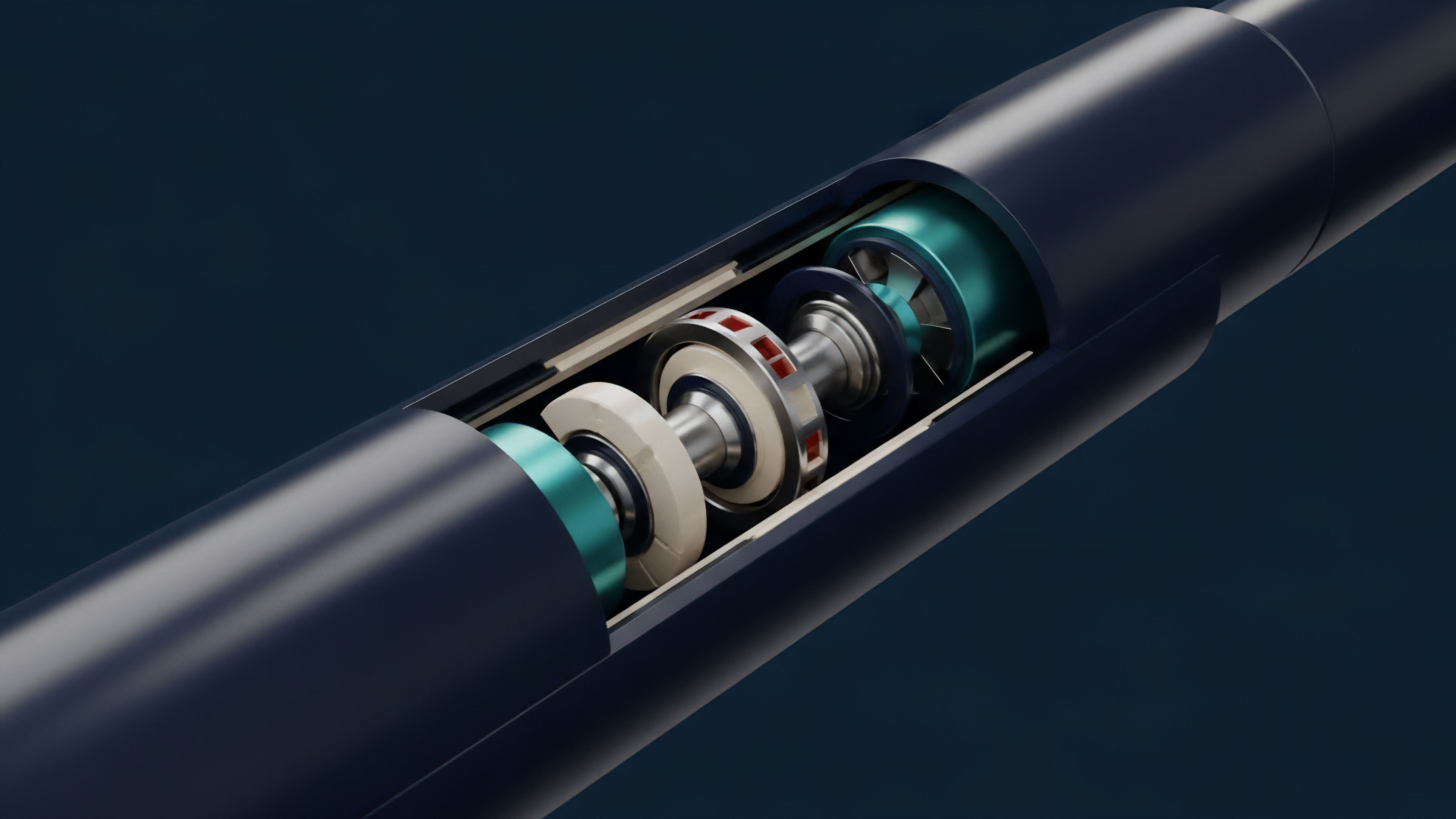
Structural Convergence
The protocol functions as a multi-layered execution environment. The primary layer utilizes off-chain matching engines to facilitate high-frequency interactions, while the settlement layer remains on-chain to ensure cryptographic finality. This duality permits professional market makers to deploy complex strategies without the prohibitive gas costs of traditional on-chain order books.
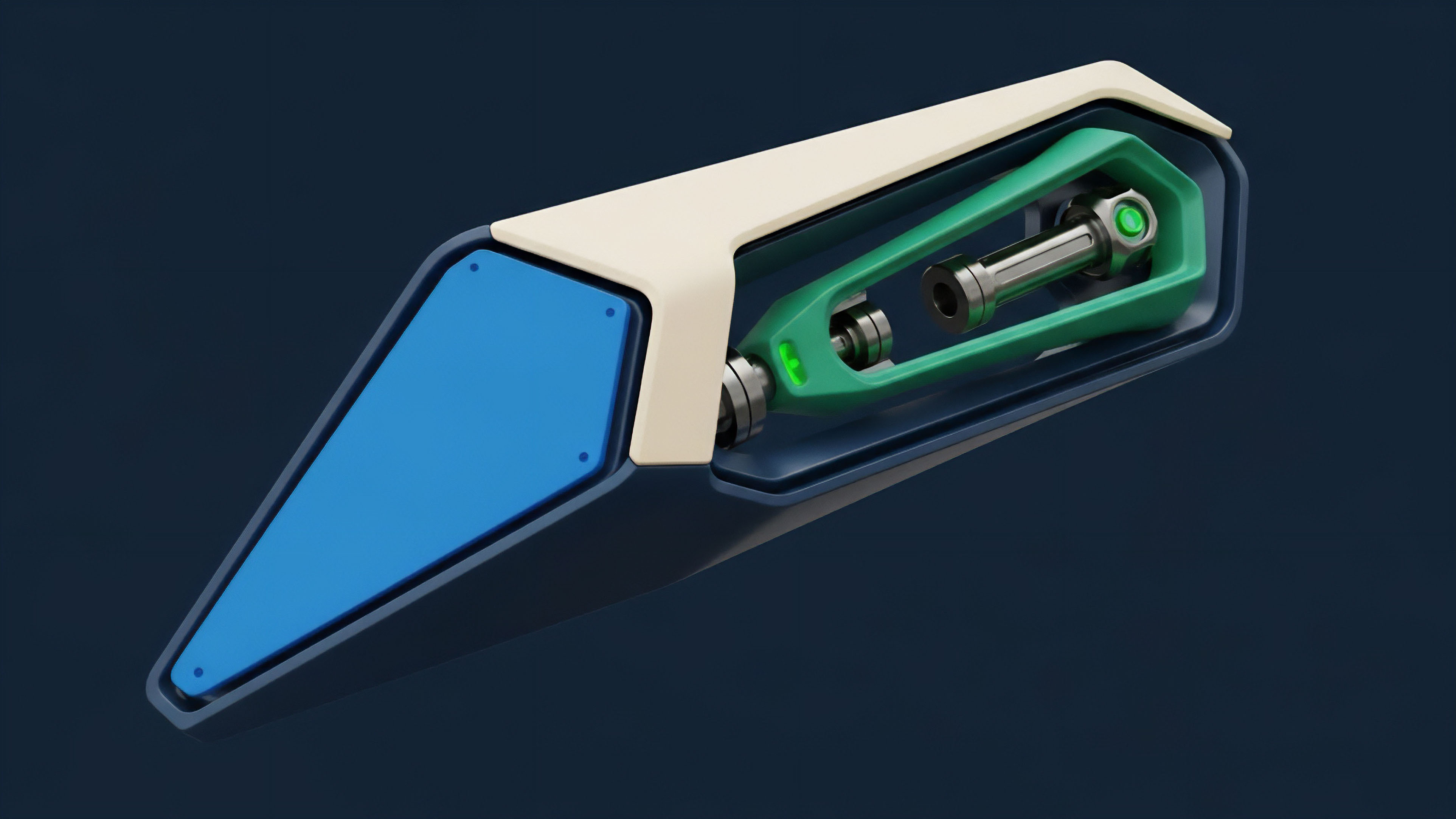
Hybrid designs integrate the deterministic nature of order books with the passive resilience of automated pools.
The system logic prioritizes the most efficient price source for every transaction. If an order book provides a tighter spread, the engine executes against specific limit orders. Conversely, during periods of extreme volatility where limit orders might vanish, the system reverts to the liquidity provided by automated vaults.
This ensures that the market remains functional regardless of participant behavior.
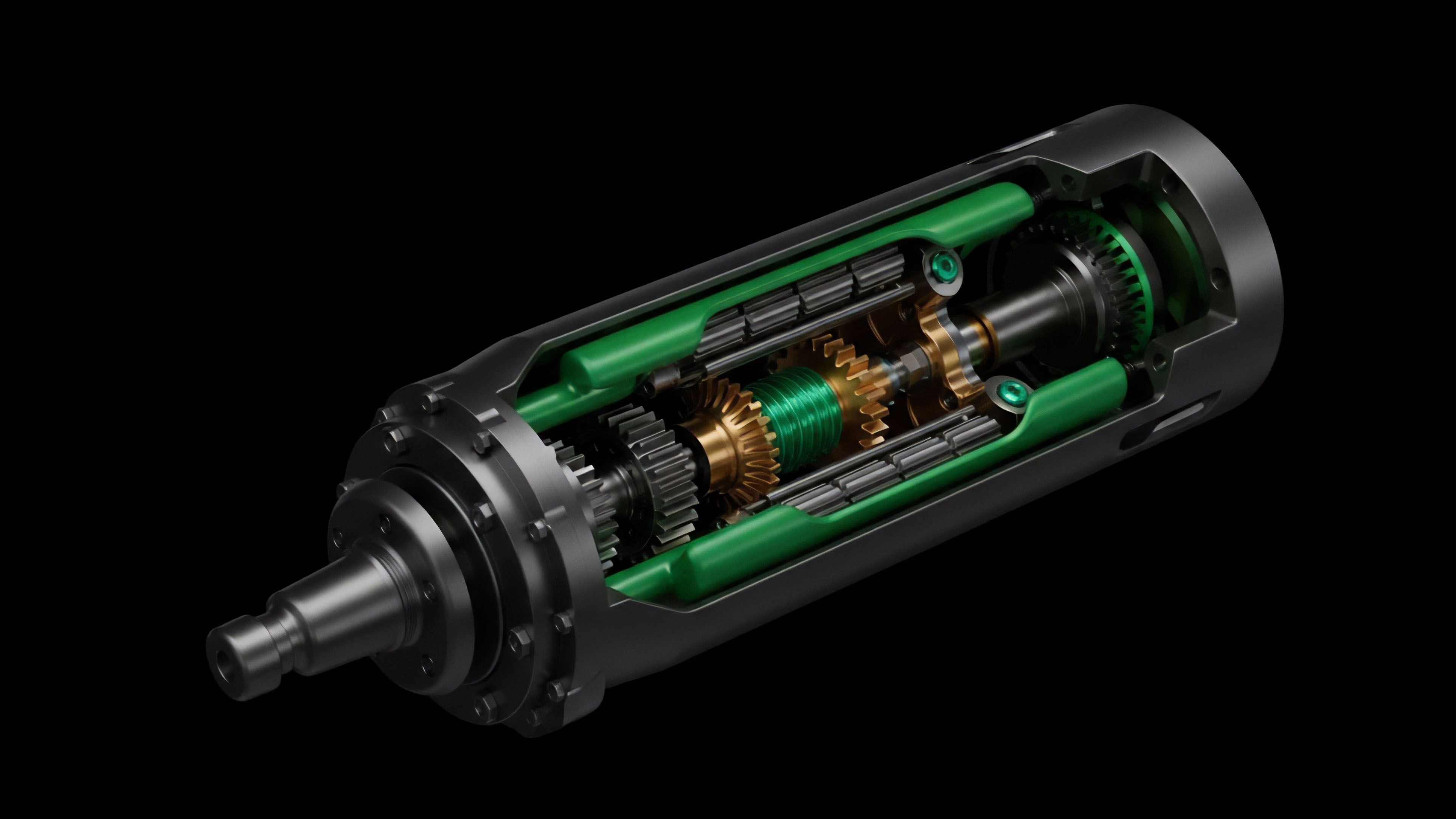
Capital Optimization
Efficiency stems from the ability to concentrate assets where they generate the highest yield. Unlike standard constant product models that distribute liquidity across an infinite price range, Hybrid Liquidity Protocol Design allows for surgical placement. Liquidity providers select specific ranges or allow professional managers to adjust positions dynamically via the order book layer.
- Liquidity Aggregation: The system pulls from diverse sources to minimize slippage for large-size trades.
- Execution Logic: Smart routing determines the optimal path between limit orders and automated curves.
- Margin Efficiency: Cross-margining across different liquidity types reduces the collateral required for complex derivative positions.


Origin
The transition from primitive liquidity pools to sophisticated hybrid models represents a response to the limitations of early decentralized finance. Initial iterations of automated market makers provided a functional proof of concept but failed to attract institutional-grade volume due to high slippage and impermanent loss. Professional traders required the precision of order books, yet blockchain latency made on-chain matching unfeasible for derivatives.

Architectural Genesis
The development of Layer 2 scaling solutions provided the technical environment necessary for Hybrid Liquidity Protocol Design to emerge. By moving the computation of order matching off the main chain, developers could replicate the speed of centralized exchanges. The necessity for a backup liquidity source led to the inclusion of automated pools, creating a safety net for the order book.
Capital efficiency increases when professional market makers provide quotes atop a base layer of algorithmic liquidity.
Early adopters of this design recognized that a pure order book model on-chain often leads to “ghost books” during market stress. The integration of a passive liquidity layer ensures that a price always exists, even if it is less favorable than a limit order. This historical shift moved the industry from “lazy” liquidity to a more active, managed environment.

Market Drivers
The demand for on-chain perpetuals and options accelerated this evolution. These instruments require tight spreads and deep liquidity to function without triggering cascading liquidations. Hybrid Liquidity Protocol Design addressed these requirements by allowing market makers to hedge their positions more effectively using the automated pool as a secondary exit.


Theory
The mathematical foundation of Hybrid Liquidity Protocol Design rests on the superposition of two distinct liquidity functions.
The first is the discrete function of the order book, where liquidity is a set of price-quantity pairs. The second is the continuous function of the AMM, typically defined by the constant product formula x y = k. The hybrid engine seeks to minimize the global cost function for the trader.

Mathematical Modeling
In a hybrid environment, the available liquidity at price P is the sum of the limit orders at that price and the derivative of the AMM curve at that same point. The system must account for the latency difference between the two layers. Quantitative models for Hybrid Liquidity Protocol Design incorporate a “slippage buffer” to prevent front-running when the off-chain matching engine synchronizes with the on-chain state.
| Model Type | Slippage Profile | Capital Efficiency | Resilience |
|---|---|---|---|
| Pure AMM | High / Non-linear | Low | Maximum |
| Pure CLOB | Low / Linear | High | Low |
| Hybrid Design | Minimal | Maximum | High |

Risk Sensitivity
The “Greeks” in a hybrid system are more complex than in traditional models. Delta exposure is managed across both the order book and the pool. Gamma risk becomes particularly acute near the boundaries of the AMM’s concentrated liquidity ranges.
Hybrid Liquidity Protocol Design requires a sophisticated risk engine to monitor these sensitivities in real-time, ensuring that the protocol remains solvent during rapid price movements.
Systemic stability depends on the synchronization between off-chain matching and on-chain state updates.
Adversarial agents often target the price discrepancy between the off-chain book and the on-chain pool. The protocol theory must include mechanisms for oracle-based price anchors to prevent toxic flow from draining the automated liquidity layer. This involves a constant rebalancing act between the two sources.


Approach
The execution of Hybrid Liquidity Protocol Design involves a multi-step process that begins with the submission of an order and ends with the settlement of the trade on a distributed ledger.
The methodology centers on a high-speed matching engine that processes orders in milliseconds, far faster than the block time of the underlying blockchain.

Execution Workflow
When a participant submits a trade, the engine first scans the order book for matching limit orders. If the order size exceeds the available book depth, the remaining portion is routed to the automated liquidity pool. This “split-fill” execution is a hallmark of the hybrid methodology.
- Order Validation: The system checks the user’s margin and collateral status before accepting the order.
- Matching Process: The off-chain engine identifies the best price across the book and the AMM.
- Transaction Bundling: Multiple matches are bundled into a single cryptographic proof for on-chain settlement.
- State Update: The on-chain contract updates the balances and positions of all involved parties.

Risk Management Parameters
The implementation of Hybrid Liquidity Protocol Design requires strict adherence to risk parameters. These values determine how the system handles volatility and ensures that the liquidity providers are protected from excessive loss.
| Parameter | Function | Systemic Impact |
|---|---|---|
| Max Spread | Limits the gap between book and AMM prices | Prevents arbitrage drain |
| Liquidation Ratio | Minimum collateral required for a position | Ensures protocol solvency |
| Funding Rate | Balances long and short interest | Aligns price with index |
The use of sub-accounts and isolated margin allows traders to manage their risk without exposing their entire portfolio to a single trade. This granular control is necessary for the professional adoption of hybrid protocols.


Evolution
The transformation of hybrid models has moved toward increasing decentralization of the matching engine. Early versions relied on centralized sequencers, which created a single point of failure.
Modern Hybrid Liquidity Protocol Design utilizes decentralized validator sets to match orders, increasing the censorship resistance of the system.

Technological Shifts
The introduction of Virtual Automated Market Makers (vAMM) has further altered the landscape. These systems do not require a physical pool of assets but use the hybrid engine to manage synthetic positions. This allows for the trading of any asset with a reliable price feed, regardless of whether a liquidity pool exists for it.
- Decentralized Sequencers: Moving the matching logic to a network of nodes rather than a single server.
- Zk-Rollup Integration: Using zero-knowledge proofs to settle thousands of trades in a single batch.
- Cross-Chain Liquidity: The ability to pull liquidity from multiple blockchains into a single hybrid book.
The shift from simple spot trading to complex derivatives has forced these protocols to develop more robust margin engines. The evolution of Hybrid Liquidity Protocol Design is now focused on reducing the latency of the on-chain settlement layer to match the speed of the off-chain engine.

Horizon
The future of Hybrid Liquidity Protocol Design lies in the total abstraction of the underlying blockchain. Users will interact with a high-performance interface that feels like a centralized exchange, while the protocol handles the complex logic of multi-chain settlement and liquidity aggregation in the background.

Asynchronous Execution
The next phase involves moving toward asynchronous execution models. In this setup, the matching engine and the settlement layer operate independently, with the protocol using economic incentives to ensure that the two states eventually converge. This will permit even higher throughput and lower fees, making on-chain derivatives competitive with their centralized counterparts.
Regulatory and Systemic Challenges
As these protocols grow, they will face increased scrutiny from global regulators. The hybrid nature of the design makes it difficult to categorize, as it combines elements of traditional exchanges and decentralized pools. The survival of Hybrid Liquidity Protocol Design will depend on its ability to incorporate compliance features without sacrificing its permissionless nature. The integration of artificial intelligence into market-making strategies will also impact the system. Automated agents will provide the majority of the liquidity on the order book layer, while the AMM layer will serve as a permanent backstop. This symbiosis will create the most resilient financial markets ever constructed, capable of operating without human intervention.

Glossary

Arbitrage Resistance

Layer 2 Scaling
Central Limit Order Book

Sub-Account Architecture

Toxic Flow

Professional Market Makers

Automated Market Makers

Virtual Amm

Order Flow Toxicity