



Essence
Financial Automation in crypto derivatives represents the programmatic execution of lifecycle events, risk management, and settlement processes via immutable smart contracts. It replaces human-intermediated clearinghouses with deterministic code, ensuring that margin calls, collateral rebalancing, and option expirations occur without latency or counterparty discretion.
Financial Automation replaces manual clearinghouse functions with deterministic code to ensure settlement integrity.
This architecture transforms the traditional derivative contract from a legal promise into a self-executing mathematical constraint. Participants engage with Automated Vaults and Algorithmic Market Makers that enforce protocol-level risk parameters, effectively neutralizing the human element in solvency management.

Origin
The genesis of this paradigm lies in the intersection of early decentralized lending protocols and the desire for trustless exposure to volatility. Initial iterations lacked sophisticated risk engines, relying on simple over-collateralization to manage systemic exposure.
- Liquidity Protocols established the foundational mechanism for automated collateral management.
- Synthetic Assets introduced the necessity for automated price oracles to track underlying market values.
- On-chain Settlement provided the finality required to move beyond off-chain accounting.
These early experiments highlighted the rigidity of initial designs. Developers recognized that to scale derivatives, the system required dynamic, feedback-loop-driven adjustments rather than static thresholds.

Theory
The mechanical structure of Financial Automation relies on a multi-layered interaction between consensus, oracles, and margin engines. The system operates as an adversarial environment where code enforces solvency through rapid liquidation cycles.
Protocol physics dictate that margin engines must execute liquidation events before insolvency reaches the system base layer.

Quantitative Mechanics
The pricing of automated options necessitates rigorous adherence to the Black-Scholes-Merton framework adapted for non-continuous time. The Greeks ⎊ Delta, Gamma, Theta, Vega ⎊ are managed by automated agents that rebalance delta-neutral positions to maintain liquidity provider solvency.
| Parameter | Mechanism | Function |
| Margin Requirement | Dynamic Thresholds | Prevent Systemic Contagion |
| Settlement Frequency | Block-time Intervals | Minimize Counterparty Exposure |
| Liquidation Engine | Programmatic Auction | Restore Protocol Solvency |
The mathematical model must account for slippage and gas costs, which act as frictions in the automated execution of complex hedging strategies. If the oracle latency exceeds the block finality, the entire risk engine becomes vulnerable to exploitation.

Approach
Current implementation focuses on Cross-Margining architectures that pool collateral across diverse derivative positions. This optimizes capital efficiency while introducing complex contagion risks that require sophisticated stress-testing models.
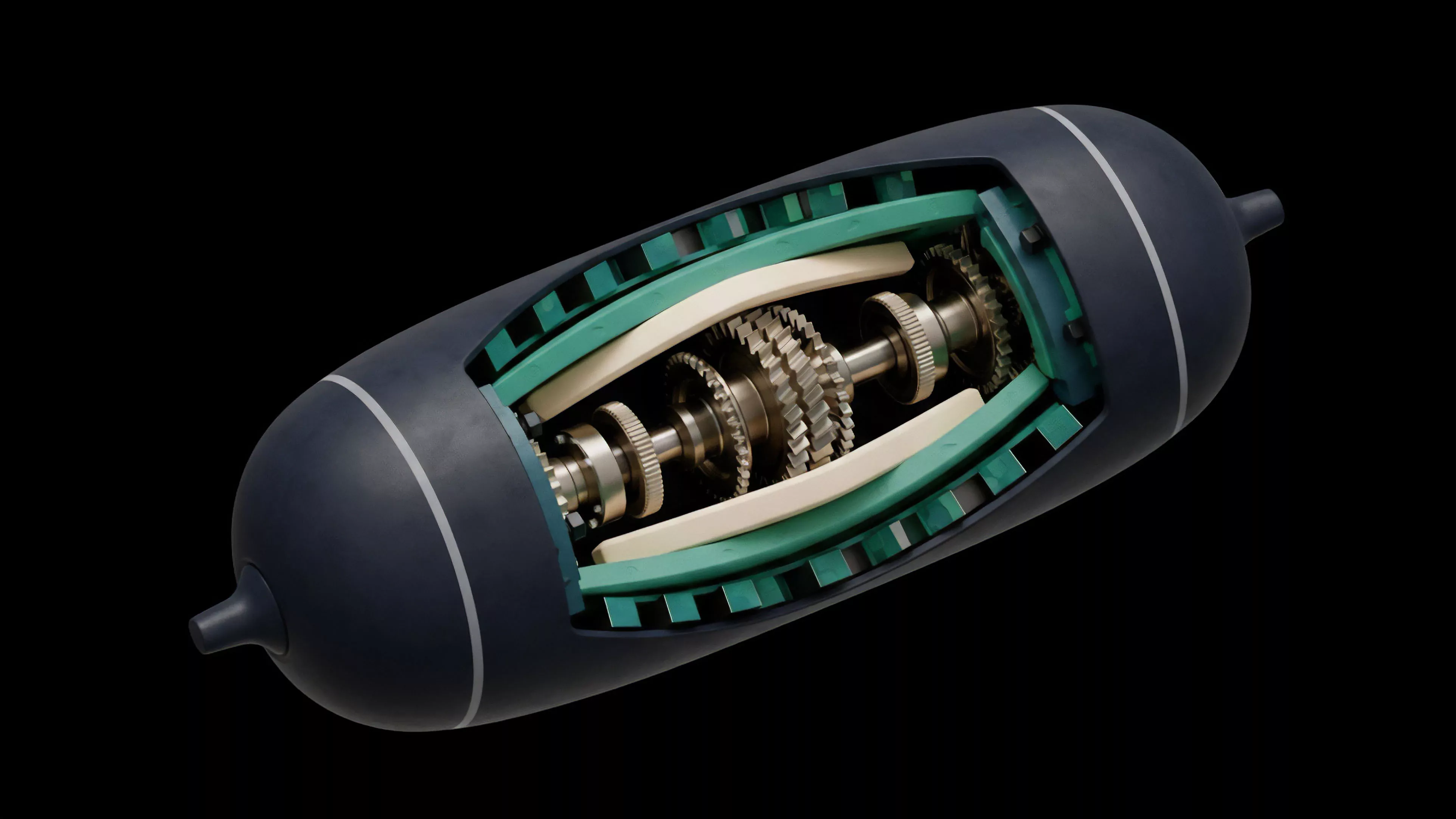
Cross-margining optimizes capital efficiency but necessitates rigorous automated stress testing to prevent cascading failures.
Market participants now utilize Strategy Vaults that automate the rolling of option positions, managing the curve to capture yield or hedge downside risk without active user intervention. These vaults operate as autonomous agents, executing trades based on pre-defined volatility regimes.
- Automated Rolling allows for continuous exposure to target strikes without manual rollover.
- Risk-Adjusted Yield is achieved through programmed delta-hedging against spot volatility.
- Composable Liquidity permits derivatives to function as collateral within other decentralized applications.
Evolution
The transition from simple perpetual swaps to complex, multi-leg option strategies marks the maturation of the field. Earlier models struggled with high-frequency adjustments, whereas current systems utilize off-chain computation combined with on-chain verification to manage state updates efficiently. The evolution reflects a broader trend toward Modular Finance, where the clearing, execution, and settlement layers are decoupled.
This separation allows for specialized protocols to handle specific tasks, such as high-frequency risk monitoring, while keeping the core asset custody on a secure base layer. This architectural shift mimics the move toward specialized microservices in distributed computing.
| Stage | Focus | Constraint |
| V1 | Basic Swaps | Capital Inefficiency |
| V2 | Automated Yield | Oracle Dependency |
| V3 | Modular Derivatives | Complexity Risk |

Horizon
Future developments prioritize Zero-Knowledge Proofs to enable private, institutional-grade derivatives while maintaining regulatory compliance. The integration of AI-Driven Risk Engines will likely replace current static thresholds with adaptive models capable of predicting volatility spikes before they occur.
Adaptive risk engines represent the next frontier in maintaining protocol stability during extreme market regimes.
The trajectory leads toward a global, unified liquidity pool where automated agents trade across disparate chains. This creates a highly efficient market microstructure where the cost of hedging approaches the theoretical minimum, fundamentally altering the nature of institutional risk management.