

Essence
Dynamic Risk Parameterization is the automated adjustment of risk-related variables within a financial protocol, specifically margin requirements, liquidation thresholds, and collateral ratios, in response to real-time market conditions. This system design represents a fundamental architectural shift from static risk models, which assume stable volatility and liquidity, toward adaptive systems that actively manage non-linear market behavior. The core function of DRP is to mitigate systemic risk by dynamically tightening requirements during periods of high volatility or illiquidity.
This preemptive adjustment aims to prevent cascading liquidations, which are a primary cause of protocol failure and market contagion in decentralized finance. The implementation of DRP requires a robust feedback loop between market data inputs and the protocol’s risk engine.
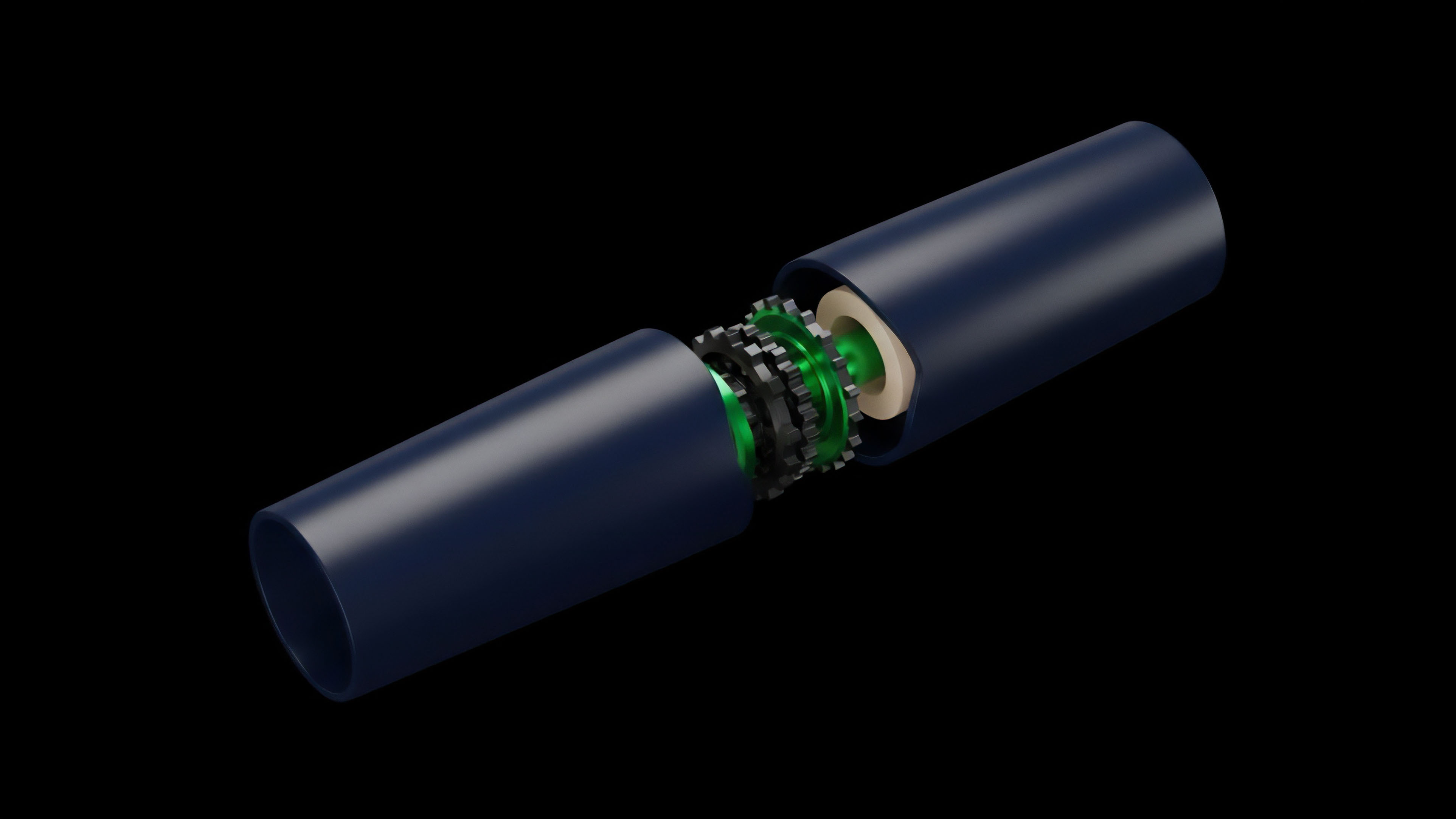
Dynamic Risk Parameterization functions as a protocol’s autonomous nervous system, adjusting its internal settings to maintain stability during external stress.
The necessity for DRP arises from the inherent volatility clustering and tail risk present in crypto assets. Static margin requirements, set to handle average market conditions, prove inadequate when faced with sudden price drops or liquidity shocks. A protocol using DRP attempts to calculate the necessary capital buffer in real-time, ensuring that the system can absorb losses without becoming insolvent.
This approach acknowledges that risk is not a fixed variable but a constantly changing function of market state, open interest, and available liquidity. The parameters adjusted by a DRP system often include the initial margin required to open a position and the maintenance margin needed to avoid liquidation. The specific calibration of these parameters is critical to balancing capital efficiency for users with systemic safety for the protocol.

Origin
The conceptual origin of dynamic risk management in finance predates decentralized systems, rooted in traditional models like Value at Risk (VaR) and the SPAN margin system used by exchanges like CME. However, these traditional approaches rely heavily on centralized risk committees and post-trade analysis, which are ill-suited for the autonomous, real-time nature of decentralized protocols. The specific application of DRP in crypto emerged directly from a series of high-profile liquidation events that exposed the fragility of early DeFi protocols.
These events demonstrated that simply replicating static traditional finance risk models in a decentralized context created significant systemic vulnerabilities. Early crypto derivatives protocols, in particular, suffered from a lack of effective mechanisms to handle sudden price drops, leading to undercollateralized positions and protocol insolvency. The response was the development of algorithmic solutions that could adjust risk parameters based on on-chain data feeds and oracle-provided volatility metrics.

Traditional Risk Model Limitations
The failure of traditional models in decentralized markets stems from several key differences in market microstructure. Traditional markets have circuit breakers, centralized oversight, and deep liquidity pools that buffer volatility. Crypto markets, by contrast, operate 24/7, lack centralized circuit breakers, and often have fragmented liquidity.
The reliance on VaR, which typically assumes a normal distribution of returns, consistently fails to account for the extreme tail risk present in crypto assets. This failure highlighted the need for models that prioritize a dynamic assessment of market risk over static, historical-data-driven assumptions.


Theory
The theoretical foundation of DRP rests on the principle of continuous calibration, where risk parameters are derived from real-time data inputs rather than historical averages. The primary inputs for a robust DRP system extend beyond simple price feeds to include liquidity depth, volatility surfaces, and open interest concentration. The goal is to create a risk model that is predictive and preventative, rather than reactive.
The risk engine processes these inputs to calculate a margin multiplier that scales with perceived risk. As market conditions deteriorate, the margin multiplier increases, effectively reducing leverage and forcing users to add collateral or reduce positions before a full liquidation cascade can occur.

Core Inputs and Models
A DRP system relies on a multi-dimensional analysis of market state. The key components are as follows:
- Volatility Modeling: This involves calculating realized volatility over short time frames, often in conjunction with implied volatility derived from options markets. A protocol may use a GARCH model or a VIX-like index specific to the underlying asset to determine the current level of market stress.
- Liquidity Depth Analysis: The system must analyze the depth of the order book on decentralized exchanges (DEXs) to understand the capital required to move the price by a specific percentage. When liquidity thins, the risk of liquidation cascades increases, prompting DRP to tighten margin requirements.
- Open Interest Concentration: A high concentration of open interest at specific price levels creates a potential for large liquidation clusters. DRP systems monitor this concentration to anticipate where price movements could trigger cascading liquidations.

Behavioral Feedback Loops
The behavioral game theory component of DRP is critical. A DRP system must be designed to anticipate how market participants will react to parameter changes. If parameter changes are too slow or predictable, sophisticated traders may front-run the system, taking advantage of a known lag between market stress and parameter adjustment.
The ideal DRP system operates on a frequency that is high enough to react to sudden changes but not so high that it creates instability or incentivizes manipulative behavior.


Approach
Implementing DRP requires a shift in architectural philosophy, moving away from a single, static risk setting toward a continuous optimization loop. The current approaches vary in their complexity and reliance on external data sources. The simplest approach involves a linear adjustment based on a single volatility metric.
More advanced approaches, however, use multi-variable models that combine volatility, liquidity, and correlation risk. The choice of model often represents a trade-off between computational cost and accuracy.
Effective DRP implementation requires a balance between a high degree of sensitivity to market stress and a low susceptibility to oracle manipulation.
A key challenge in implementing DRP is managing the oracle dependency. The DRP engine relies on external data feeds for accurate volatility and liquidity information. The integrity of these oracles is paramount; a compromised oracle can lead to incorrect risk calculations and catastrophic system failure.
Protocols must therefore carefully select and secure their data feeds, often utilizing decentralized oracle networks that aggregate data from multiple sources to minimize the risk of single-point-of-failure manipulation.
The following table illustrates the key differences between centralized and decentralized DRP implementation strategies:
| Feature | Centralized Risk Management (Traditional) | Decentralized DRP (Crypto Protocols) |
|---|---|---|
| Decision Mechanism | Human risk committee and manual intervention. | Algorithmic logic and smart contract automation. |
| Data Inputs | Proprietary data feeds, internal models, historical data. | On-chain data, decentralized oracle networks, real-time liquidity analysis. |
| Response Time | Hours to days; subject to human decision latency. | Seconds to minutes; automated and immediate. |
| Key Risk | Human error, operational failure, counterparty risk. | Oracle manipulation, smart contract vulnerability, calibration error. |


Evolution
DRP systems have evolved significantly in crypto, moving from simple, single-asset margin adjustments to complex, portfolio-based risk frameworks. Early iterations of DRP focused primarily on adjusting margin requirements for isolated assets based on their own volatility. This approach proved inefficient when users held diversified portfolios, as a collateral asset might suddenly lose value, triggering a liquidation on a different position even if the overall portfolio risk was balanced.
The next phase introduced cross-margin systems, where a user’s total collateral is measured against their total portfolio risk, allowing for greater capital efficiency.

Multi-Asset Risk Modeling
The current state-of-the-art in DRP involves modeling correlation risk. When assets become highly correlated during market stress, a simple cross-margin calculation may still underestimate systemic risk. Advanced DRP systems analyze the correlation between collateral assets and borrowed assets, adjusting parameters based on the likelihood that all assets in a portfolio will decline simultaneously.
This requires sophisticated quantitative modeling that goes beyond simple volatility metrics to assess the overall portfolio’s risk profile. The psychological element of risk management is often overlooked; during periods of extreme market panic, even rational actors behave in ways that accelerate downward spirals. DRP attempts to counteract this by removing human decision-making from the immediate liquidation process, allowing for purely mathematical risk management during high-stress events.

Parameter Calibration Challenges
The primary challenge in DRP evolution remains parameter calibration. The selection of parameters ⎊ how quickly margin requirements tighten, how much buffer is required, and what data sources are weighted ⎊ is a delicate balancing act. An overly aggressive DRP system reduces leverage for users, making the protocol less competitive.
A system that is too lenient risks insolvency during black swan events. The calibration process often relies on backtesting against historical market data, but given the non-linear nature of crypto, this approach provides limited predictive power for future, unseen events.


Horizon
Looking ahead, the next generation of DRP systems will likely move toward a fully autonomous, self-calibrating risk engine. The current DRP models still require manual intervention or governance votes to adjust fundamental parameters. The future involves a transition to systems where machine learning models continuously optimize risk parameters based on observed market behavior and historical stress test results.
This would allow protocols to adapt to changing market conditions without human oversight, creating a truly anti-fragile financial system.
Another area of development is the integration of DRP with systemic risk scoring. As decentralized protocols become increasingly interconnected through shared liquidity pools and composable assets, a failure in one protocol can rapidly propagate through the entire ecosystem. Future DRP models will need to incorporate inter-protocol dependencies, calculating a “systemic risk score” that adjusts a protocol’s risk parameters based on the health of its dependencies.
This moves DRP beyond isolated risk management to ecosystem-wide risk mitigation.
The ultimate goal of DRP is to build financial systems that are resilient enough to withstand unforeseen shocks. The ability to autonomously adjust risk parameters in real-time is foundational to achieving this resilience. The next step in this evolution will involve designing protocols that can learn from past failures and proactively adapt to new market dynamics, effectively creating a decentralized risk management primitive that underpins all future financial applications.

Glossary

Dynamic Protocol-Market Risk Model

Systemic Risk Mitigation

Dynamic Risk Weighting

Dynamic Risk Management Systems

Volatility Modeling

Dynamic Risk Governance

Model Calibration Trade-Offs

Dynamic Risk Profiling

Risk Parameterization Framework