

Essence
Counterparty insolvency in decentralized derivatives often stems from the invisible decay of unhedged delta exposure. Delta Hedging Verification serves as the cryptographic attestation that a market participant maintains a risk-neutral profile relative to their derivative obligations. This mechanism shifts the burden of proof from legal promises to mathematical certainty ⎊ enforcing a state where collateralization remains sufficient regardless of underlying price action.
In the adversarial environment of on-chain finance, where anonymous actors manage vast pools of liquidity, the ability to verify that a counterparty is actually hedging their directional risk is the difference between a resilient protocol and a systemic collapse.
Delta Hedging Verification transforms the opaque risk management of traditional finance into a transparent, cryptographic certainty for decentralized participants.
The primary function of Delta Hedging Verification involves the continuous monitoring of a participant’s net delta ⎊ the sensitivity of their portfolio value to changes in the price of the underlying asset. By requiring market makers or vault strategies to provide proofs of their spot or perpetual swap positions, the protocol ensures that the aggregate delta remains within a predefined epsilon range. This process mitigates the risk of “naked” options selling, where a provider lacks the necessary hedge to cover a sharp move in the market, leading to a liquidity vacuum during periods of high volatility.

Systemic Trust and Mathematical Accountability
Trust in decentralized markets is a function of verifiable state rather than institutional reputation. Delta Hedging Verification provides a layer of security that allows undercollateralized lending and sophisticated derivative issuance to exist without the need for centralized clearinghouses. It establishes a regime where the solvency of the counterparty is a public, computable fact ⎊ accessible to any participant or smart contract within the network.
This transparency reduces the risk premiums associated with counterparty uncertainty, leading to tighter spreads and deeper liquidity for all users.


Origin
The necessity for Delta Hedging Verification emerged from the wreckage of the 2022 digital asset credit crisis. During this period, several large-scale centralized entities collapsed because they failed to maintain neutral delta positions while managing client-facing derivative books. These entities operated in a “black box” environment, where their actual hedging activity ⎊ or lack thereof ⎊ was hidden from creditors and users.
The subsequent contagion revealed that the absence of real-time risk auditing creates a structural fragility that can bring down entire market segments.

The Shift from Reputation to Proof
Traditional finance relies on periodic regulatory audits and capital adequacy reports to manage systemic risk. These methods are slow, reactive, and prone to manipulation. The crypto-native response was the development of “Proof of Reserve” (PoR), which initially only verified the existence of assets.
Delta Hedging Verification represents the next stage of this evolution, moving beyond static asset verification to the dynamic verification of risk-neutrality. It applies the principles of zero-knowledge cryptography and on-chain oracle data to create a living audit of a participant’s market exposure.
| Verification Metric | Traditional Finance | Decentralized Verification |
|---|---|---|
| Frequency | Quarterly or Annual Audits | Block-by-Block Real-Time |
| Transparency | Confidential Regulatory Reports | Publicly Verifiable Ledger State |
| Enforcement | Legal Sanctions and Fines | Automated Liquidation and Slashing |
| Privacy | Complete Portfolio Secrecy | Zero-Knowledge Proof Privacy |
The transition to Delta Hedging Verification was accelerated by the rise of Decentralized Option Vaults (DOVs). These protocols needed a way to prove to their depositors that the market makers buying the vault’s options were not simply taking directional bets with the vault’s collateral. By integrating verification requirements, these protocols ensured that the liquidity provided remained delta-neutral, protecting the system from the “tail risk” of unhedged volatility.


Theory
The quantitative foundation of Delta Hedging Verification rests on the partial derivative of the option’s price with respect to the underlying asset price.
For a portfolio to be considered “hedged,” the sum of the deltas of all positions must equal zero. In a decentralized context, this requires the protocol to track the delta (δ) of the options issued and the delta of the offsetting positions ⎊ such as spot holdings or perpetual futures ⎊ held by the market maker. This relationship is defined by the requirement that δTotal = sum δOptions + sum δHedge ≈ 0.
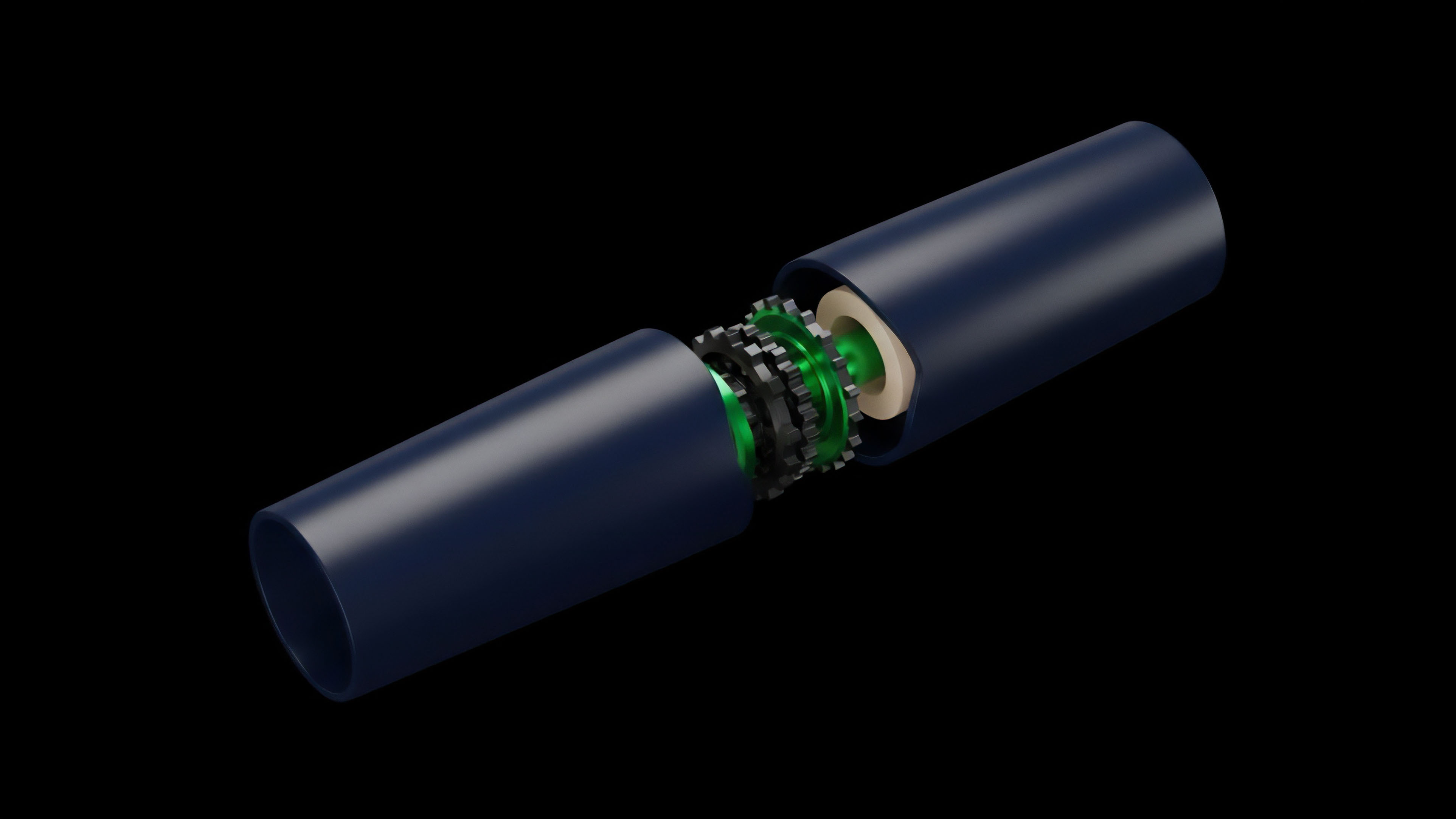
Mathematical integrity in delta neutral strategies relies on the continuous alignment of spot positions against the derivative’s price sensitivity.
Achieving this verification without compromising the proprietary strategies of market makers requires sophisticated cryptographic techniques. Zero-Knowledge Proofs (ZKPs) allow a participant to prove that their net delta is within a specific range without revealing the exact composition of their portfolio. The participant generates a proof that their current holdings ⎊ when processed through a standardized pricing model like Black-Scholes ⎊ result in a delta-neutral state.
This proof is then verified on-chain by the protocol’s margin engine. Biological systems maintain homeostasis through similar feedback loops ⎊ constantly adjusting internal variables to counteract external fluctuations ⎊ and Delta Hedging Verification acts as the homeostatic regulator for decentralized liquidity pools. The margin engine uses the verified delta to calculate the required collateral, ensuring that the participant has enough capital to withstand the “Gamma” risk ⎊ the rate of change in delta ⎊ as the market moves.
If the verified delta drifts too far from zero, the protocol can trigger an automated rebalancing or increase the margin requirements to account for the increased directional risk. This theoretical framework ensures that the protocol remains solvent even during “black swan” events where price movements are extreme and non-linear.

Approach
Current implementations of Delta Hedging Verification utilize a combination of on-chain monitoring and off-chain computation. Protocols often require market makers to link their hedging accounts ⎊ whether on-chain or through verified CEX-to-DEX bridges ⎊ to the derivative contract.
This allows the protocol to pull real-time data on the participant’s total exposure.
- Protocols utilize real-time oracle feeds to calculate the delta of every open option position.
- Smart contracts enforce liquidation thresholds when the verified delta exceeds pre-defined risk parameters.
- Zero-knowledge circuits allow market makers to prove their hedge without revealing their exact spot entry prices.
- Automated rebalancing bots execute trades on behalf of the vault to maintain delta neutrality when market makers fail to provide proof.

Implementation Models
The specific methodology for Delta Hedging Verification varies based on the protocol’s architecture. Some protocols use a “pessimistic” approach, where the maximum possible delta exposure is assumed unless a proof is provided. Others use an “optimistic” approach, where the participant is assumed to be hedged until a challenger provides evidence of a discrepancy.
| Model Type | Mechanism | Capital Efficiency |
|---|---|---|
| Pessimistic | High initial margin, reduced only upon proof submission | Lower |
| Optimistic | Lower margin, subject to slashing upon fraud proof | Higher |
| ZK-Continuous | Real-time cryptographic proofs for every state change | Highest |
Beyond this, Delta Hedging Verification is increasingly integrated into “Delta-Neutral Vaults.” These vaults automate the hedging process by programmatically trading perpetual swaps against their option positions. The verification step here is internal ⎊ the vault’s own code ensures that the hedge is executed and maintained, providing depositors with a transparent view of the vault’s risk profile at all times.


Evolution
The transition from manual risk management to automated Delta Hedging Verification represents a structural shift in market microstructure. Initially, hedging was a discretionary activity performed by human traders.
This led to significant “execution risk,” where the hedge was not adjusted quickly enough to keep up with market volatility. The move toward algorithmic hedging reduced this risk, but the verification remained opaque.
The shift toward real-time algorithmic verification eliminates the latency between risk accumulation and systemic correction.
The current state of Delta Hedging Verification is characterized by the integration of cross-protocol liquidity. Market makers now use their positions on one protocol to hedge their obligations on another. This creates a complex web of interdependencies that requires a unified verification standard.
Protocols are beginning to adopt shared “Risk Oracles” that can verify a participant’s delta across multiple chains and venues. This evolution reduces the fragmentation of capital and allows for more efficient risk distribution across the entire decentralized finance ecosystem.

From Static Proofs to Dynamic Risk Engines
Early verification methods were static ⎊ they checked the hedge at a single point in time. Modern Delta Hedging Verification is dynamic, accounting for the “Greeks” in real-time. This includes not only delta but also the sensitivity to time decay (Theta) and volatility (Vega).
By verifying the entire Greek profile, protocols can better predict the future capital requirements of their participants, preventing liquidations before they become necessary.


Horizon
The future of Delta Hedging Verification lies in the total automation of risk neutrality through “Proof of Hedge” consensus. As zero-knowledge technology matures, we will see the emergence of fully private, yet fully verifiable, market making. Participants will be able to prove their compliance with complex risk mandates without revealing any part of their strategy to competitors.
- Cross-chain liquidity aggregation through unified delta proofs.
- Automated regulatory reporting via ZK-proofs that demonstrate compliance with risk-limit mandates.
- Hyper-efficient capital utilization through lower margin requirements for verified hedgers.
- Integration of AI-driven risk models that provide predictive delta verification.
Ultimately, Delta Hedging Verification will become a foundational component of the global financial stack. It will enable the creation of “Trustless Prime Brokerages” that can offer gearing and liquidity to any participant with a verifiable hedge. This will democratize access to sophisticated financial strategies and create a more resilient, transparent, and efficient market for digital asset derivatives. The adversarial nature of crypto finance demands nothing less than the absolute certainty that mathematics provides.

Glossary

Crypto Options

Proof of Reserve

Trustless Finance

Hedging Efficiency
Algorithmic Hedging

Tail Risk Hedging

Transaction Finality

Deterministic Settlement

Risk Neutrality