

Essence
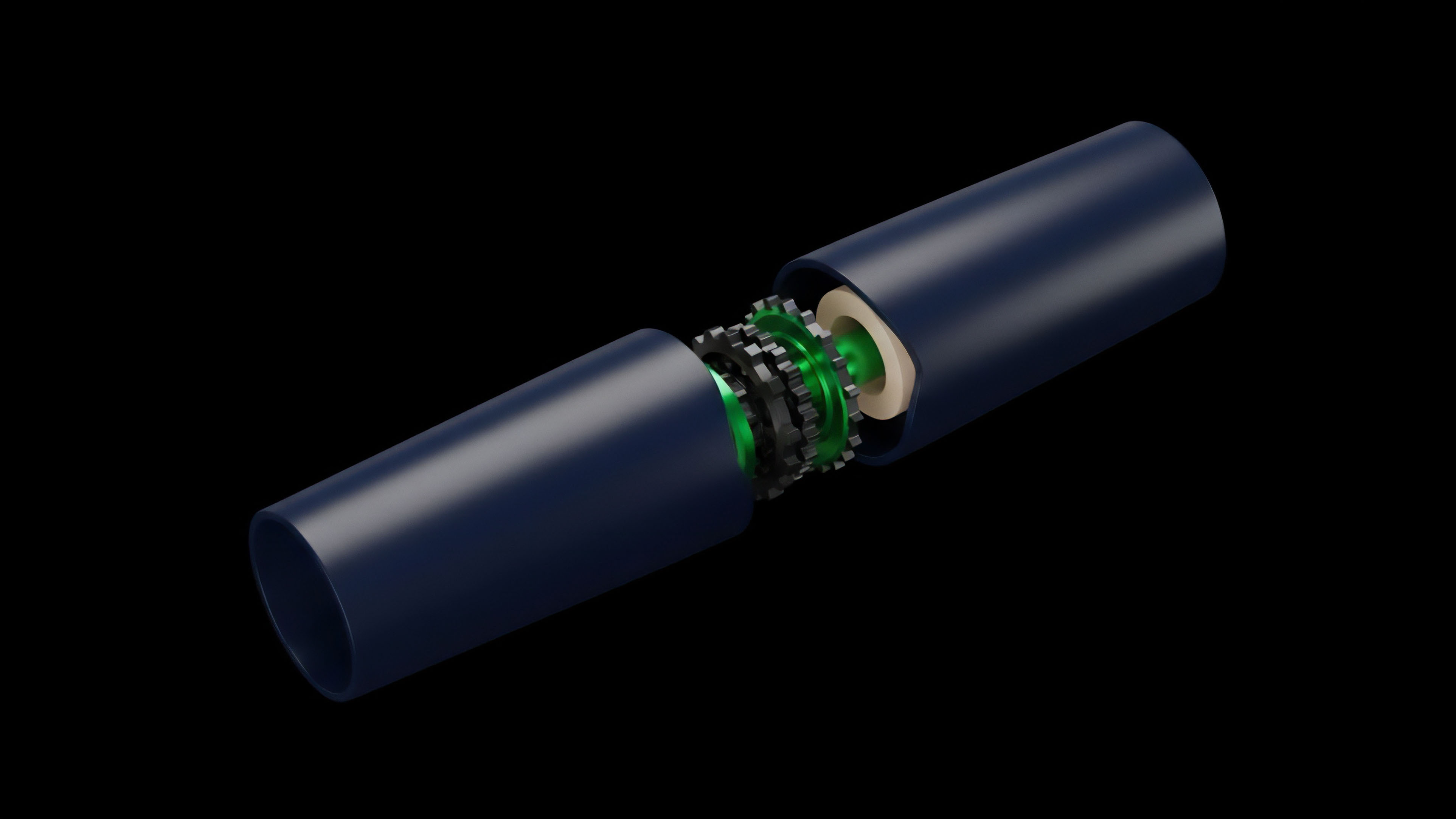
Computation Cost Abstraction functions as a structural insulation layer between the financial logic of a derivative and the underlying physical constraints of the distributed ledger. This mechanism decouples the volatility of execution fees from the valuation of the contract itself, ensuring that the cost of state transitions remains a predictable variable rather than a catastrophic friction. Within the architecture of high-frequency decentralized options, this abstraction allows for the separation of settlement risk from network congestion risk.
Computation Cost Abstraction removes execution fee volatility from the financial instrument valuation to preserve margin integrity during network congestion.
The systemic utility of Computation Cost Abstraction manifests in the creation of deterministic execution environments. By shifting the burden of gas management or prover-time allocation to specialized protocol actors, the end-user interacts with a pure financial primitive. This architecture relies on several distinct functional pillars:
- The protocol assumes responsibility for the underlying computational debt to ensure that liquidations occur at the precise price trigger regardless of network state.
- Smart contract engines utilize paymaster contracts to subsidize or batch transactions, which effectively converts a variable operational expense into a fixed protocol overhead.
- Value accrual shifts from simple transaction fees to sophisticated spread management, where the protocol captures the difference between the abstracted cost and the actual market rate for block space.
This separation of concerns prevents the “gas-induced insolvency” that plagued early decentralized margin engines. By treating computation as a distinct utility layer, Computation Cost Abstraction enables the development of professional-grade risk management tools that remain functional even when the base layer experiences extreme demand.


Origin
The genesis of Computation Cost Abstraction traces back to the catastrophic failures observed during extreme market volatility events, most notably the liquidity crunches of early 2020. During these periods, the surge in demand for block space caused execution fees to exceed the value of the collateral being liquidated.
This created a perverse incentive where rational actors refused to trigger liquidations, leading to systemic bad debt within decentralized lending and derivative protocols. The shift toward Computation Cost Abstraction was accelerated by the transition from monolithic execution to modular architectures. As protocols moved to Layer 2 environments and specialized app-chains, the need to hide the complexity of cross-chain communication and data availability costs became paramount.
Early implementations of meta-transactions provided the first glimpse into a future where the “gas” token was no longer the primary interface for the trader.
The historical failure of fixed-gas liquidation models necessitated a transition toward abstracted execution layers to maintain protocol solvency during periods of extreme network demand.
| Era | Execution Model | Primary Friction |
|---|---|---|
| Monolithic | Direct Gas Payment | Network Congestion Risk |
| Modular | Meta-Transactions | Relayer Centralization |
| Abstracted | Account Abstraction / Paymasters | Prover-Time Volatility |
This evolution reflects a broader trend in financial history where the physical costs of settlement ⎊ such as the transport of gold or the manual clearing of paper checks ⎊ are eventually absorbed into the systemic infrastructure. In the digital asset space, Computation Cost Abstraction represents the final stage of this professionalization, where the “physics” of the blockchain no longer dictates the “mathematics” of the option price.

Theory
The mathematical foundation of Computation Cost Abstraction rests on the stochastic modeling of block space demand as a distinct Greek in the option pricing formula. We can define this as “Gamma-Gas,” representing the sensitivity of the protocol’s margin health to the second-order changes in execution costs.
In a traditional Black-Scholes environment, the cost of exercise is assumed to be zero or a constant; however, in a decentralized environment, the cost of exercise Ce is a variable f(G, t) where G is the current gas price and t is the time of execution. The total value of an option under Computation Cost Abstraction is modified to account for the protocol-absorbed friction. This involves a complex interplay between the probability of the option being in-the-money and the projected cost of the state transition required to settle the contract.
If the protocol guarantees a fixed execution cost to the user, it effectively takes a short position on network volatility. To mitigate this, the protocol must employ a hedging strategy that involves either pre-purchasing block space via long-term blobs or maintaining a reserve of the native gas token that scales with the open interest of the platform. This creates a feedback loop where the protocol’s solvency is tied to its ability to accurately predict the “thermal noise” of the network ⎊ a concept borrowed from information theory where the background signal of the network acts as a heat source that can degrade the signal of the financial transaction.
The systemic risk shifts from the individual trader to the protocol’s insurance fund, which must now be modeled as a multi-dimensional risk pool covering both asset price movements and computational spikes.
Protocols utilizing Computation Cost Abstraction must hedge against network volatility to prevent the exhaustion of insurance funds during high-congestion market regimes.
| Variable | Traditional Derivative | Abstracted Derivative |
|---|---|---|
| Settlement Cost | Zero / Negligible | Stochastic / Protocol-Absorbed |
| Liquidation Logic | Price-Dependent | Price and Gas-Dependent |
| Margin Requirement | Asset Volatility Only | Asset and Compute Volatility |


Approach
Current implementations of Computation Cost Abstraction utilize Account Abstraction frameworks to create a seamless execution environment. By leveraging entry point contracts and specialized bundlers, protocols can batch thousands of derivative settlements into a single transaction, significantly reducing the per-user cost. This methodology allows for the introduction of “gas-less” trading interfaces where the user pays the premium in the quoted asset, while the protocol handles the underlying native token requirements in the background.
- Paymaster Integration: The protocol deploys a paymaster contract that holds a balance of the native network token and is programmed to sign off on transactions originating from the derivative exchange.
- Intent-Based Execution: Traders sign an “intent” rather than a transaction, allowing a network of solvers to compete for the most efficient way to settle the trade, effectively outsourcing the computation cost optimization.
- Dynamic Fee Scaling: The protocol calculates a “buffer” added to the option premium that accounts for the expected value of the execution cost, creating a self-sustaining pool for computation debt.
- ZK-Proof Outsourcing: For privacy-preserving or scaling-focused derivatives, the cost of generating zero-knowledge proofs is abstracted through decentralized prover markets, where the protocol pays for “proof-as-a-service.”
The operational reality of these systems requires a robust relayer network. These relayers act as the bridge between the abstracted layer and the raw blockchain, taking on the timing risk of transaction inclusion. If a relayer fails to include a transaction during a critical market move, the Computation Cost Abstraction layer must have fail-safes ⎊ such as secondary relayer auctions or direct protocol-level incentives ⎊ to ensure the financial logic remains intact.


Evolution
The transition from simple gas-reimbursement schemes to full-scale Computation Cost Abstraction marks a shift in the power dynamics of decentralized finance.
Initially, abstraction was a luxury provided by venture-funded protocols to attract retail users. It has now become a survival requirement for institutional-grade derivative platforms. The rise of “App-Chains” has further refined this, allowing protocols to customize their own fee markets and eliminate the competition for block space with unrelated applications like NFT mints or meme-coin launches.

From Gas to Prover Time
In the current landscape, the focus is shifting from the cost of L1 gas to the cost of L2 and L3 prover time. As Zero-Knowledge Rollups become the dominant venue for derivative liquidity, Computation Cost Abstraction must now account for the hardware-intensive process of generating proofs. This has led to the emergence of:
- Prover Marketplaces: Open auctions where protocols bid for the computational power of specialized hardware clusters.
- Recursive Proof Aggregation: The ability to wrap multiple derivative settlements into a single proof, drastically lowering the abstracted cost per trade.
- Hardware Acceleration: The development of ASICs specifically designed to lower the “physical” cost of the abstraction layer.
This trajectory suggests that the ultimate form of Computation Cost Abstraction will be a world where the user is entirely unaware of the blockchain’s existence, interacting with a high-performance financial engine that happens to be secured by decentralized proofs.


Horizon
The future of Computation Cost Abstraction lies in the total convergence of AI-driven agents and autonomous financial protocols. We are moving toward a regime where “Agentic Liquidity” manages its own computational budget, optimizing for execution speed and cost in real-time. In this environment, Computation Cost Abstraction will likely evolve into a standardized protocol-to-protocol language, where liquidity providers offer “compute-inclusive” quotes that guarantee settlement regardless of the underlying network’s state. We anticipate the emergence of “Execution Insurance” derivatives ⎊ options on the cost of computation itself. These instruments will allow protocols to lock in their execution costs for months in advance, effectively turning a volatile operational risk into a fixed, hedgeable expense. This will enable the creation of “perpetual execution” contracts, where a trader can maintain a position for years without ever worrying about the fluctuating costs of state maintenance or margin adjustments. The final frontier for Computation Cost Abstraction is the cross-chain environment. As liquidity fragments across dozens of execution layers, the ability to abstract the cost of moving value and proofs between these layers will be the defining competitive advantage. The protocols that successfully hide this complexity will capture the majority of institutional flow, as they provide the only environment where the “Greeks” of a derivative are not corrupted by the “Physics” of the network. This leads to a truly global, permissionless financial system that operates with the efficiency of a centralized exchange but the resilience of a decentralized network.

Glossary

Network Congestion

Block Space Commodity

Solver Competition

Execution Risk Management

Decentralized Clearinghouse

Meta-Transactions

App Chain Sovereignty

Margin Engine Architecture

Paymaster Contract