

Essence
Capital Deployment Efficiency in decentralized derivatives measures the effectiveness of collateral utilization. The metric quantifies the ratio between the notional value of positions secured and the amount of underlying collateral required to maintain solvency. A high CDE indicates that a small amount of capital can support a large amount of risk exposure, a critical factor in the competition between decentralized finance and traditional financial markets.
The objective is to maximize capital utilization while maintaining systemic stability against market volatility and adversarial behavior.
Capital deployment efficiency represents the optimization of collateral requirements to maximize leverage while mitigating systemic risk within a decentralized protocol.
The core challenge in decentralized systems lies in balancing CDE with the inherent risk of over-collateralization. Traditional finance achieves high CDE through trusted intermediaries and centralized clearinghouses, allowing for cross-margining and netting of positions across different assets. In a trustless environment, protocols must use code-based mechanisms, such as automated liquidations and dynamic margin calculations, to achieve similar efficiency without relying on human counterparties.
The pursuit of CDE is a constant optimization problem involving risk modeling, smart contract architecture, and incentive design.


Origin
The concept of capital efficiency in crypto originated with over-collateralized lending protocols. Early DeFi protocols, like MakerDAO, required significant excess collateral (e.g.
150% collateral ratio) to secure a loan. This model prioritized security over efficiency, ensuring that a sharp drop in collateral value would not result in a bad debt. The derivatives market introduced a new dimension to this problem.
Derivatives, particularly options, offer leverage by nature. The challenge for protocols building decentralized options was to create a mechanism that could facilitate this leverage without inheriting the extreme over-collateralization requirements of lending protocols. The solution began with liquidity pool models, where a single pool of collateral could be used to write options for multiple users, sharing risk and capital across the ecosystem.
This shift marked the transition from isolated, over-collateralized debt to shared, under-collateralized risk pools.
Early decentralized derivatives protocols demonstrated that shared collateral pools could significantly reduce the capital required to provide liquidity compared to isolated, single-position collateralization.
This progression in CDE can be viewed through a historical lens of financial innovation. The move from full collateralization to fractional reserve systems in traditional banking was driven by the need for efficiency. Similarly, the evolution of crypto derivatives protocols reflects a search for mechanisms that allow for fractional collateralization of risk, secured not by trust in an institution, but by transparent, verifiable code.


Theory
The theoretical foundation of CDE in derivatives relies on advanced margin models and risk-adjusted pricing. The calculation of CDE for a specific protocol involves analyzing its margin requirements relative to a benchmark, typically a Black-Scholes model or a more sophisticated volatility surface. A protocol’s CDE is directly impacted by its margin methodology.

Margin Model Comparison
The choice between isolated and portfolio margining dictates a protocol’s CDE. Isolated margining treats each position independently, requiring separate collateral for each trade. This approach simplifies risk calculation but results in poor CDE.
Portfolio margining, by contrast, calculates the net risk across all positions in an account, allowing for risk offsets.
| Feature | Isolated Margining | Portfolio Margining |
|---|---|---|
| Collateral Requirement | Position-specific collateral | Net collateral across all positions |
| Risk Offsets | None | Risk offsets allowed (e.g. long call/short call spread) |
| Capital Efficiency | Low | High |
| Complexity | Low | High |

Greeks and CDE
The “Greeks” quantify a position’s sensitivity to various market factors, providing the foundation for CDE calculation. For options, a protocol must model the risk of changes in the underlying asset price (Delta), volatility (Vega), and time decay (Theta).
- Delta Hedging: A delta-neutral position, where the overall portfolio delta is zero, typically requires significantly less margin than a directional position. Protocols that facilitate automated delta hedging or allow users to easily manage delta-neutral spreads can offer superior CDE.
- Vega Risk: Vega measures sensitivity to volatility changes. A protocol’s margin model must account for Vega risk. If volatility increases rapidly, a protocol with high Vega exposure may face a liquidity crisis, forcing liquidations. Protocols with dynamic margin requirements that adjust based on current volatility surfaces can maintain higher CDE by adapting to changing market conditions.
- Theta Decay: Theta measures time decay. As an option approaches expiration, its value decays. Protocols must accurately account for this decay in their margin calculations.


Approach
The implementation of CDE in practice involves specific design choices within decentralized options protocols. These choices often revolve around how liquidity providers are compensated and how collateral is managed.

Options AMMs and Capital Efficiency
Automated Market Makers (AMMs) for options utilize capital pools to facilitate trading. The efficiency of these pools depends on their ability to manage impermanent loss and maintain tight spreads. Protocols like Lyra utilize dynamic fees and concentrated liquidity to increase CDE for liquidity providers.
By concentrating liquidity around specific price ranges, LPs can earn higher fees with less capital.
Dynamic fee structures in options AMMs adjust based on market conditions, encouraging arbitrageurs to balance the pool’s risk and increasing the overall capital efficiency of liquidity provision.
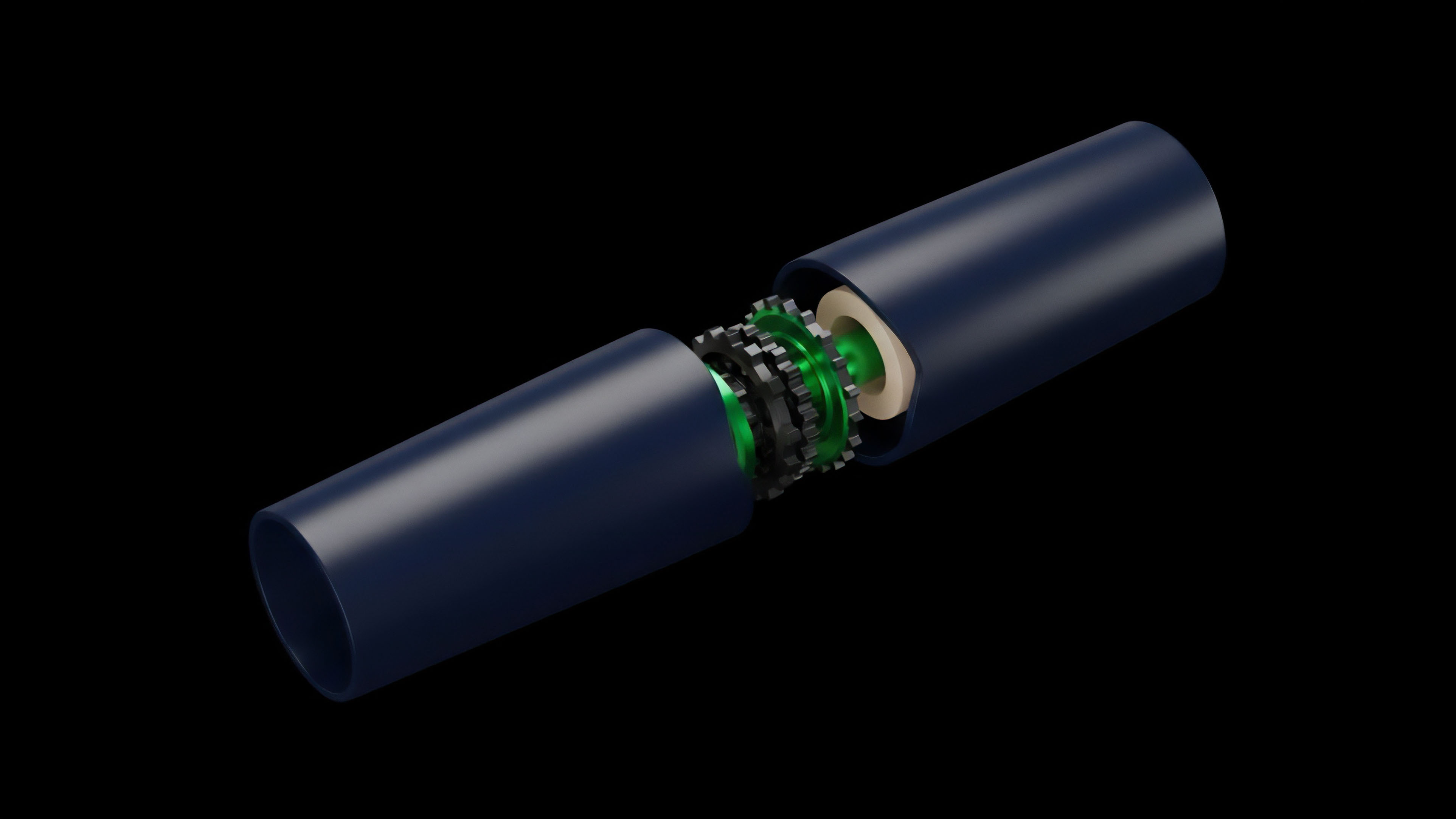
Cross-Margining Systems
Cross-margining systems represent a significant advancement in CDE for derivatives protocols. Instead of requiring separate collateral for each derivative type, a single pool of collateral secures all positions. This allows users to offset risks across different assets and instruments.
A user with a long position in one asset and a short position in another can use the profit from one to offset potential losses from the other, freeing up capital that would otherwise be locked.

Collateral Haircuts and Risk Parameters
A protocol’s CDE is directly influenced by its collateral haircuts. A haircut is a percentage reduction applied to the value of collateral to account for its volatility. Stablecoins typically have low haircuts (e.g.
0-5%), while volatile assets like ETH have higher haircuts (e.g. 10-20%). The decision on haircut percentages is a core element of risk management.
| Collateral Asset Type | Typical Haircut Range | Impact on CDE | Risk Profile |
|---|---|---|---|
| Stablecoins (e.g. USDC) | 0-5% | High CDE | Low volatility risk |
| Volatile Assets (e.g. ETH) | 10-20% | Medium CDE | High volatility risk |
| LP Tokens | 20-40% | Low CDE | High smart contract and impermanent loss risk |


Evolution
The evolution of CDE in crypto derivatives reflects a constant tension between security and efficiency. Early protocols were overly conservative, requiring high collateral ratios to compensate for smart contract risk and lack of a central clearinghouse. The current generation of protocols has adopted more sophisticated risk models, moving closer to the CDE levels seen in traditional finance.
The shift toward risk-sharing mechanisms is a key development. Protocols are experimenting with mechanisms where liquidity providers act as insurers of last resort, absorbing losses in exchange for premium income. This creates a more efficient capital structure by distributing risk among participants rather than isolating it within a single account.
The regulatory environment also shapes CDE. Protocols operating outside of traditional regulatory frameworks can offer higher leverage ratios. This regulatory arbitrage allows for higher CDE, but it also increases systemic risk for users.
The future development of CDE will be heavily influenced by how protocols manage this regulatory ambiguity.


Horizon
The next generation of CDE will be driven by advancements in interoperability and Layer 2 solutions. The current state of fragmented liquidity across multiple protocols and chains hinders CDE.
A user with collateral on one chain cannot easily use it to secure a position on another.

Interoperability and Cross-Chain Collateral
The ability to use collateral across different blockchains and protocols will significantly increase CDE. This requires a robust, secure cross-chain messaging system that allows protocols to verify collateral balances on external chains. This development would create a unified capital pool, maximizing utilization across the entire decentralized ecosystem.

Structured Products and Automated Strategies
The rise of automated structured products will redefine CDE. These products bundle derivatives into automated strategies that optimize capital allocation based on predefined risk parameters. For example, a “yield vault” might automatically sell covered calls on a user’s underlying assets, maximizing capital utilization by generating yield from collateral that would otherwise be idle.
This automation allows for CDE to be optimized continuously without manual intervention.

Layer 2 Solutions and Micro-Transactions
Layer 2 solutions, such as ZK-rollups, will enable micro-transactions and high-frequency trading strategies that are currently cost-prohibitive on Layer 1. This will allow for real-time risk adjustments and liquidations, enabling protocols to reduce collateral buffers. Lower latency and transaction costs will allow protocols to maintain higher CDE by reacting faster to market movements, thereby reducing the risk of bad debt.

Glossary

Derivatives Protocols

Capital Requirement

Market Efficiency and Scalability

Decentralized Oracle Deployment

Margin Ratio Update Efficiency

Automated Capital Deployment

Defi Capital Efficiency Strategies

Decentralized Applications Development and Deployment

Capital Deployment Speed