

Essence
An Automated Market Maker (AMM) for options serves as a core primitive for programmatic risk transfer in decentralized finance. Unlike traditional spot AMMs, which facilitate simple asset swaps based on a constant product formula, options AMMs manage a pool of assets against non-linear financial instruments. The central function is to continuously price and provide liquidity for complex derivatives ⎊ call and put options ⎊ without reliance on a traditional order book or human market makers.
This mechanism automates the entire risk-management workflow, from calculating theoretical option prices based on underlying volatility to dynamically hedging the resulting risk exposure. The goal is to create a capital-efficient, always-on counterparty for options traders, effectively abstracting away the complexities of traditional options trading infrastructure.
Options AMMs transform options trading from a capital-intensive, high-barrier activity into a permissionless protocol function for decentralized risk transfer.


Origin
The concept of AMMs originated with simple constant function market makers (CFMMs), first popularized by protocols like Uniswap. However, this model proved inadequate for derivatives. A standard CFMM prices assets based solely on their quantities in the pool, failing to account for critical variables like time decay (theta) and volatility (vega) inherent to options contracts.
Early attempts to decentralize options trading often relied on a Central Limit Order Book (CLOB) model, but these systems typically lacked deep liquidity and suffered from high transaction costs. The innovation for options AMMs began by translating established financial theory, specifically the Black-Scholes-Merton model, into smart contract logic. This required protocols to move from static pricing models to dynamic ones, where the AMM adjusts prices based on external data feeds (oracles) providing volatility and underlying asset prices.
This evolution enabled a shift from a passive, inventory-based pricing model to an active, risk-aware pricing engine.


Theory
The theoretical foundation of options AMMs revolves around the programmatic management of Greeks ⎊ the sensitivity measures of an option’s price to various inputs. The AMM’s core task is to maintain a continuously hedged portfolio, primarily by managing its delta exposure.
When a user purchases an option from the pool, the pool assumes a corresponding delta position. The protocol’s pricing logic must then calculate the necessary size of a simultaneous transaction in the underlying asset (e.g. a futures contract or spot asset) to neutralize this risk. This dynamic rebalancing process ⎊ the heart of the options AMM ⎊ aims to minimize impermanent loss for liquidity providers, ensuring that changes in the underlying asset price do not automatically erode the value of the pool’s assets.

Managing Risk and Pricing Inputs
Sophisticated options AMMs must go beyond simple Black-Scholes calculations. They must account for real-world market characteristics, particularly volatility skew and jump risk.
- Volatility Skew and Smile: The assumption of constant volatility across strikes and expirations is demonstrably false in real markets. An AMM must dynamically model a volatility surface ⎊ the relationship between implied volatility and both time and strike price ⎊ to accurately price options, as a failure to do so creates immediate arbitrage opportunities.
- Impermanent Loss vs. Hedging Cost Trade-off: The AMM must determine whether the cost of continuous hedging (gas costs, transaction fees, and slippage) outweighs the potential impermanent loss from maintaining an unhedged position. This is a critical risk optimization problem solved through different mechanisms depending on the protocol.
- Time Decay and Theta: Options AMMs must continuously adjust prices based on time decay. The AMM’s internal calculations must constantly mark down the option price as expiration approaches, allowing liquidity providers to capture the intrinsic time value premium.

Pricing Mechanism Comparison
| Mechanism | Description | Risk Management Strategy |
|---|---|---|
| Black-Scholes-Merton (BSM) Model | A foundational model for pricing European options based on five inputs (spot price, strike price, time to expiration, risk-free rate, volatility). | Derivatives of BSM (Greeks) provide guidelines for delta hedging and risk adjustments; assumes continuous, lognormal price movements. |
| Binomial Option Pricing Model (BOPM) | A discrete time model that values options based on the possibility of price movements in a given time period. | More flexible than BSM for path-dependent options or non-continuous hedging strategies, often computationally simpler for on-chain calculations. |


Approach
The implementation of options AMMs has bifurcated into two primary architectural paradigms: virtual AMMs and capital-backed liquidity pools. The choice between these two determines the risk profile and capital efficiency of the protocol. A virtual AMM (vAMM) architecture, often used by perpetual futures protocols, maintains a virtual pool for calculations but does not hold all underlying assets.
Instead, it relies on a funding rate mechanism to ensure price convergence. This approach is highly capital efficient but presents significant challenges for accurately pricing options with multiple expirations and strikes. The more common approach for options is a capital-backed pool, where liquidity providers deposit funds that act as the counterparty to all trades.

Concentrated Liquidity and Risk Management
The current state-of-the-art approach in options AMMs utilizes concentrated liquidity and dynamic pricing mechanisms. In this model, liquidity providers do not just deposit funds into a general pool. They designate specific price ranges where their liquidity will be active.
This significantly increases capital efficiency within those ranges but requires a more sophisticated risk-management model, especially regarding impermanent loss.
A central challenge in this new architecture is managing Maximum Extractable Value (MEV). Arbitrageurs constantly monitor options AMMs, attempting to front-run large trades or exploit temporary pricing discrepancies before the protocol’s automated hedging mechanism can adjust. This adversarial environment requires AMM designers to build robust anti-MEV mechanisms and ensure the hedging process is executed efficiently to prevent losses from being siphoned by arbitrageurs.

Challenges in Implementation
- Liquidity Fragmentation: Concentrated liquidity requires LPs to predict where the price of the option will trade. This can lead to liquidity fragmentation if providers choose different strike price ranges, reducing overall market depth and increasing slippage.
- Oracle Reliance: The options AMM relies heavily on accurate, low-latency data feeds (oracles) for both underlying asset prices and implied volatility. The integrity of these feeds is critical; an oracle failure or manipulation can lead to significant protocol losses.
- Execution Risk: Hedging requires the AMM to execute trades on external spot or perpetual markets. High gas fees or network congestion during times of market stress can prevent timely rebalancing, exposing the liquidity pool to significant losses.

Evolution
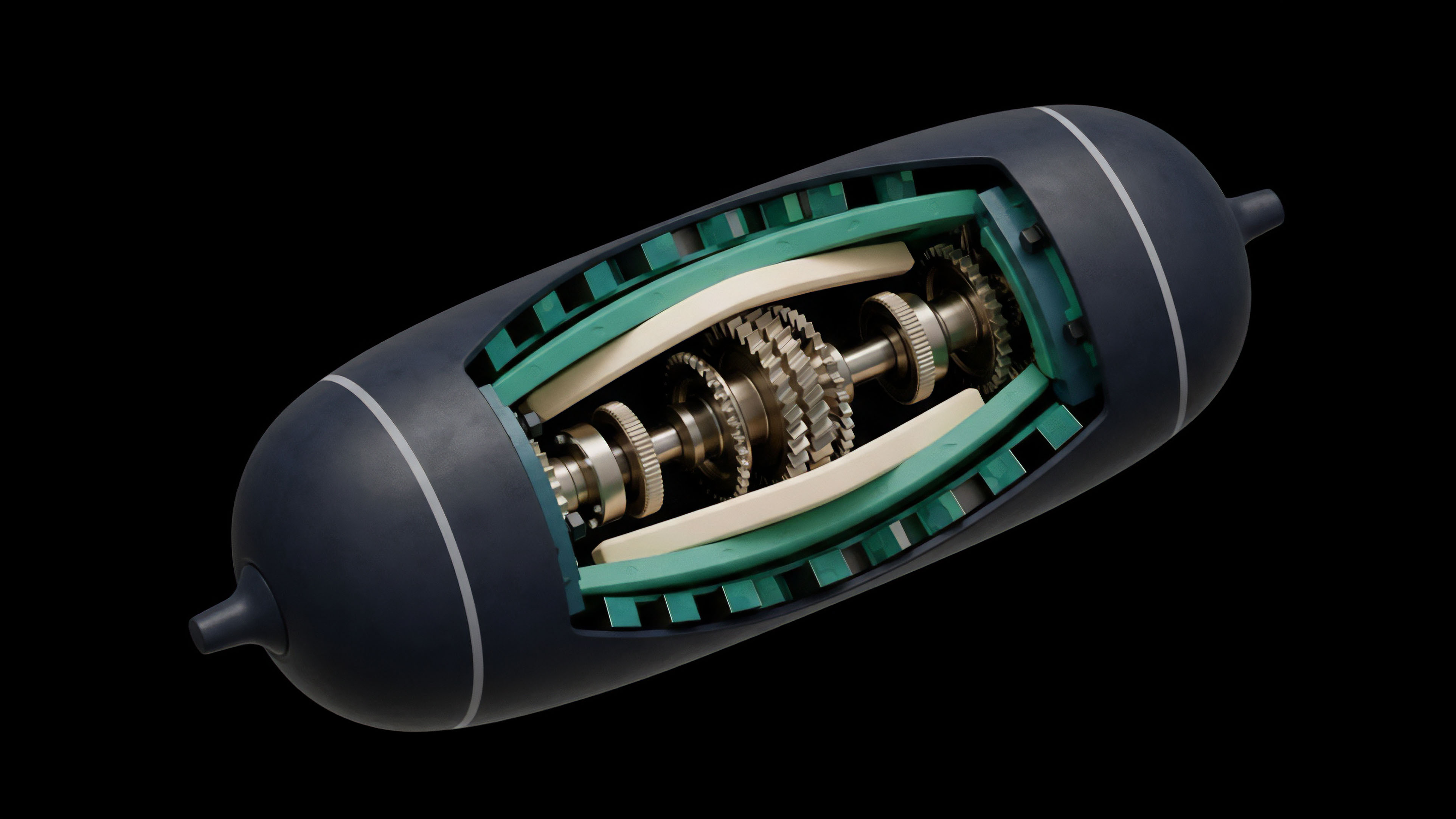
Options AMMs have progressed significantly in addressing liquidity provider risk. The initial model involved a simple pool that absorbed all risk, often leading to significant losses for liquidity providers due to impermanent loss and poor hedging execution. The evolution moved towards risk-defined strategies and Decentralized Option Vaults (DOVs).
DOVs abstract away the complexities of AMM management for the end-user. Instead of providing continuous liquidity, a user deposits assets into a vault that automatically executes a specific, pre-defined strategy ⎊ such as writing covered calls or selling protective puts ⎊ for a set period.

The Shift to Structured Products
The movement from a pure AMM model to DOVs represents a change from a generalized market-making function to a structured product offering. The AMM, in effect, becomes a risk-managed product manager rather than just a simple counterparty. This approach offers benefits to liquidity providers seeking passive income while providing a more stable source of options liquidity for traders.
| Model Type | Liquidity Provider Role | Primary Risk |
|---|---|---|
| Pure AMM (Continuous Liquidity) | Provide funds to a pool that acts as the counterparty for all options trades; high flexibility. | Impermanent Loss (IL), slippage on hedging trades, and significant exposure to volatility changes. |
| Decentralized Option Vault (DOV) | Deposit funds to a vault that executes a specific, pre-defined options strategy; lower flexibility. | Counterparty risk (for the option sold), execution risk, and strategy-specific risk. |
The transition from simple options pools to risk-defined Decentralized Option Vaults reflects an effort to manage impermanent loss by automating specific options strategies.


Horizon
The next iteration of options AMMs will focus on achieving true capital efficiency and managing systemic risk. The primary challenge remains the creation of leverage loops between different protocols ⎊ where liquidity providers borrow from one protocol to fund their position in an options AMM, creating inter-protocol dependencies that compound risk during liquidations. The future of options AMMs must account for a more sophisticated understanding of risk beyond just delta and vega.
This includes managing liquidity fragmentation across chains and addressing regulatory pressures as traditional institutions enter the space.

Future Developments in Options AMMs
- Systemic Risk Management: Future AMMs must incorporate mechanisms to manage cross-protocol contagion. This means protocols will need to move beyond single-asset risk management to address inter-protocol dependencies and leverage loops across the DeFi ecosystem.
- Real World Asset (RWA) Integration: The integration of options on real-world assets into AMM structures, creating a bridge between traditional finance and DeFi. This requires a robust legal framework and accurate on-chain representation of off-chain assets.
- Advanced Hedging Models: Implementation of volatility models that account for “jump risk” and sudden market movements, rather than assuming continuous, lognormal price changes. These models will likely utilize machine learning or advanced quantitative methods.
- Regulatory Compliance and KYC/AML: Adapting AMM architecture to meet global regulatory standards for derivatives, potentially requiring new mechanisms for user identification or jurisdiction-specific limitations.
The next generation of options AMMs must address systemic risk by mitigating leverage loops and inter-protocol contagion in the broader decentralized finance landscape.

Glossary

Market Maker Scalability

Automated Market Maker Inefficiency

Mica Regulation

Automated Market Maker Ecosystem

Automated Options Market Making

Market Maker Operations

Theta Decay

Automated Market Maker Vaults

Inter Protocol Dependencies