



Essence
Dynamic Liquidity Provisioning Engines ⎊ or DLPEs ⎊ represent the architectural pivot from passive capital pools to active, intelligent market structures within decentralized options markets. The problem DLPEs address is the inherent capital inefficiency of static Automated Market Makers (AMMs) when applied to options, instruments defined by non-linear payoffs and a volatility-dependent pricing surface. A static pool cannot efficiently quote across the entire volatility skew and term structure without massive over-collateralization.
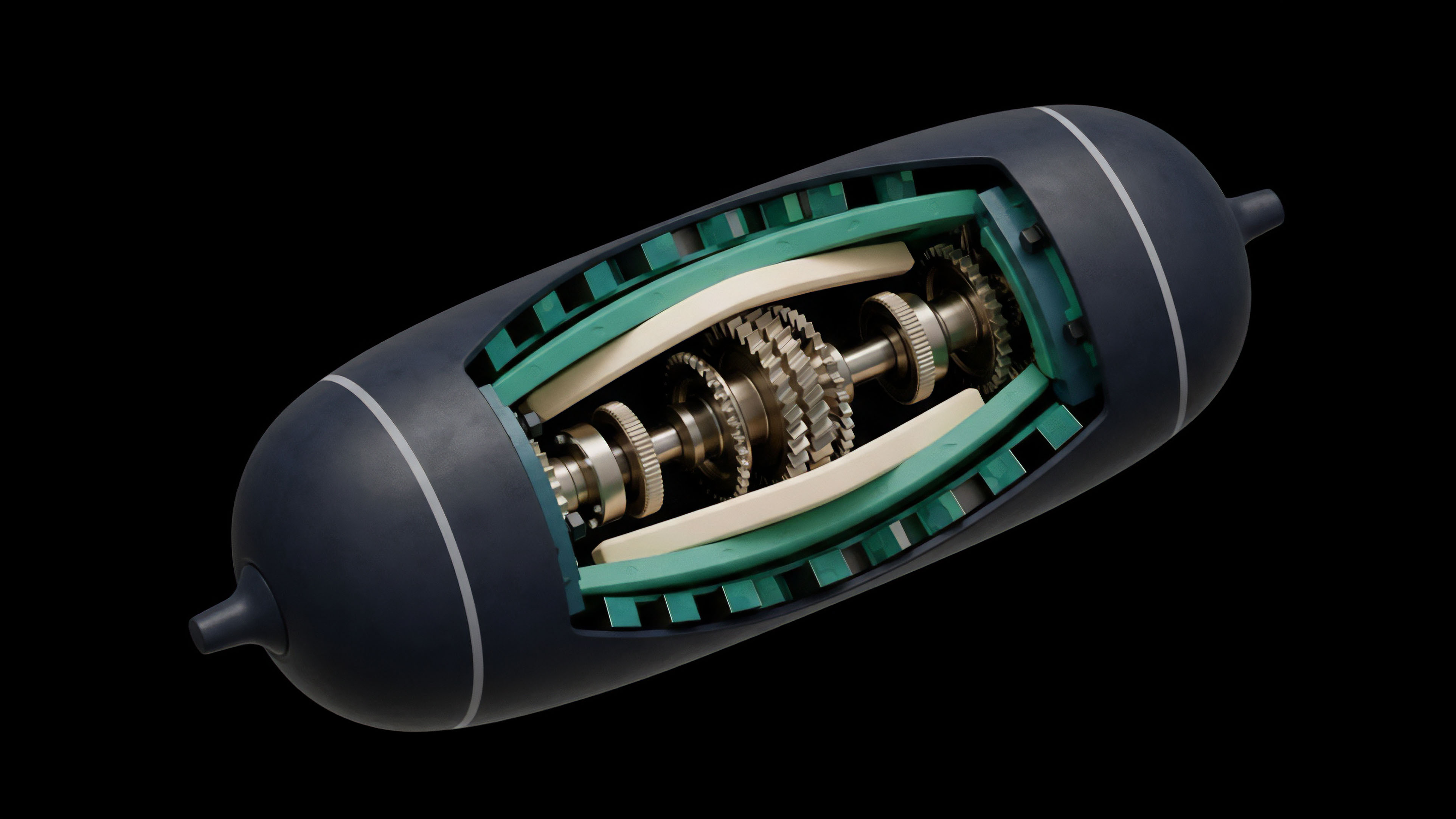
The DLPE is the programmatic layer that sits between the on-chain collateral vault and the market-facing order book, orchestrating capital deployment and risk exposure in real time. It is a necessary abstraction layer ⎊ a financial operating system ⎊ that manages the second-order effects of every trade. Its primary function is to compute and deploy quotes that reflect true risk-adjusted pricing, not simply a path-dependent function of pool utilization.
This logic must account for the full suite of market microstructure realities ⎊ latency arbitrage, inventory risk, and the subtle shifts in implied volatility ⎊ that define the adversarial environment of derivatives trading.
DLPEs are the programmable logic that translates real-time market risk into executable, capital-efficient quotes for decentralized options order books.
This system fundamentally changes the nature of liquidity provision. It transforms a liquidity provider from a passive taker of adverse selection into an active risk manager. The engine uses external data ⎊ price feeds, volatility indices, and trade history ⎊ to solve for an optimal hedging portfolio, effectively externalizing the complexity of market making away from the individual user and into a hardened, auditable smart contract system.


Origin
The origin of the DLPE concept stems from the collision of two distinct financial histories: the high-frequency trading (HFT) strategies of centralized exchanges and the immutable, deterministic settlement of decentralized finance (DeFi). Traditional market makers on centralized limit order books (CLOBs) have long employed proprietary, low-latency algorithms to manage inventory and volatility exposure ⎊ a process that is inherently centralized and opaque. When options were ported to DeFi, the initial solutions ⎊ simple constant-product or constant-sum AMMs ⎊ proved catastrophic.
These static models were designed for linear assets like spot tokens, failing spectacularly when faced with the non-linear risk profile of options, leading to rapid pool depletion during periods of high volatility or sudden price movements. The conceptual breakthrough arrived with the realization that on-chain settlement did not necessitate on-chain computation for quoting. The core problem was one of protocol physics ⎊ blockchain latency made real-time quoting and hedging impossible within a single block.
The solution was a hybrid architecture.
- The Failure of Static AMMs: Simple AMM curves could not correctly price volatility skew or manage delta risk, making them an easy target for arbitrageurs and leading to guaranteed losses for liquidity providers.
- The Centralized Order Book Requirement: Efficient options trading demands a CLOB for price discovery and low-latency execution, mirroring the structure that proved successful in traditional finance.
- The DLPE Synthesis: The development tool emerged as the bridge, allowing sophisticated, off-chain algorithms to calculate optimal quotes and risk parameters, which are then relayed to a low-latency CLOB for execution, with final settlement occurring trustlessly on-chain.
This hybrid model ⎊ part centralized execution, part decentralized settlement ⎊ was the only viable path to providing the necessary depth and tight spreads for crypto options, forcing the creation of these specialized development tools.


Theory
The theoretical foundation of a Dynamic Liquidity Provisioning Engine is a rigorous application of quantitative finance, adapted for the unique constraints of protocol physics ⎊ specifically, asynchronous information flow and deterministic settlement. The engine’s primary objective is to maintain a zero-expected-profit portfolio over a defined time horizon, accounting for transaction costs and the probability of adverse selection.

Greeks and Inventory Management
The DLPE’s core function is the continuous solution of an optimal hedging problem. This begins with the Greeks ⎊ the partial derivatives of the option price with respect to its input variables.
- Delta Hedging: The engine calculates the required position in the underlying asset to keep the overall portfolio delta-neutral, minimizing directional risk.
- Gamma Risk Management: This measures the change in delta relative to the underlying price movement. High gamma requires more frequent re-hedging, increasing transaction costs. The DLPE strategically widens quotes in high-gamma regimes to compensate for this accelerated risk.
- Vega Exposure: Vega measures sensitivity to implied volatility. This is perhaps the most critical component for crypto options, as volatility regimes shift rapidly. The DLPE’s quote-generation process is essentially a continuous attempt to sell high-vega options when the engine is short vega, and buy when it is long.
This is where the pricing model becomes truly elegant ⎊ and dangerous if ignored. Our inability to respect the skew is the critical flaw in many early models. The DLPE must not only price based on the implied volatility surface but also dynamically adjust that surface based on its own current inventory and the observed market flow ⎊ a process that introduces a powerful, but necessary, feedback loop.

Model Comparison for Options Pricing
The choice of the underlying model dictates the engine’s theoretical precision and computational load.
| Pricing Model | Primary Advantage | DLPE Application | Computational Load |
|---|---|---|---|
| Black-Scholes-Merton (BSM) | Analytical closed-form solution, speed | Base price generation, delta calculation | Low |
| Binomial/Trinomial Tree | Handles American-style options, path-dependency | Valuation of early exercise features | Medium |
| Monte Carlo Simulation | Handles complex payoffs, multiple sources of uncertainty | Stress testing, Value-at-Risk (VaR) calculation | High |
The DLPE operates under the principle of continuous hedging, attempting to minimize the portfolio’s directional and volatility exposure across all market states.
The engine uses BSM for speed in generating base quotes, but the true sophistication lies in the integration of the volatility surface , which is the market’s collective belief about future volatility across different strikes and expirations. The DLPE must continuously fit a curve to this surface, and its quoting strategy is a function of the engine’s deviation from a desired inventory profile relative to that surface.


Approach
The modern development of a DLPE requires a deep understanding of distributed systems architecture, as the solution is inherently hybrid ⎊ it spans off-chain computation and on-chain settlement.
The construction is not a single piece of software; it is a stack of interconnected services designed for high availability and low-latency communication with the exchange’s matching engine.

The DLPE Technical Stack
The execution framework is composed of distinct, yet interconnected, components that allow for both speed and trustless finality.
- Off-Chain Optimization Solver: This is the high-performance core, typically written in C++ or Rust. Its function is to solve the continuous-time optimal execution problem, generating bid/ask quotes and corresponding hedge orders based on real-time market data and the engine’s inventory.
- Risk and Inventory Management Service: This component tracks the engine’s precise position ⎊ the notional value, the total Greeks, and the capital utilization ratio. It acts as a circuit breaker, pausing quoting if a pre-defined VaR or maximum loss threshold is breached.
- Oracle and Data Aggregation Layer: This service feeds the Solver with reliable, low-latency data, including spot prices, implied volatility indices, and collateral ratios. The integrity of the DLPE is entirely dependent on the veracity and speed of this data.
- On-Chain Smart Contract Vault: This is the immutable settlement layer. It holds the collateral, executes the final trade settlement, and is the single source of truth for the engine’s net asset value (NAV). All funds are managed by the contract logic, not the off-chain solver.

Algorithmic Strategy Implementation
The core strategies implemented by the engine must be robust against the specific risks of the crypto market. The DLPE must prioritize capital preservation over speculative profit.
- Quote Generation and Spreading: The algorithm computes the theoretical price (mid) and then adds a spread ⎊ the size of which is dynamically determined by the inventory delta, the gamma exposure, and the current market volatility. A high gamma exposure demands a wider spread to compensate for the cost of re-hedging.
- Optimal Execution Logic: When a hedge is required (e.g. selling underlying to neutralize delta), the engine uses execution algorithms (like TWAP or VWAP variants) to minimize market impact, which is particularly acute in the lower-liquidity environments of perpetual futures used for hedging.
- Liquidation Threshold Modeling: The engine must continuously monitor the health of its collateral, modeling the probability of liquidation under various stress scenarios, often using Monte Carlo simulations to project price paths and volatility spikes.


Evolution
The development of DLPEs has been a rapid, adversarial evolution ⎊ a financial arms race against latency and systemic risk. The first generation focused simply on delta-hedging the Black-Scholes mid-price. The current state is far more complex, characterized by the shift from single-asset risk management to portfolio-level optimization.
The key evolution lies in the incorporation of Behavioral Game Theory and Systems Risk into the quoting logic. Early DLPEs assumed a rational market. They were quickly exploited by sophisticated counterparties who understood that the engine’s quote was based on a backward-looking volatility surface.
The shift from static BSM pricing to volatility-regime-aware quoting represents the maturation of algorithmic liquidity provision in crypto options.

Regime-Aware Quoting
Modern DLPEs employ Regime Switching Models ⎊ a clear sign of maturation. These models identify the current market state (e.g. low volatility, trending, high-volatility chop) and dynamically adjust the entire quoting and hedging methodology to match the regime.
- Low Volatility Regime: The engine tightens spreads, increases quote size, and hedges aggressively, as transaction costs are lower and directional risk is manageable.
- High Volatility Regime: Spreads widen significantly, quote size is reduced, and the engine may strategically under-hedge its delta to profit from mean reversion in the underlying, accepting a calculated gamma exposure.
- Liquidation Cascade Regime: The engine ceases quoting entirely, often switching to a passive-only order submission strategy to avoid providing exit liquidity to forced sellers, prioritizing the safety of its capital over market share.
This transition acknowledges that the system operates under constant stress. The trade-off is clear: increased computational complexity and development cost for reduced systemic risk and enhanced capital efficiency.

Capital Efficiency versus Risk Trade-Offs
The design choices within a DLPE directly affect the platform’s overall systemic risk profile.
| DLPE Design Choice | Impact on Capital Efficiency | Impact on Systemic Risk |
|---|---|---|
| Cross-Margining Implementation | High (Allows netting of positions) | High (Contagion risk across instruments) |
| High-Frequency Re-hedging | Medium (Lower slippage cost) | Low (Tighter risk control) |
| Dynamic Spreading Logic | Low (Wider spreads reduce utilization) | Low (Better compensation for adverse selection) |
| On-Chain Settlement Frequency | Low (Collateral is locked longer) | Medium (Increased latency for risk updates) |


Horizon
The future of Dynamic Liquidity Provisioning Engines is defined by the quest for Trustless Computation and Cross-Chain Interoperability. The current hybrid architecture ⎊ relying on a trusted off-chain solver ⎊ introduces a single point of failure and opacity, which runs contrary to the fundamental ethos of decentralized markets. The critical hurdle we face is computational ⎊ how to run complex options pricing and optimization algorithms within a verifiable, decentralized environment.
This is the domain of Zero-Knowledge Proofs (ZKPs) and Homomorphic Encryption. A DLPE running on a ZK-Rollup, for instance, could prove the correctness of its quoting logic and the integrity of its risk parameters without revealing the proprietary algorithm or the engine’s current inventory. This would solve the fundamental trust problem inherent in the current hybrid design.
The next major frontier is the integration of Macro-Crypto Correlation and Financial History into the engine’s core model. Current models are often too focused on micro-structure, ignoring the larger liquidity cycles driven by central bank policy and global economic conditions. A truly sophisticated DLPE will use machine learning to ingest macro data, dynamically adjusting its volatility assumptions based on systemic liquidity shifts ⎊ the very force that governs the propagation of failure across protocols.

The Next Generation of DLPE Architecture
The final, fully decentralized iteration of the DLPE will be a protocol, not a proprietary tool.
| Feature | Current State (2025) | Horizon (2030) |
|---|---|---|
| Computation Environment | Trusted Off-Chain Solver | ZK-Proved On-Chain Logic |
| Risk Management | Inventory Delta Management | Portfolio VaR via Homomorphic Encryption |
| Data Input | Real-time Price Oracles | Macro-Economic & On-Chain Fundamental Analysis Feeds |
| Liquidity Scope | Single-Chain Isolated Pools | Cross-Chain Interoperable Liquidity Networks |
This shift to verifiable computation will change the competitive landscape entirely. It will democratize the ability to run a sophisticated market-making strategy, turning the proprietary HFT advantage into a permissionless protocol layer. The Derivative Systems Architect’s task becomes one of ensuring the Protocol Physics are sound ⎊ that the gas limits, latency assumptions, and finality mechanisms of the underlying chain can support the necessary computational overhead for these complex, real-time risk calculations. It is a question of survival ⎊ will the next wave of systemic risk find a vulnerability in our computational assumptions, or will we have secured the financial operating system before the next cycle truly tests its limits?

Glossary

Trading Venue Evolution

Programmable Money Risk
Collateral Vault Architecture

Protocol Physics Constraints

Tokenomics Incentive Alignment

Delta Hedging Strategy

Adverse Selection

Volatility Surface

Systemic Contagion Risk
